
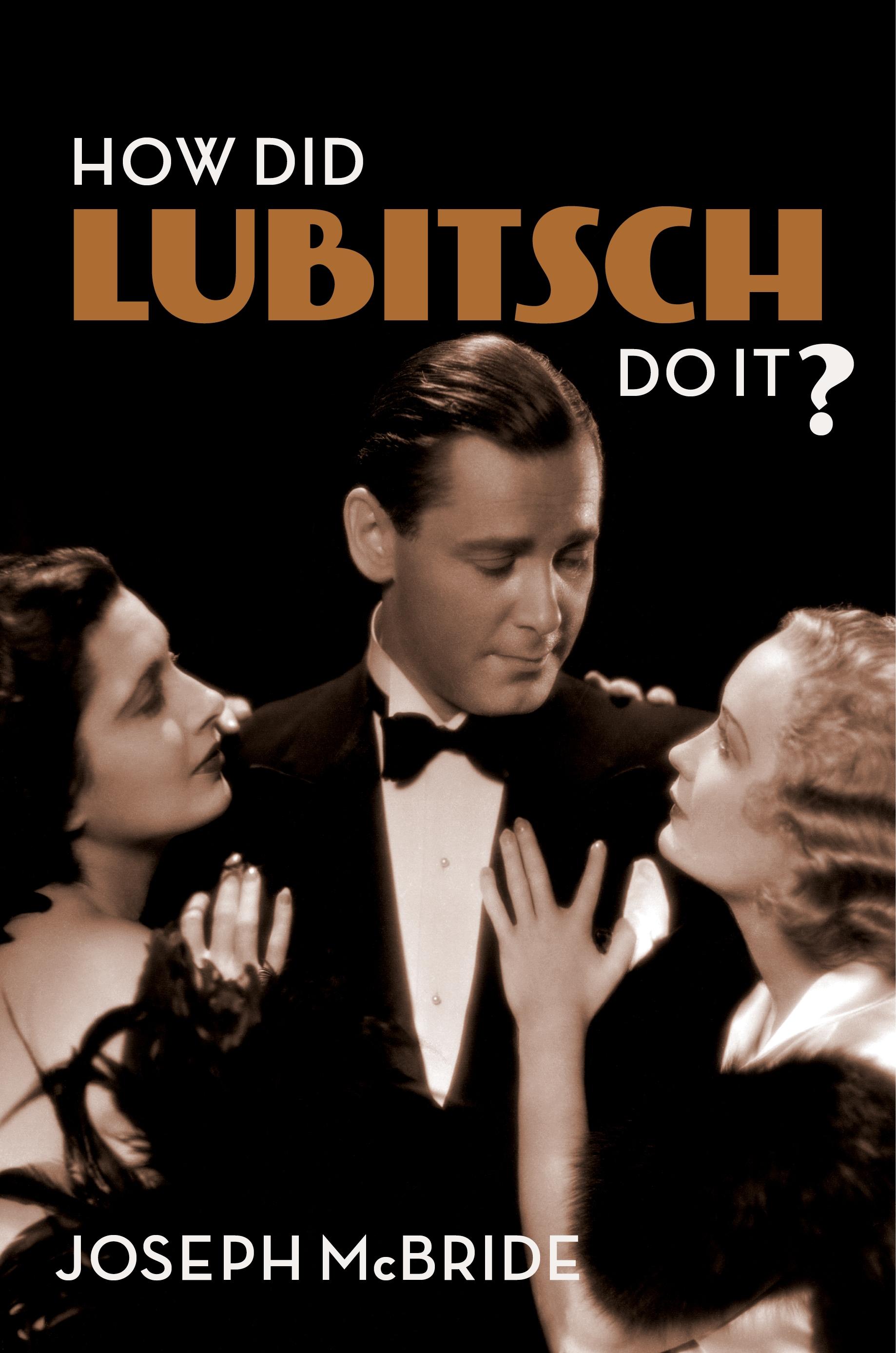
Orson Welles called Ernst Lubitsch (1892–1947) “a giant” whose “talent and originality are stupefying.” Jean Renoir said, “He invented the modern Hollywood.” Celebrated for his distinct style and credited with inventing the classic genre of the Hollywood romantic comedy and helping to create the musical, Lubitsch won the admiration of his fellow directors, including Alfred Hitchcock and Billy Wilder, whose office featured a sign on the wall asking, “How would Lubitsch do it?” Despite the high esteem in which Lubitsch is held, as well as his unique status as a leading filmmaker in both Germany and the United States, today he seldom receives the critical attention accorded other major directors of his era.
How Did Lubitsch Do It? restores Lubitsch to his former stature in the world of cinema. Joseph McBride analyzes Lubitsch’s films in rich detail in the first in-depth critical study to consider the full scope of his work and its evolution in both his native and adopted lands. McBride explains the “Lubitsch Touch” and shows how the director challenged American attitudes toward romance and sex. Expressed obliquely, through sly innuendo, Lubitsch’s risqué, sophisticated, continental humor engaged the viewer’s intelligence while circumventing the strictures of censorship in such masterworks as The Marriage Circle, Trouble in Paradise, Design for Living, Ninotchka, The Shop Around the Corner, and To Be or Not to Be. McBride’s analysis of these films brings to life Lubitsch’s wit and inventiveness and offers revealing insights into his working methods.
Pay easily by card, Klarna, Apple Pay or Google Pay. Not happy? You always have a 14-day money-back guarantee. Read more in our terms. If you have any questions, email us at hello@memmo.org.
Memmo makes studying easier – wherever you are in the world. We bring your course books and smart study tools together in one place: summaries, quizzes, podcasts and flashcards. Plus Ted, your study buddy who answers anything you wonder. Over 50,000 students already study here – built to help you learn faster and stress less.