
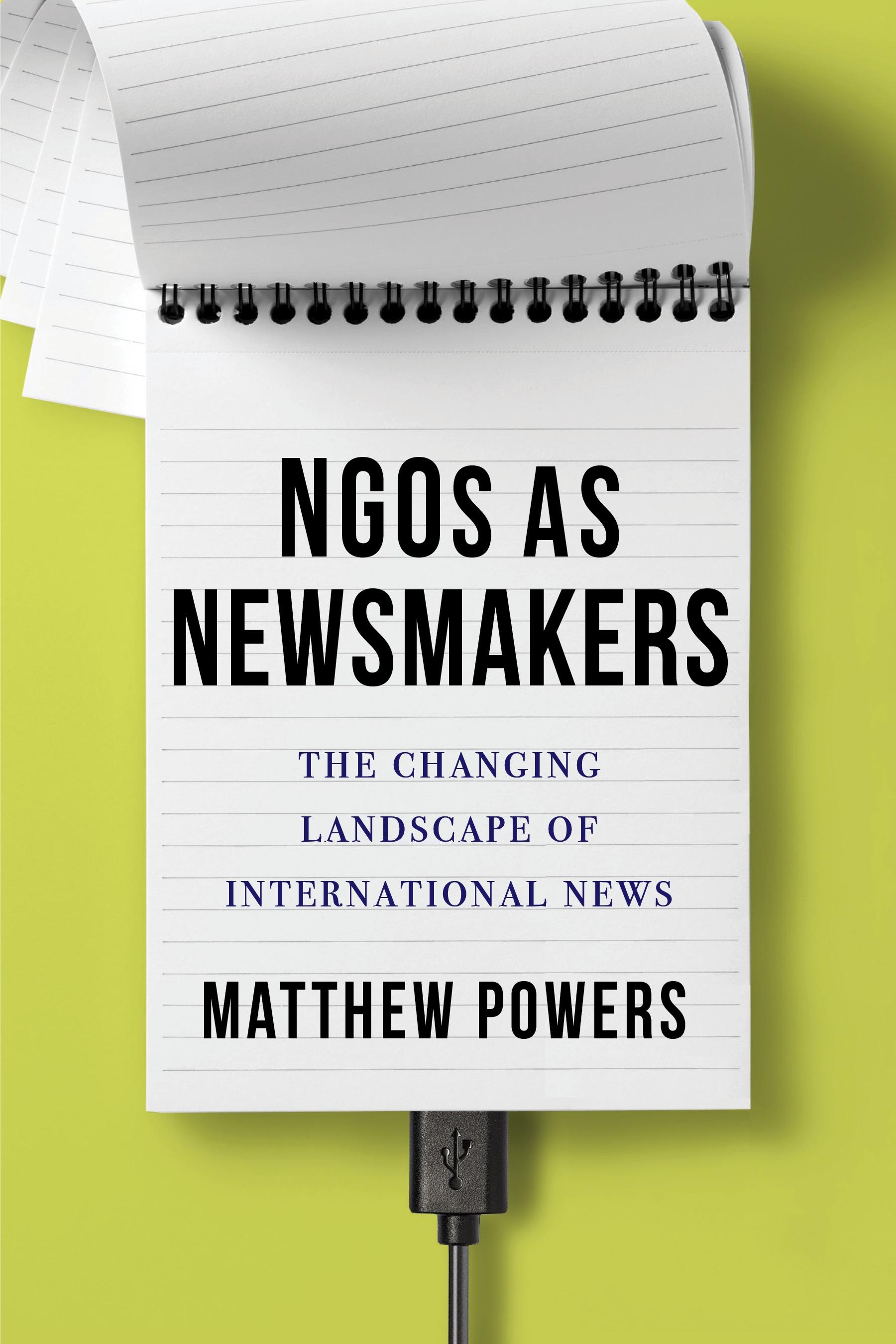
As traditional news outlets’ international coverage has waned, several prominent nongovernmental organizations have taken on a growing number of seemingly journalistic functions. Groups such as Amnesty International, Human Rights Watch, and Médecins Sans Frontières send reporters to gather information and provide analysis and assign photographers and videographers to boost the visibility of their work. Digital technologies and social media have increased the potential for NGOs to communicate directly with the public, bypassing traditional gatekeepers. But have these efforts changed and expanded traditional news practices and coverage—and are there consequences to blurring the lines between reporting and advocacy?
In NGOs as Newsmakers, Matthew Powers analyzes the growing role NGOs play in shaping—and sometimes directly producing—international news. Drawing on interviews, observations, and content analysis, he charts the dramatic growth in NGO news-making efforts, examines whether these efforts increase the organizations' chances of garnering news coverage, and analyzes the effects of digital technologies on publicity strategies. Although the contemporary media environment offers NGOs greater opportunities to shape the news, Powers finds, it also subjects them to news-media norms. While advocacy groups can and do provide coverage of otherwise ignored places and topics, they are still dependent on traditional media and political elites and influenced by the expectations of donors, officials, journalists, and NGOs themselves. Through an unprecedented glimpse into NGOs’ newsmaking efforts, Powers portrays the possibilities and limits of NGOs as newsmakers amid the transformations of international news, with important implications for the intersections of journalism and advocacy.
Pay easily by card, Klarna, Apple Pay or Google Pay. Not happy? You always have a 14-day money-back guarantee. Read more in our terms. If you have any questions, email us at hello@memmo.org.
Memmo makes studying easier – wherever you are in the world. We bring your course books and smart study tools together in one place: summaries, quizzes, podcasts and flashcards. Plus Ted, your study buddy who answers anything you wonder. Over 75,000 students already study here – built to help you learn faster and stress less.