
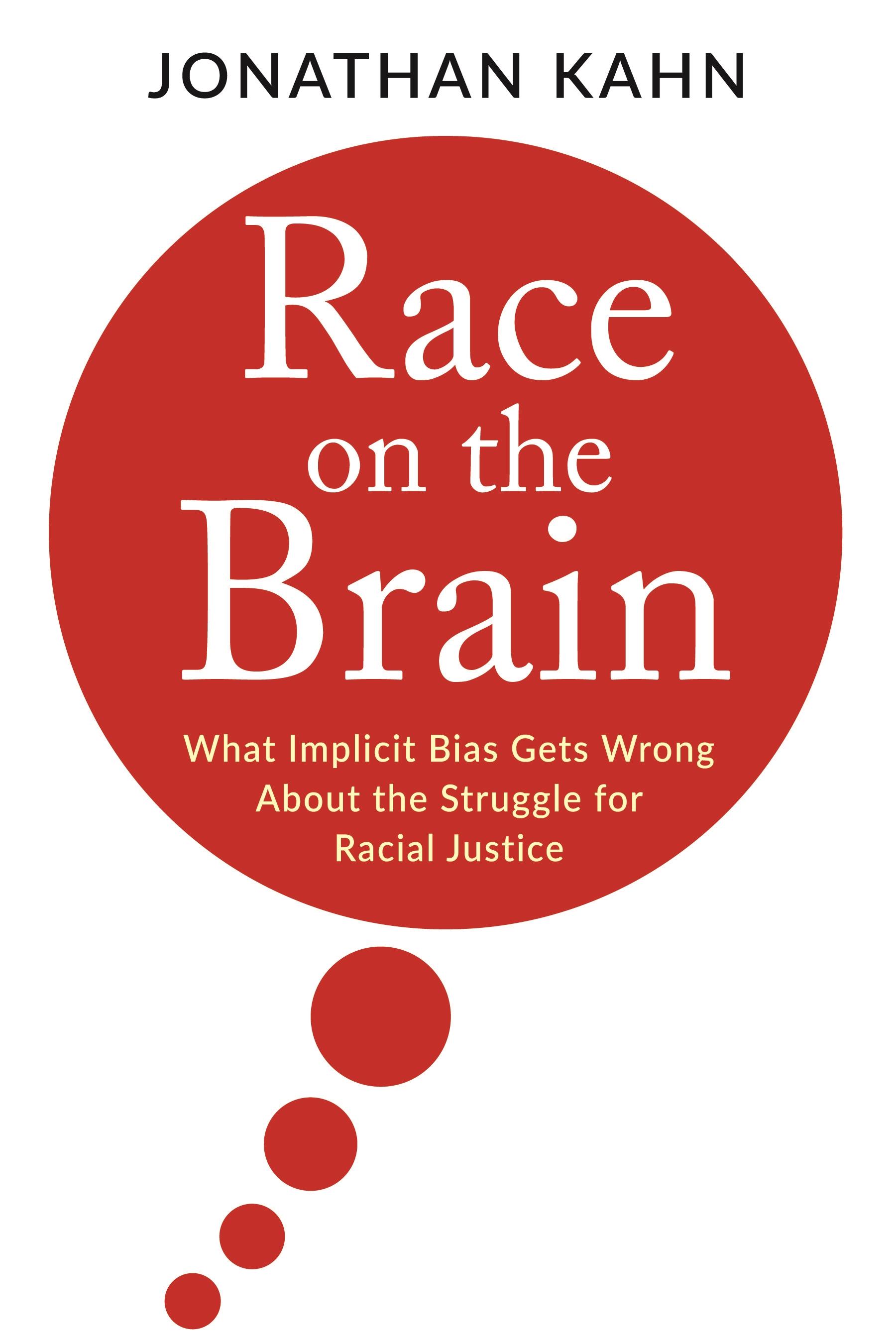
Of the many obstacles to racial justice in America, none has received more recent attention than the one that lurks in our subconscious. As social movements and policing scandals have shown how far from being “postracial” we are, the concept of implicit bias has taken center stage in the national conversation about race. Millions of Americans have taken online tests purporting to show the deep, invisible roots of their own prejudice. A recent Oxford study that claims to have found a drug that reduces implicit bias is only the starkest example of a pervasive trend. But what do we risk when we seek the simplicity of a technological diagnosis—and solution—for racism? What do we miss when we locate racism in our biology and our brains rather than in our history and our social practices?
In Race on the Brain, Jonathan Kahn argues that implicit bias has grown into a master narrative of race relations—one with profound, if unintended, negative consequences for law, science, and society. He emphasizes its limitations, arguing that while useful as a tool to understand particular types of behavior, it is only one among several tools available to policy makers. An uncritical embrace of implicit bias, to the exclusion of power relations and structural racism, undermines wider civic responsibility for addressing the problem by turning it over to experts. Technological interventions, including many tests for implicit bias, are premised on a color-blind ideal and run the risk of erasing history, denying present reality, and obscuring accountability. Kahn recognizes the significance of implicit social cognition but cautions against seeing it as a panacea for addressing America’s longstanding racial problems. A bracing corrective to what has become a common-sense understanding of the power of prejudice, Race on the Brain challenges us all to engage more thoughtfully and more democratically in the difficult task of promoting racial justice.
Pay easily by card, Klarna, Apple Pay or Google Pay. Not happy? You always have a 14-day money-back guarantee. Read more in our terms. If you have any questions, email us at hello@memmo.org.
Memmo makes studying easier – wherever you are in the world. We bring your course books and smart study tools together in one place: summaries, quizzes, podcasts and flashcards. Plus Ted, your study buddy who answers anything you wonder. Over 50,000 students already study here – built to help you learn faster and stress less.