
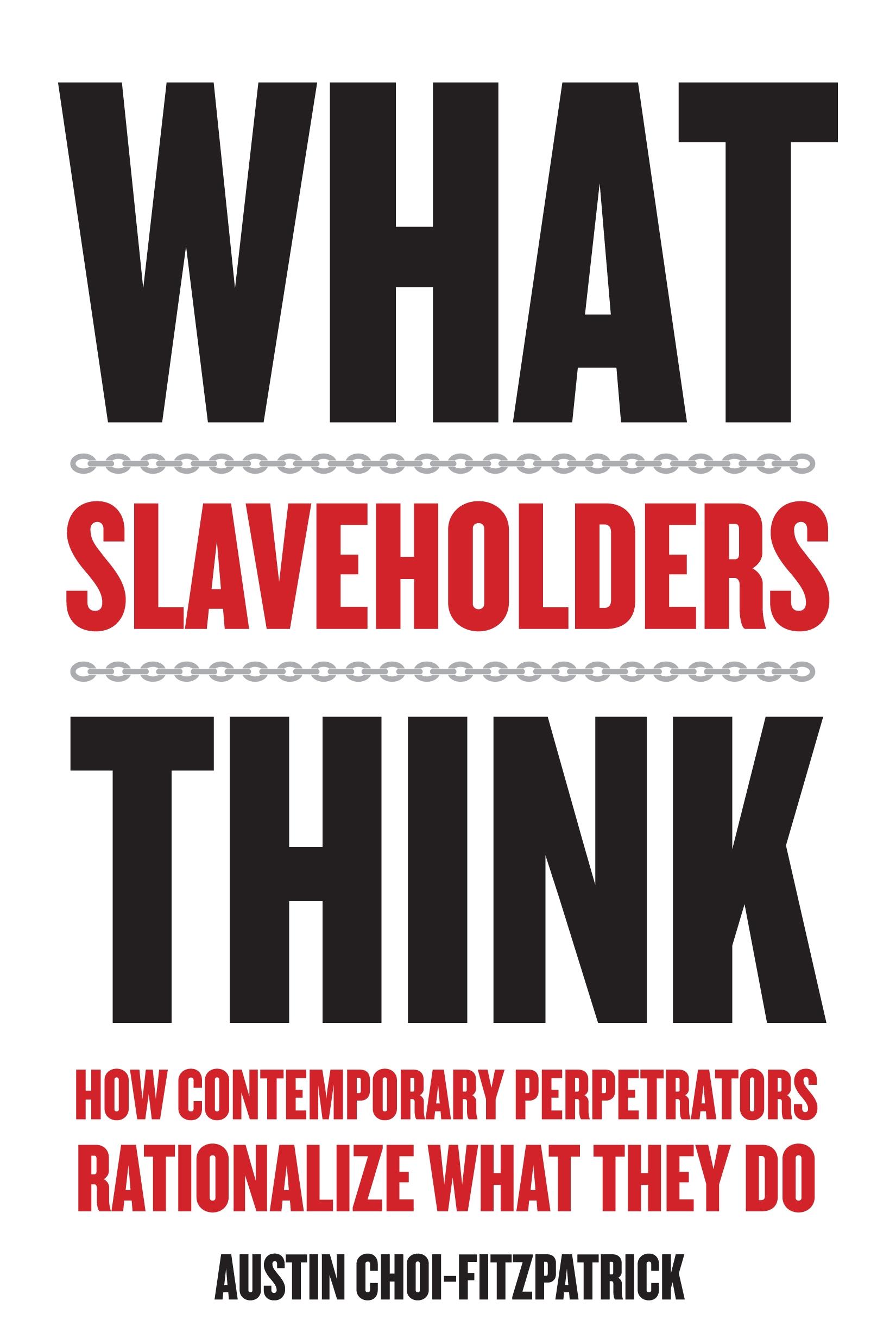
Drawing on fifteen years of work in the antislavery movement, Austin Choi-Fitzpatrick examines the systematic oppression of men, women, and children in rural India and asks: How do contemporary slaveholders rationalize the subjugation of other human beings, and how do they respond when their power is threatened? More than a billion dollars have been spent on antislavery efforts, yet the practice persists. Why? Unpacking what slaveholders think about emancipation is critical for scholars and policy makers who want to understand the broader context, especially as seen by the powerful. Insight into those moments when the powerful either double down or back off provides a sobering counterbalance to scholarship on popular struggle.
Through frank and unprecedented conversations with slaveholders, Choi-Fitzpatrick reveals the condescending and paternalistic thought processes that blind them. While they understand they are exploiting workers' vulnerabilities, slaveholders also feel they are doing workers a favor, often taking pride in this relationship. And when the victims share this perspective, their emancipation is harder to secure, driving some in the antislavery movement to ask why slaves fear freedom. The answer, Choi-Fitzpatrick convincingly argues, lies in the power relationship. Whether slaveholders recoil at their past behavior or plot a return to power, Choi-Fitzpatrick zeroes in on the relational dynamics of their self-assessment, unpacking what happens next. Incorporating the experiences of such pivotal actors into antislavery research is an immensely important step toward crafting effective antislavery policies and intervention. It also contributes to scholarship on social change, social movements, and the realization of human rights.
Pay easily by card, Klarna, Apple Pay or Google Pay. Not happy? You always have a 14-day money-back guarantee. Read more in our terms. If you have any questions, email us at hello@memmo.org.
Memmo makes studying easier – wherever you are in the world. We bring your course books and smart study tools together in one place: summaries, quizzes, podcasts and flashcards. Plus Ted, your study buddy who answers anything you wonder. Over 50,000 students already study here – built to help you learn faster and stress less.