
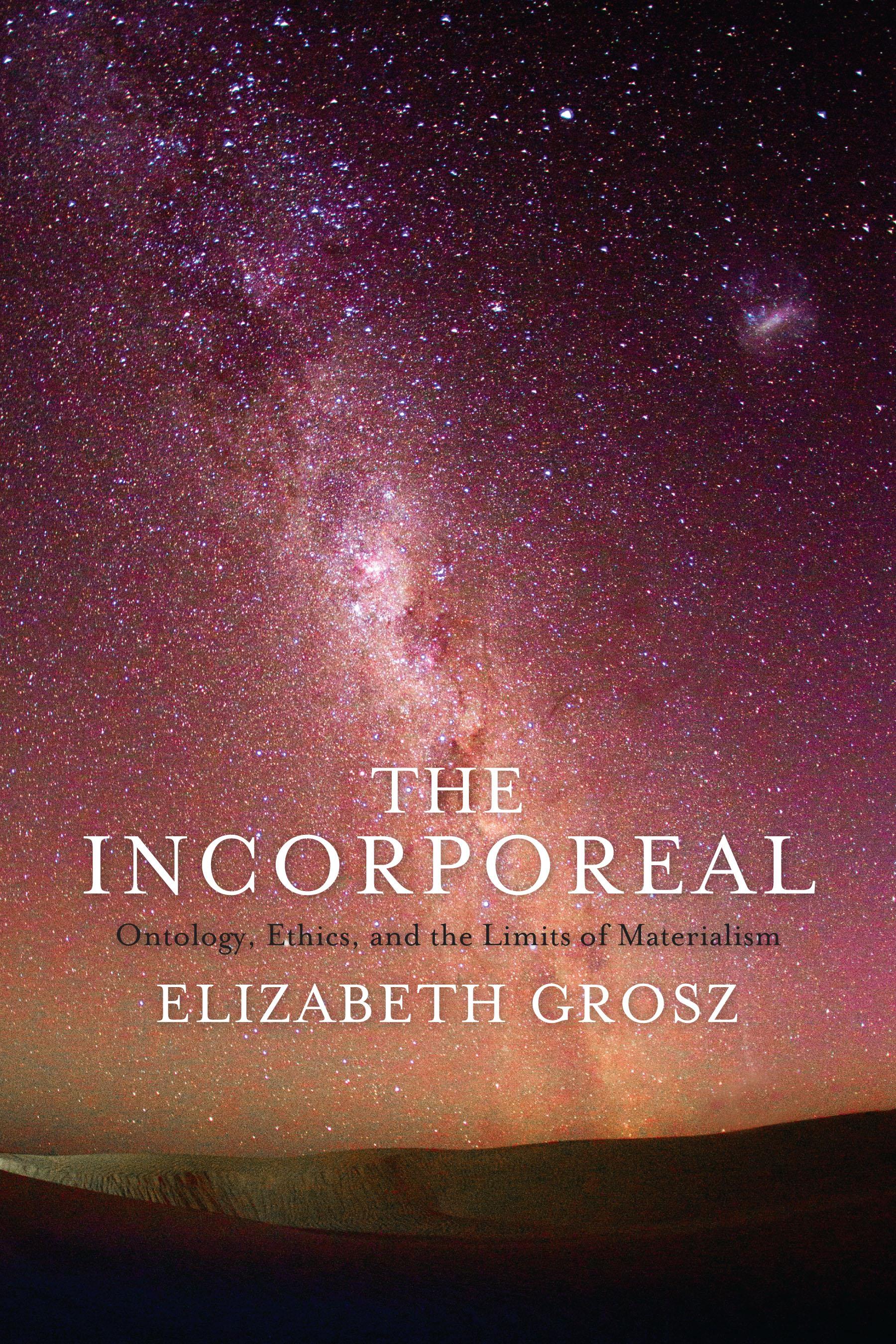
Philosophy has inherited a powerful impulse to embrace either dualism or a reductive monism—either a radical separation of mind and body or the reduction of mind to body. But from its origins in the writings of the Stoics, the first thoroughgoing materialists, another view has acknowledged that no forms of materialism can be completely self-inclusive—space, time, the void, and sense are the incorporeal conditions of all that is corporeal or material. In The Incorporeal Elizabeth Grosz argues that the ideal is inherent in the material and the material in the ideal, and, by tracing its development over time, she makes the case that this same idea reasserts itself in different intellectual contexts.
Grosz shows that not only are idealism and materialism inextricably linked but that this "belonging together" of the entirety of ideality and the entirety of materiality is not mediated or created by human consciousness. Instead, it is an ontological condition for the development of human consciousness. Grosz draws from Spinoza's material and ideal concept of substance, Nietzsche's amor fati, Deleuze and Guattari's plane of immanence, Simondon's preindividual, and Raymond Ruyer's self-survey or autoaffection to show that the world preexists the evolution of the human and that its material and incorporeal forces are the conditions for all forms of life, human and nonhuman alike. A masterwork by an eminent theoretician, The Incorporeal offers profound new insight into the mind-body problem
Pay easily by card, Klarna, Apple Pay or Google Pay. Not happy? You always have a 14-day money-back guarantee. Read more in our terms. If you have any questions, email us at hello@memmo.org.
Memmo makes studying easier – wherever you are in the world. We bring your course books and smart study tools together in one place: summaries, quizzes, podcasts and flashcards. Plus Ted, your study buddy who answers anything you wonder. Over 50,000 students already study here – built to help you learn faster and stress less.