
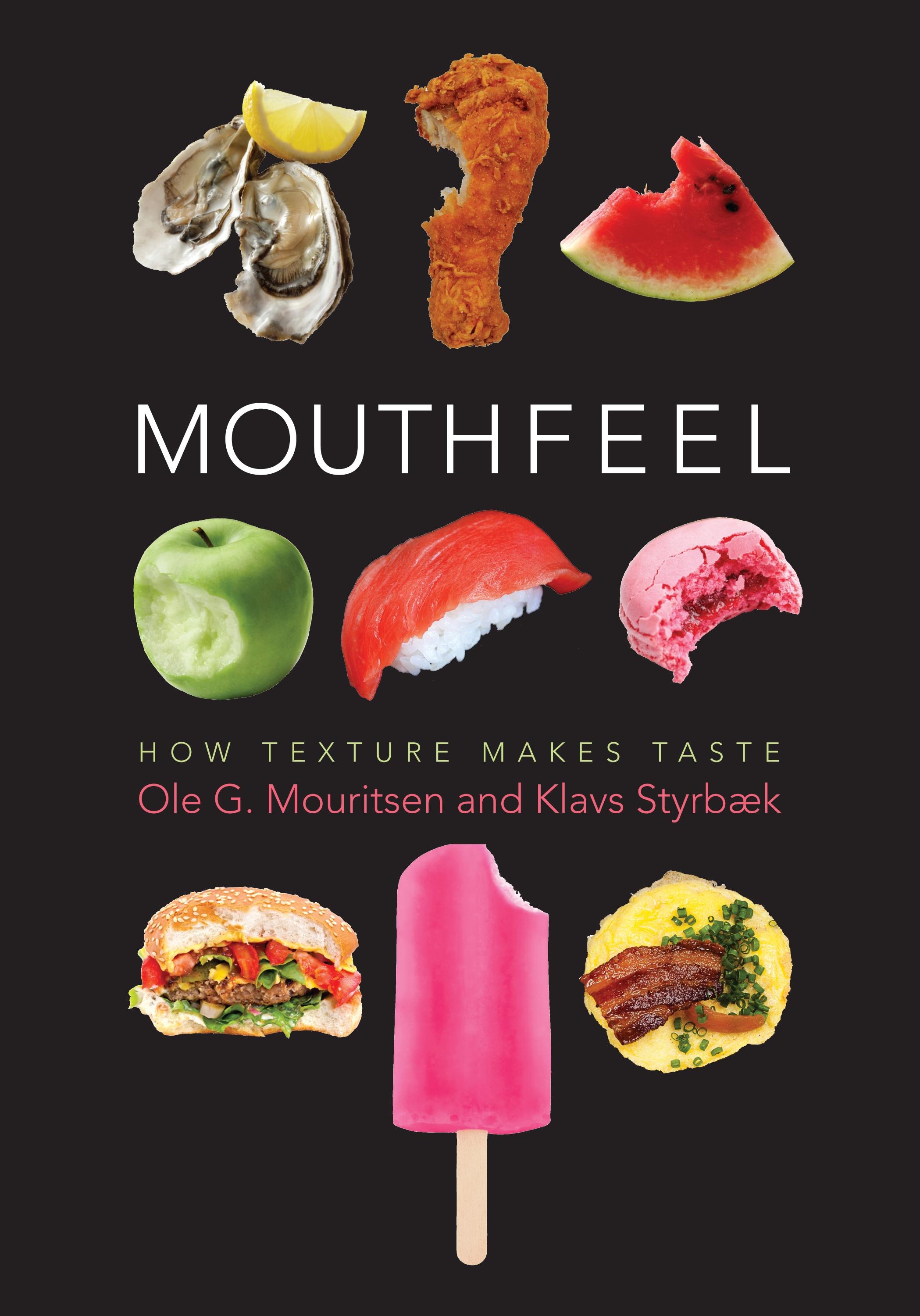
Why is chocolate melting on the tongue such a decadent sensation? Why do we love crunching on bacon? Why is fizz-less soda such a disappointment to drink, and why is flat beer so unappealing to the palate? Our sense of taste produces physical and emotional reactions that cannot be explained by chemical components alone. Eating triggers our imagination, draws on our powers of recall, and activates our critical judgment, creating a unique impression in our mouths and our minds. How exactly does this alchemy work, and what are the larger cultural and environmental implications?
Collaborating in the laboratory and the kitchen, Ole G. Mouritsen and Klavs Styrbæk investigate the multiple ways in which food texture influences taste. Combining scientific analysis with creative intuition and a sophisticated knowledge of food preparation, they write a one-of-a-kind book for food lovers and food science scholars. By mapping the mechanics of mouthfeel, Mouritsen and Styrbæk advance a greater awareness of its link to our culinary preferences. Gaining insight into the textural properties of raw vegetables, puffed rice, bouillon, or ice cream can help us make healthier and more sustainable food choices. Through mouthfeel, we can recreate the physical feelings of foods we love with other ingredients or learn to latch onto smarter food options. Mastering texture also leads to more adventurous gastronomic experiments in the kitchen, allowing us to reach even greater heights of taste sensation.
Pay easily by card, Klarna, Apple Pay or Google Pay. Not happy? You always have a 14-day money-back guarantee. Read more in our terms. If you have any questions, email us at hello@memmo.org.
Memmo makes studying easier – wherever you are in the world. We bring your course books and smart study tools together in one place: summaries, quizzes, podcasts and flashcards. Plus Ted, your study buddy who answers anything you wonder. Over 50,000 students already study here – built to help you learn faster and stress less.