
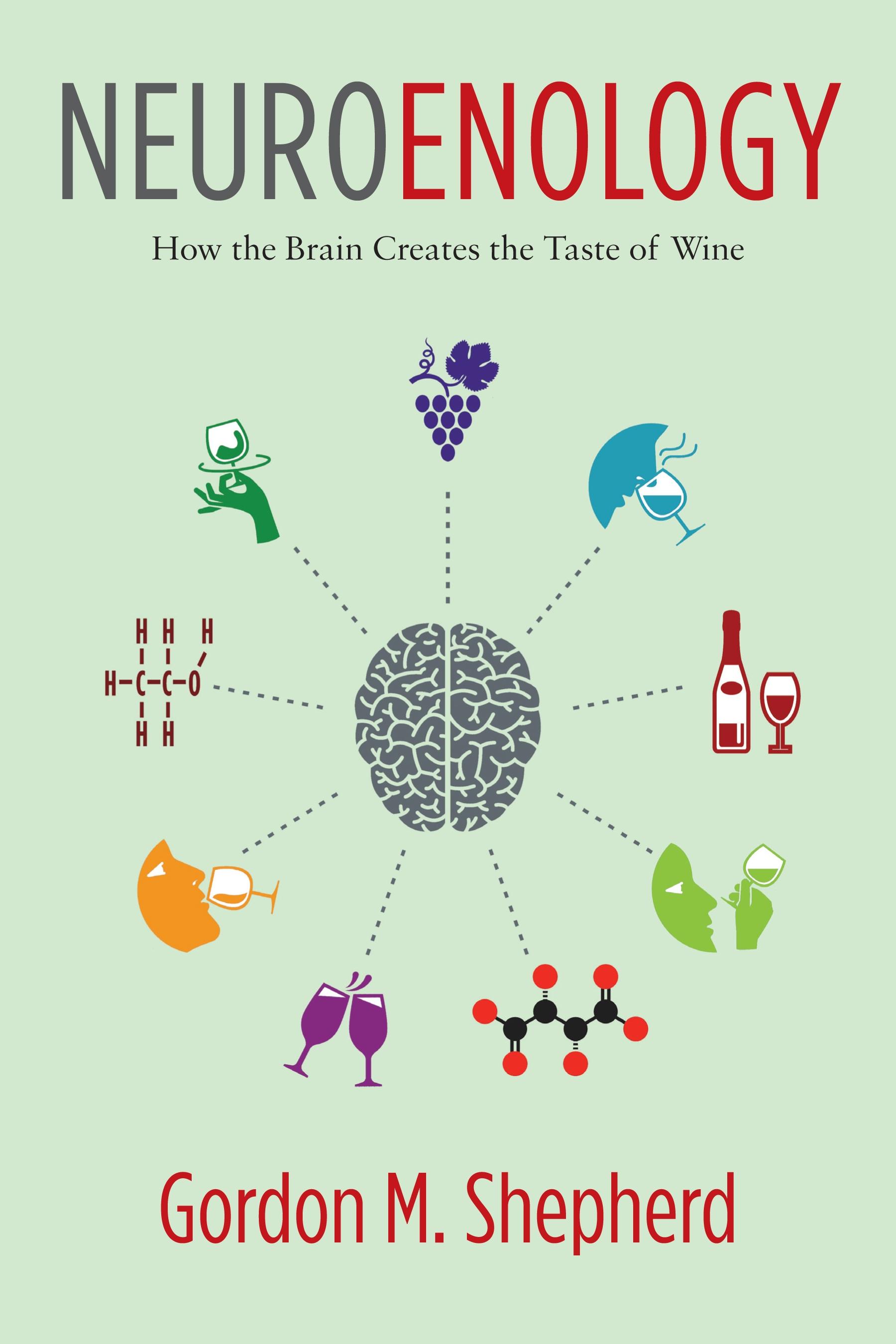
In his new book, Gordon M. Shepherd expands on the startling discovery that the brain creates the taste of wine. This approach to understanding wine's sensory experience draws on findings in neuroscience, biomechanics, human physiology, and traditional enology. Shepherd shows, just as he did in Neurogastronomy: How the Brain Creates Flavor and Why It Matters, that creating the taste of wine engages more of the brain than does any other human behavior. He clearly illustrates the scientific underpinnings of this process, along the way enhancing our enjoyment of wine.
Neuroenology is the first book on wine tasting by a neuroscientist. It begins with the movements of wine through the mouth and then consults recent research to explain the function of retronasal smell and its extraordinary power in creating wine taste. Shepherd comprehensively explains how the specific sensory pathways in the cerebral cortex create the memory of wine and how language is used to identify and imprint wine characteristics. Intended for a broad audience of readers—from amateur wine drinkers to sommeliers, from casual foodies to seasoned chefs—Neuroenology shows how the emotion of pleasure is the final judge of the wine experience. It includes practical tips for a scientifically informed wine tasting and closes with a delightful account of Shepherd's experience tasting classic Bordeaux vintages with French winemaker Jean-Claude Berrouet of the Chateau Petrus and Dominus Estate.
Pay easily by card, Klarna, Apple Pay or Google Pay. Not happy? You always have a 14-day money-back guarantee. Read more in our terms. If you have any questions, email us at hello@memmo.org.
Memmo makes studying easier – wherever you are in the world. We bring your course books and smart study tools together in one place: summaries, quizzes, podcasts and flashcards. Plus Ted, your study buddy who answers anything you wonder. Over 50,000 students already study here – built to help you learn faster and stress less.