
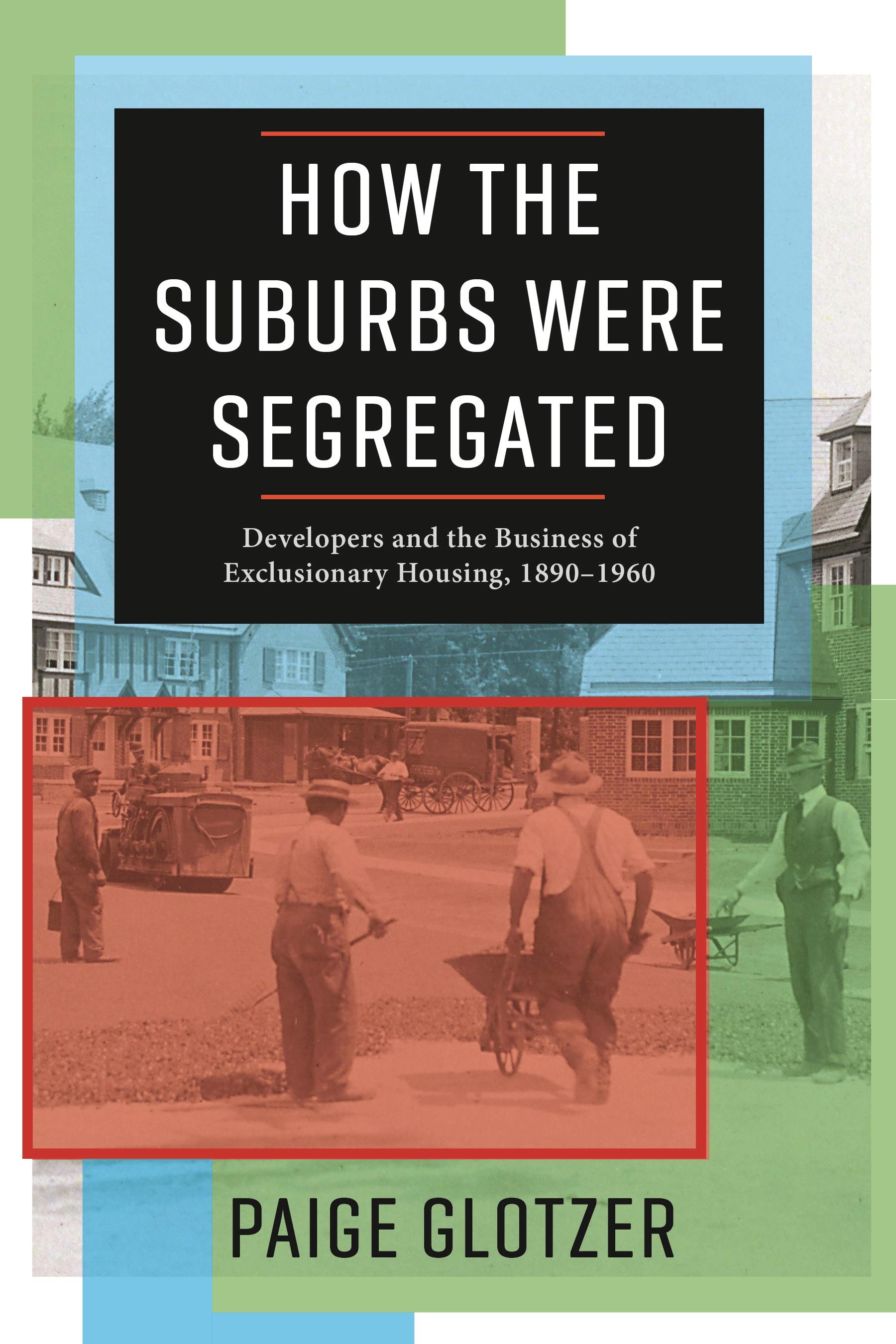
The story of the rise of the segregated suburb often begins during the New Deal and the Second World War, when sweeping federal policies hollowed out cities, pushed rapid suburbanization, and created a white homeowner class intent on defending racial barriers. Paige Glotzer offers a new understanding of the deeper roots of suburban segregation. The mid-twentieth-century policies that favored exclusionary housing were not simply the inevitable result of popular and elite prejudice, she reveals, but the culmination of a long-term effort by developers to use racism to structure suburban real estate markets.
Glotzer charts how the real estate industry shaped residential segregation, from the emergence of large-scale suburban development in the 1890s to the postwar housing boom. Focusing on the Roland Park Company as it developed Baltimore’s wealthiest, whitest neighborhoods, she follows the money that financed early segregated suburbs, including the role of transnational capital, mostly British, in the U.S. housing market. She also scrutinizes the business practices of real estate developers, from vetting homebuyers to negotiating with municipal governments for services. She examines how they sold the idea of the suburbs to consumers and analyzes their influence in shaping local and federal housing policies. Glotzer then details how Baltimore’s experience informed the creation of a national real estate industry with professional organizations that lobbied for planned segregated suburbs. How the Suburbs Were Segregated sheds new light on the power of real estate developers in shaping the origins and mechanisms of a housing market in which racial exclusion and profit are still inextricably intertwined.
Pay easily by card, Klarna, Apple Pay or Google Pay. Not happy? You always have a 14-day money-back guarantee. Read more in our terms. If you have any questions, email us at hello@memmo.org.
Memmo makes studying easier – wherever you are in the world. We bring your course books and smart study tools together in one place: summaries, quizzes, podcasts and flashcards. Plus Ted, your study buddy who answers anything you wonder. Over 50,000 students already study here – built to help you learn faster and stress less.