
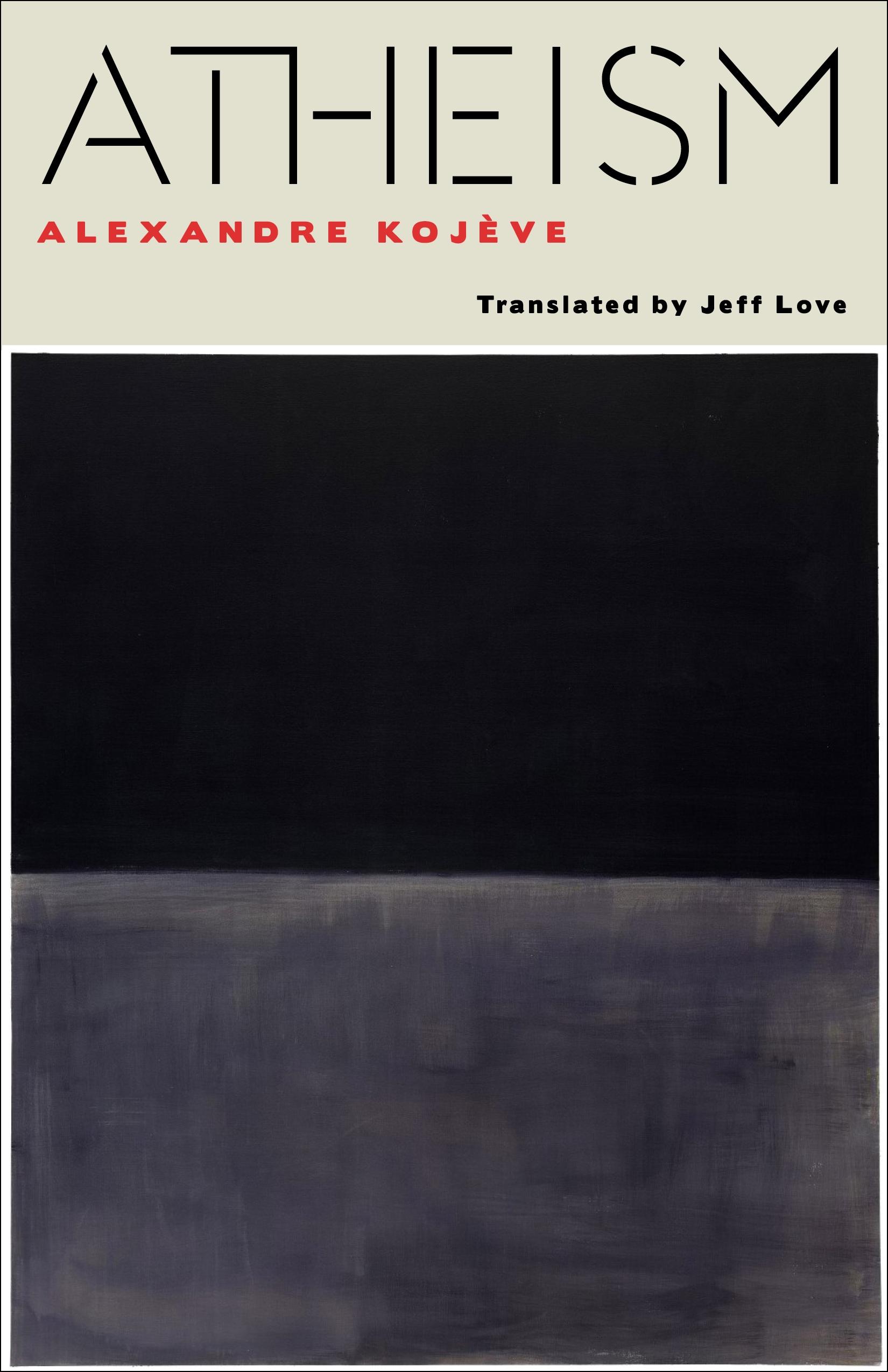
One of the twentieth century’s most brilliant and unconventional thinkers, Alexandre Kojève was a Russian émigré to France whose lectures on Hegel in the 1930s galvanized a generation of French intellectuals. Although Kojève wrote a great deal, he published very little in his lifetime, and so the ongoing rediscovery of his work continues to present new challenges to philosophy and political theory. Written in 1931 but left unfinished, Atheism is an erudite and open-ended exploration of profound questions of estrangement, death, suicide, and the infinite that demonstrates the range and the provocative power of Kojève’s thought.
Ranging across Heidegger, Buddhism, Christianity, German idealism, Russian literature, and mathematics, Kojève advances a novel argument about freedom and authority. He investigates the possibility that there is not any vantage point or source of authority—including philosophy, science, or God—that is outside or beyond politics and the world as we experience it. The question becomes whether atheism—or theism—is even a meaningful position since both affirmation and denial of God’s existence imply a knowledge that seems clearly outside our capacities. Masterfully translated by Jeff Love, this book offers a striking new perspective on Kojève’s work and its implications for theism, atheism, politics, and freedom.
Pay easily by card, Klarna, Apple Pay or Google Pay. Not happy? You always have a 14-day money-back guarantee. Read more in our terms. If you have any questions, email us at hello@memmo.org.
Memmo makes studying easier – wherever you are in the world. We bring your course books and smart study tools together in one place: summaries, quizzes, podcasts and flashcards. Plus Ted, your study buddy who answers anything you wonder. Over 50,000 students already study here – built to help you learn faster and stress less.