
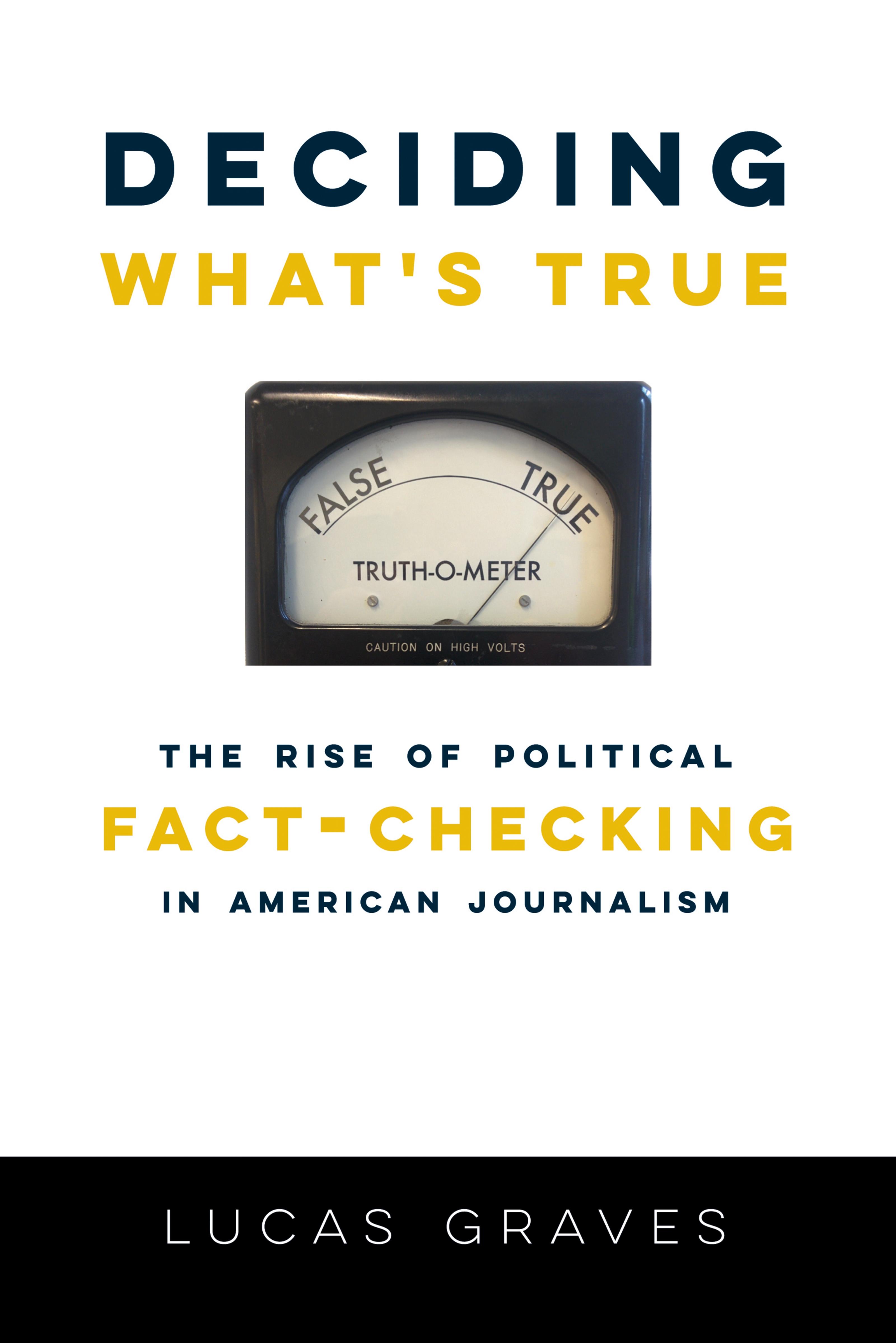
Over the past decade, American outlets such as PolitiFact, FactCheck.org, and the Washington Post's Fact Checker have shaken up the political world by holding public figures accountable for what they say. Cited across social and national news media, these verdicts can rattle a political campaign and send the White House press corps scrambling. Yet fact-checking is a fraught kind of journalism, one that challenges reporters' traditional roles as objective observers and places them at the center of white-hot, real-time debates. As these journalists are the first to admit, in a hyperpartisan world, facts can easily slip into fiction, and decisions about which claims to investigate and how to judge them are frequently denounced as unfair play.
Deciding What's True draws on Lucas Graves's unique access to the members of the newsrooms leading this movement. Graves vividly recounts the routines of journalists at three of these hyperconnected, technologically innovative organizations and what informs their approach to a story. Graves also plots a compelling, personality-driven history of the fact-checking movement and its recent evolution from the blogosphere, reflecting on its revolutionary remaking of journalistic ethics and practice. His book demonstrates the ways these rising organizations depend on professional networks and media partnerships yet have also made inroads with the academic and philanthropic worlds. These networks have become a vital source of influence as fact-checking spreads around the world.
Pay easily by card, Klarna, Apple Pay or Google Pay. Not happy? You always have a 14-day money-back guarantee. Read more in our terms. If you have any questions, email us at hello@memmo.org.
Memmo makes studying easier – wherever you are in the world. We bring your course books and smart study tools together in one place: summaries, quizzes, podcasts and flashcards. Plus Ted, your study buddy who answers anything you wonder. Over 75,000 students already study here – built to help you learn faster and stress less.