
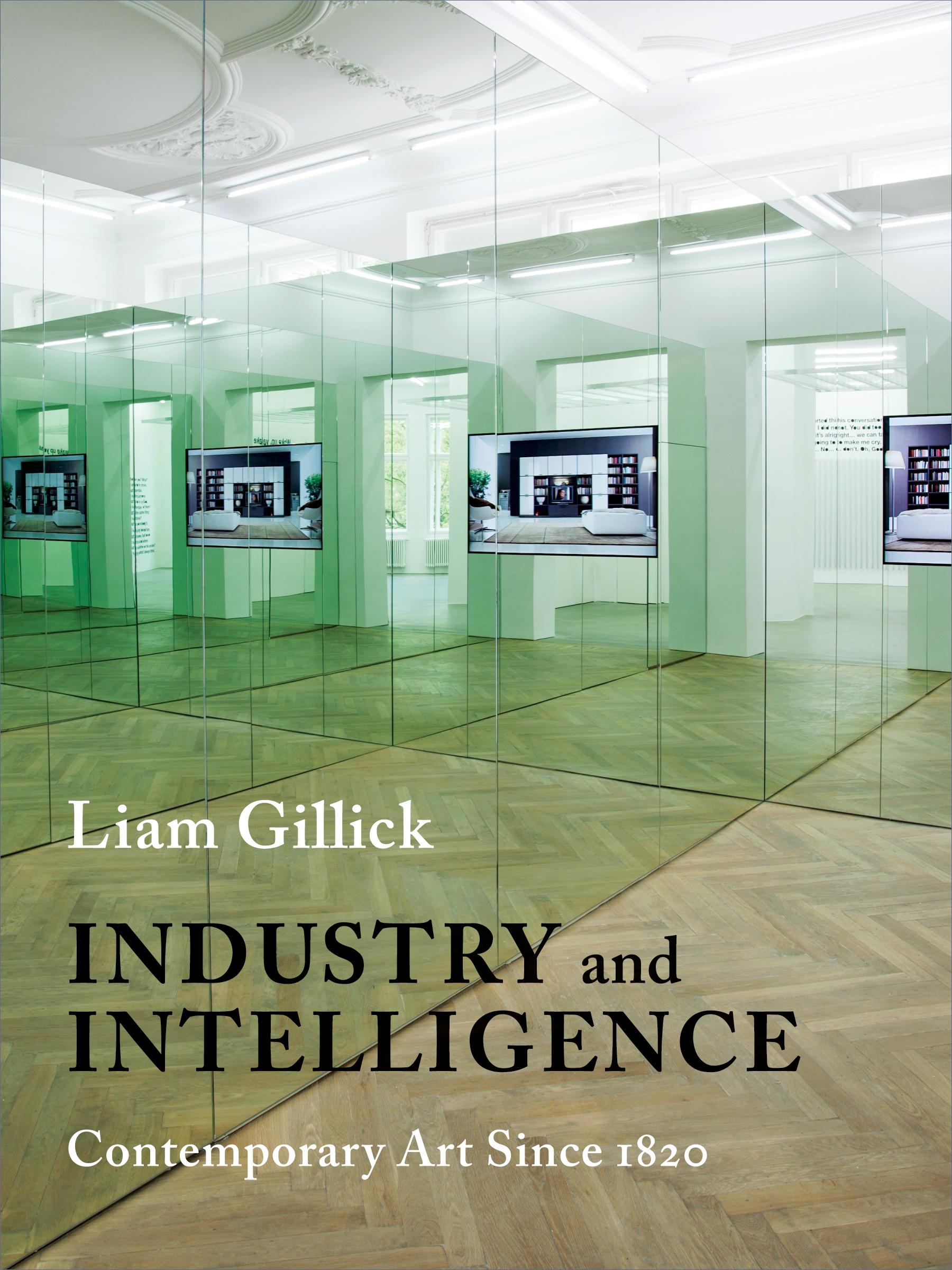
The history of modern art is often told through aesthetic breakthroughs that sync well with cultural and political change. From Courbet to Picasso, from Malevich to Warhol, it is accepted that art tracks the disruptions of industrialization, fascism, revolution, and war. Yet filtering the history of modern art only through catastrophic events cannot account for the subtle developments that lead to the profound confusion at the heart of contemporary art.
In Industry and Intelligence, the artist Liam Gillick writes a nuanced genealogy to help us appreciate contemporary art's engagement with history even when it seems apathetic or blind to current events. Taking a broad view of artistic creation from 1820 to today, Gillick follows the response of artists to incremental developments in science, politics, and technology. The great innovations and dislocations of the nineteenth and twentieth centuries have their place in this timeline, but their traces are alternately amplified and diminished as Gillick moves through artistic reactions to liberalism, mass manufacturing, psychology, nuclear physics, automobiles, and a host of other advances. He intimately ties the origins of contemporary art to the social and technological adjustments of modern life, which artists struggled to incorporate truthfully into their works.
Pay easily by card, Klarna, Apple Pay or Google Pay. Not happy? You always have a 14-day money-back guarantee. Read more in our terms. If you have any questions, email us at hello@memmo.org.
Memmo makes studying easier – wherever you are in the world. We bring your course books and smart study tools together in one place: summaries, quizzes, podcasts and flashcards. Plus Ted, your study buddy who answers anything you wonder. Over 50,000 students already study here – built to help you learn faster and stress less.