
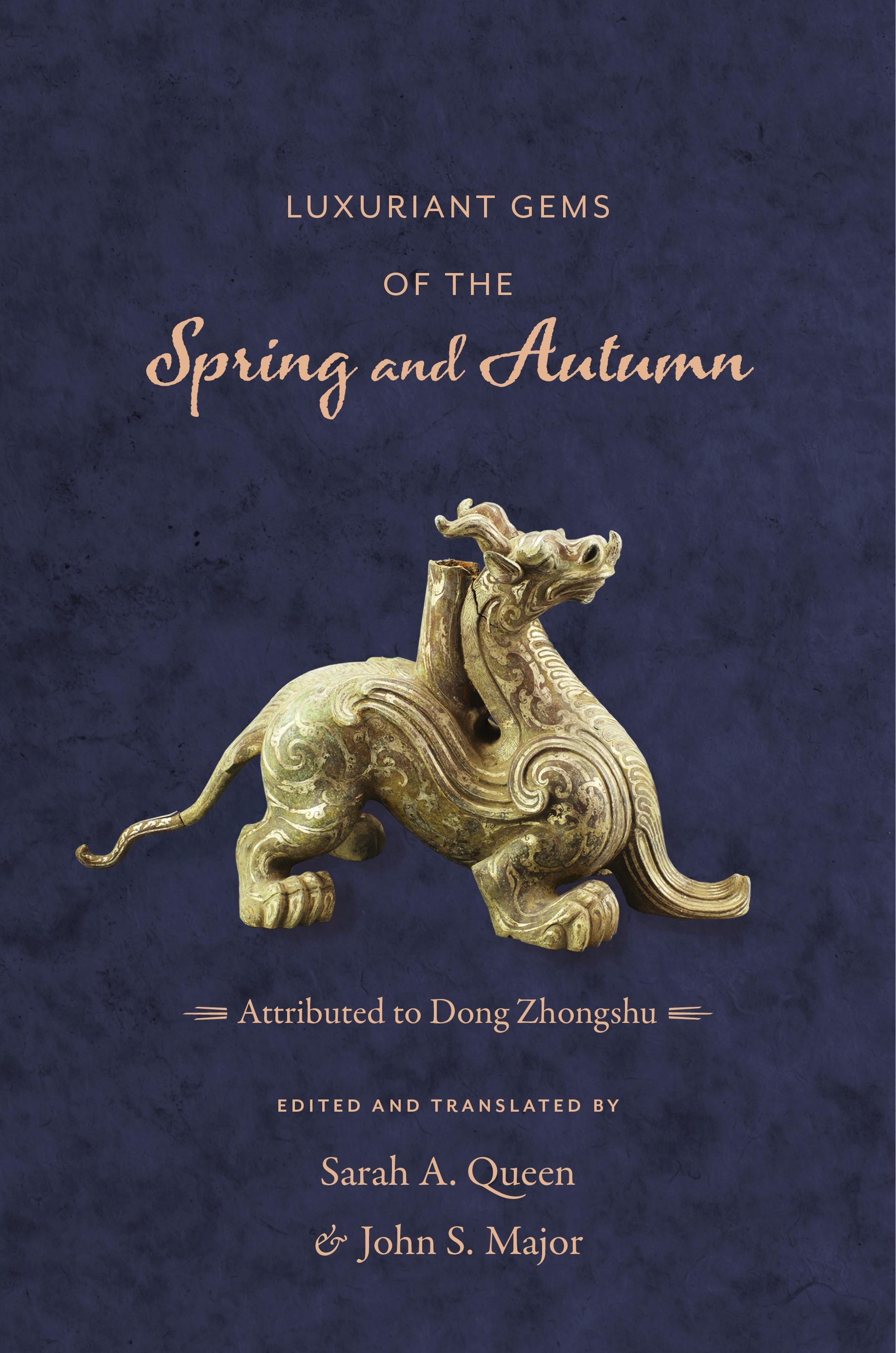
The Spring and Autumn (Chunqiu) is a chronicle kept by the dukes of the state of Lu from 722 to 481 B.C.E. Luxuriant Gems of the "Spring and Autumn" (Chunqiu fanlu) follows the interpretations of the Gongyang Commentary, whose transmitters sought to explicate the special language of the Spring and Autumn. The work is often ascribed to the Han scholar and court official Dong Zhongshu, but, as this study reveals, the text is in fact a compendium of writings by a variety of authors spanning several generations. It depicts a utopian vision of a flourishing humanity that they believed to be Confucius's legacy to the world.
The Gongyang masters thought that Confucius had written the Spring and Autumn, employing subtle phrasing to indicate approval or disapproval of important events and personages. Luxuriant Gems therefore augments Confucian ethical and philosophical teachings with chapters on cosmology, statecraft, and other topics drawn from contemporary non-Confucian traditions. A major resource, this book features the first complete English-language translation of Luxuriant Gems, divided into eight thematic sections with introductions that address dating, authorship, authenticity, and the relationship between the Spring and Autumn and the Gongyang approach. Critically illuminating early Chinese philosophy, religion, literature, and politics, this book conveys the brilliance of intellectual life in the Han dynasty during the formative decades of the Chinese imperial state.
Pay easily by card, Klarna, Apple Pay or Google Pay. Not happy? You always have a 14-day money-back guarantee. Read more in our terms. If you have any questions, email us at hello@memmo.org.
Memmo makes studying easier – wherever you are in the world. We bring your course books and smart study tools together in one place: summaries, quizzes, podcasts and flashcards. Plus Ted, your study buddy who answers anything you wonder. Over 75,000 students already study here – built to help you learn faster and stress less.