
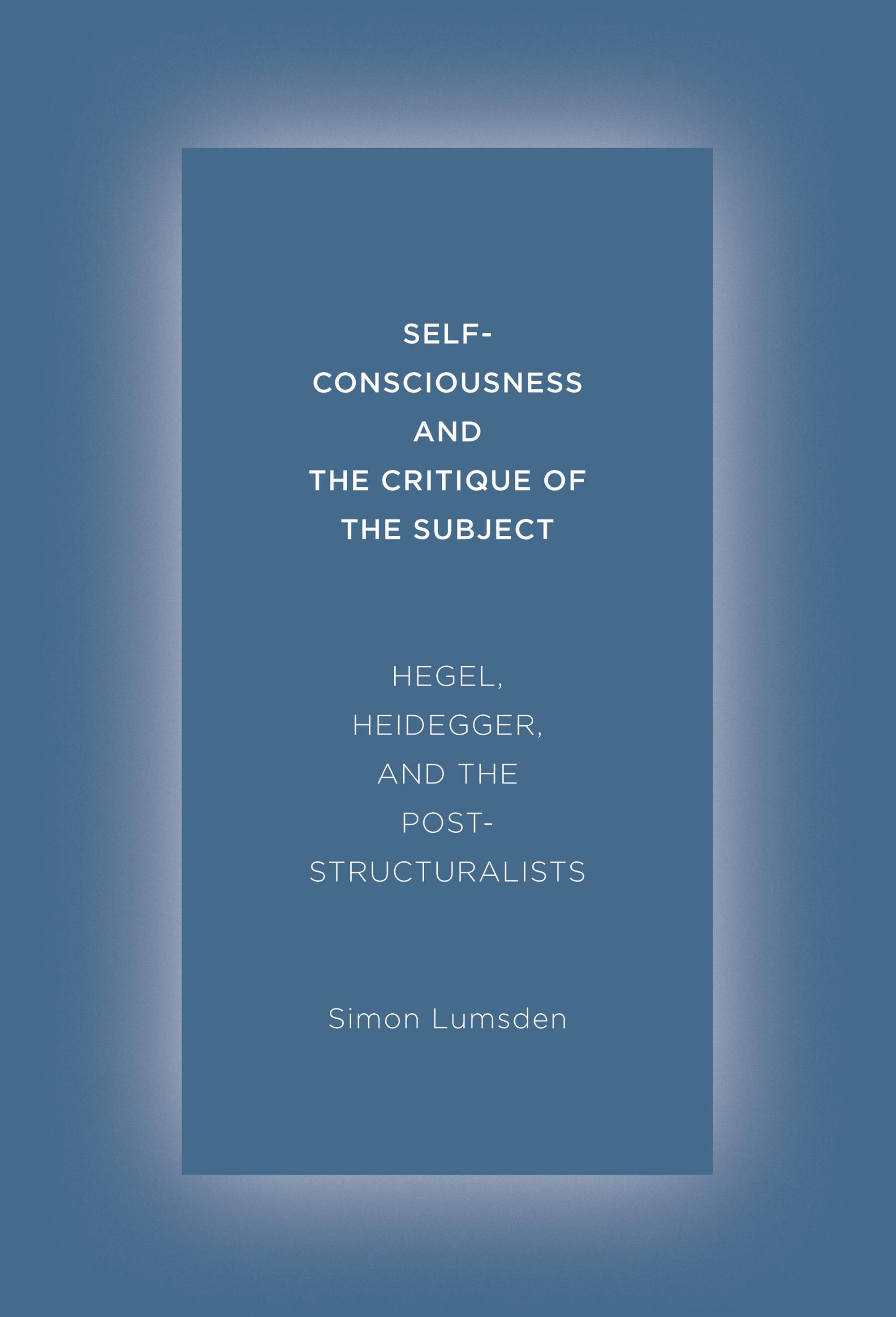
Poststructuralists hold Hegel responsible for giving rise to many of modern philosophy's problematic concepts—the authority of reason, self-consciousness, the knowing subject. Yet, according to Simon Lumsden, this animosity is rooted in a fundamental misunderstanding of Hegel's thought, and resolving this tension can not only heal the rift between poststructuralism and German idealism but also point these traditions in exciting new directions.
Revisiting the philosopher's key texts, Lumsden calls attention to Hegel's reformulation of liberal and Cartesian conceptions of subjectivity, identifying a critical though unrecognized continuity between poststructuralism and German idealism. Poststructuralism forged its identity in opposition to idealist subjectivity; however, Lumsden argues this model is not found in Hegel's texts but in an uncritical acceptance of Heidegger's characterization of Hegel and Fichte as "metaphysicians of subjectivity." Recasting Hegel as both post-Kantian and postmetaphysical, Lumsden sheds new light on this complex philosopher while revealing the surprising affinities between two supposedly antithetical modes of thought.
Pay easily by card, Klarna, Apple Pay or Google Pay. Not happy? You always have a 14-day money-back guarantee. Read more in our terms. If you have any questions, email us at hello@memmo.org.
Memmo makes studying easier – wherever you are in the world. We bring your course books and smart study tools together in one place: summaries, quizzes, podcasts and flashcards. Plus Ted, your study buddy who answers anything you wonder. Over 50,000 students already study here – built to help you learn faster and stress less.