
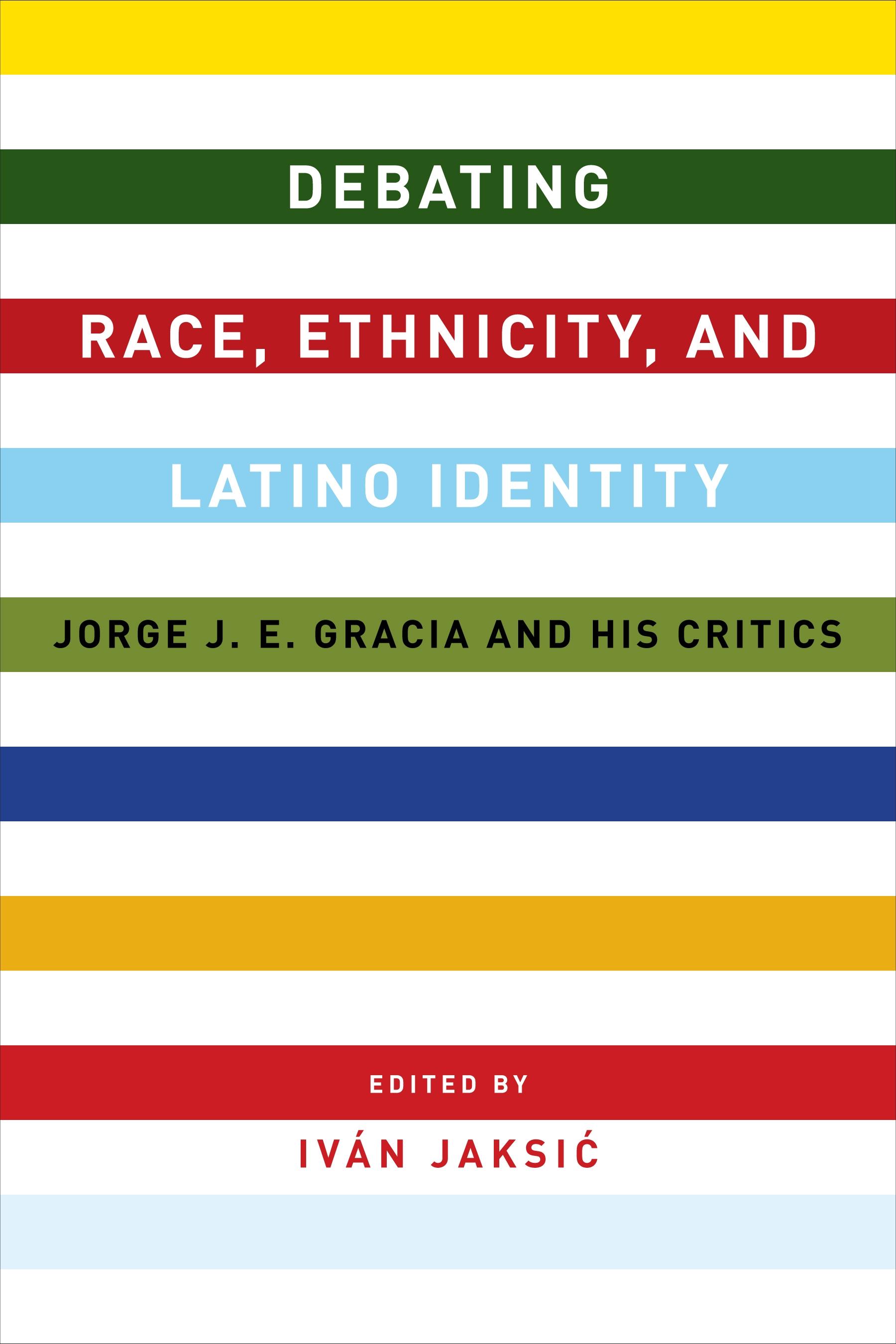
The philosopher Jorge J. E. Gracia engages fifteen prominent scholars on race, ethnicity, nationality, and Hispanic/Latino identity in the United States. Their discussion joins two distinct traditions: the philosophy of race begun by African Americans in the nineteenth century, and the search for an understanding of identity initiated by Latin American philosophers in the sixteenth century. Participants include Linda M. Alcoff, K. Anthony Appiah, Richard J. Bernstein, Lawrence Blum, Robert Gooding-Williams, Eduardo Mendieta, and Lucius T. Outlaw Jr., and their dialogue reflects the analytic, Aristotelian, Continental, literary, Marxist, and pragmatic schools of thought.
These intellectuals start with the philosophy of Hispanics/Latinos in the United States and then move to the philosophy of African Americans and Anglo Americans in the United States and the philosophy of Latin Americans in Latin America. Gracia and his interlocutors debate the nature of race and ethnicity and their relation to nationality, linguistic rights, matters of identity, and Affirmative Action, binding the concepts of race and ethnicity together in ways that open new paths of inquiry. Gracia's Familial-Historical View of ethnic and Hispanic/Latino identity operates at the center of each of these discussions, providing vivid access to the philosopher's provocative arguments while adding unique depth to issues that each of us struggles to understand.
Pay easily by card, Klarna, Apple Pay or Google Pay. Not happy? You always have a 14-day money-back guarantee. Read more in our terms. If you have any questions, email us at hello@memmo.org.
Memmo makes studying easier – wherever you are in the world. We bring your course books and smart study tools together in one place: summaries, quizzes, podcasts and flashcards. Plus Ted, your study buddy who answers anything you wonder. Over 50,000 students already study here – built to help you learn faster and stress less.