
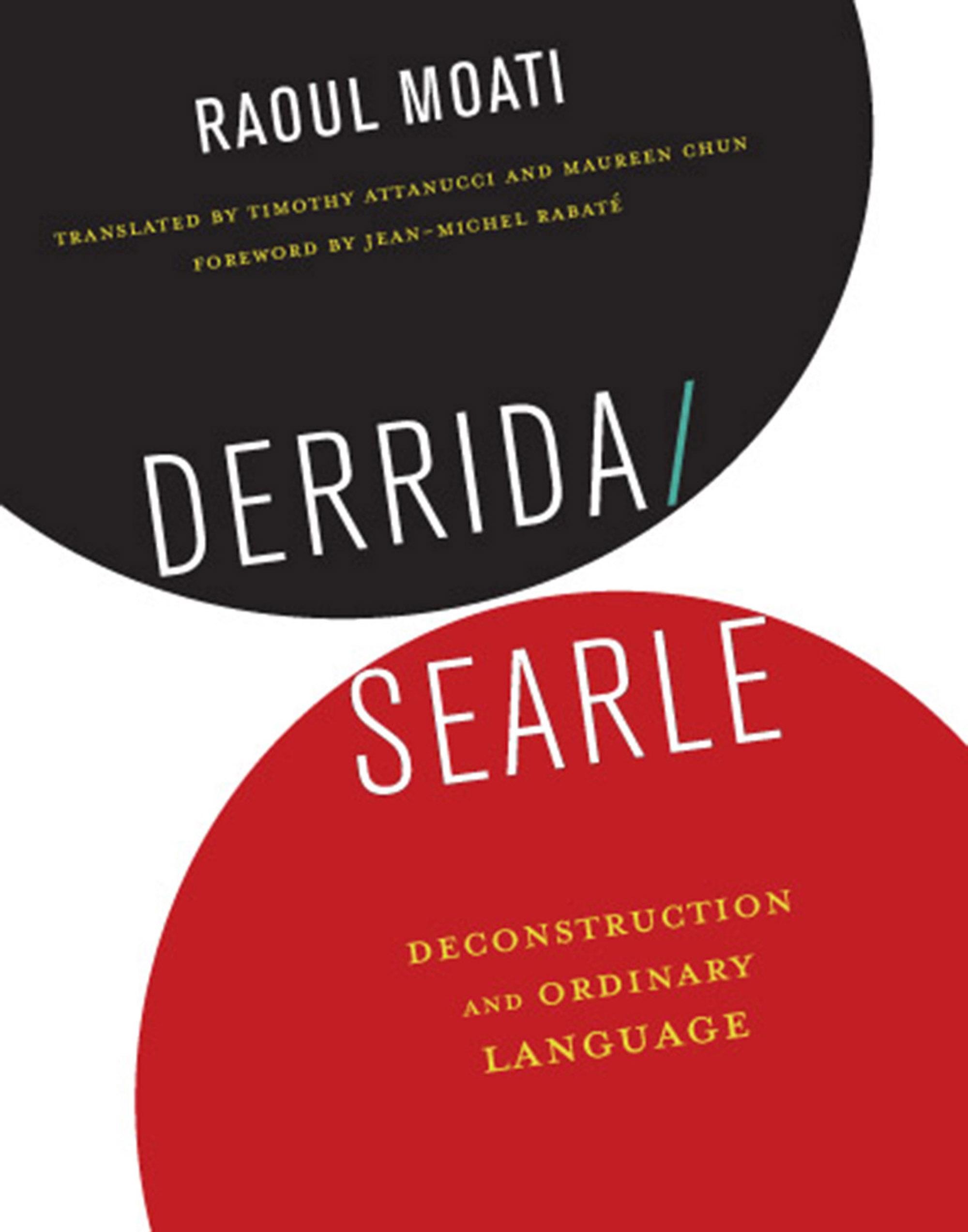
Raoul Moati intervenes in the critical debate that divided two prominent philosophers in the mid-twentieth century. In the 1950s, the British philosopher J. L. Austin advanced a theory of speech acts, or the "performative," that Jacques Derrida and John R. Searle interpreted in fundamentally different ways. Their disagreement centered on the issue of intentionality, which Derrida understood phenomenologically and Searle read pragmatically. The controversy had profound implications for the development of contemporary philosophy, which, Moati argues, can profit greatly by returning to this classic debate.
In this book, Moati systematically replays the historical encounter between Austin, Derrida, and Searle and the disruption that caused the lasting break between Anglo-American language philosophy and continental traditions of phenomenology and its deconstruction. The key issue, Moati argues, is not whether "intentionality," a concept derived from Husserl's phenomenology, can or cannot be linked to Austin's speech-acts as defined in his groundbreaking How to Do Things with Words, but rather the emphasis Searle placed on the performativity and determined pragmatic values of Austin's speech-acts, whereas Derrida insisted on the trace of writing behind every act of speech and the iterability of signs in different contexts.
Pay easily by card, Klarna, Apple Pay or Google Pay. Not happy? You always have a 14-day money-back guarantee. Read more in our terms. If you have any questions, email us at hello@memmo.org.
Memmo makes studying easier – wherever you are in the world. We bring your course books and smart study tools together in one place: summaries, quizzes, podcasts and flashcards. Plus Ted, your study buddy who answers anything you wonder. Over 50,000 students already study here – built to help you learn faster and stress less.