
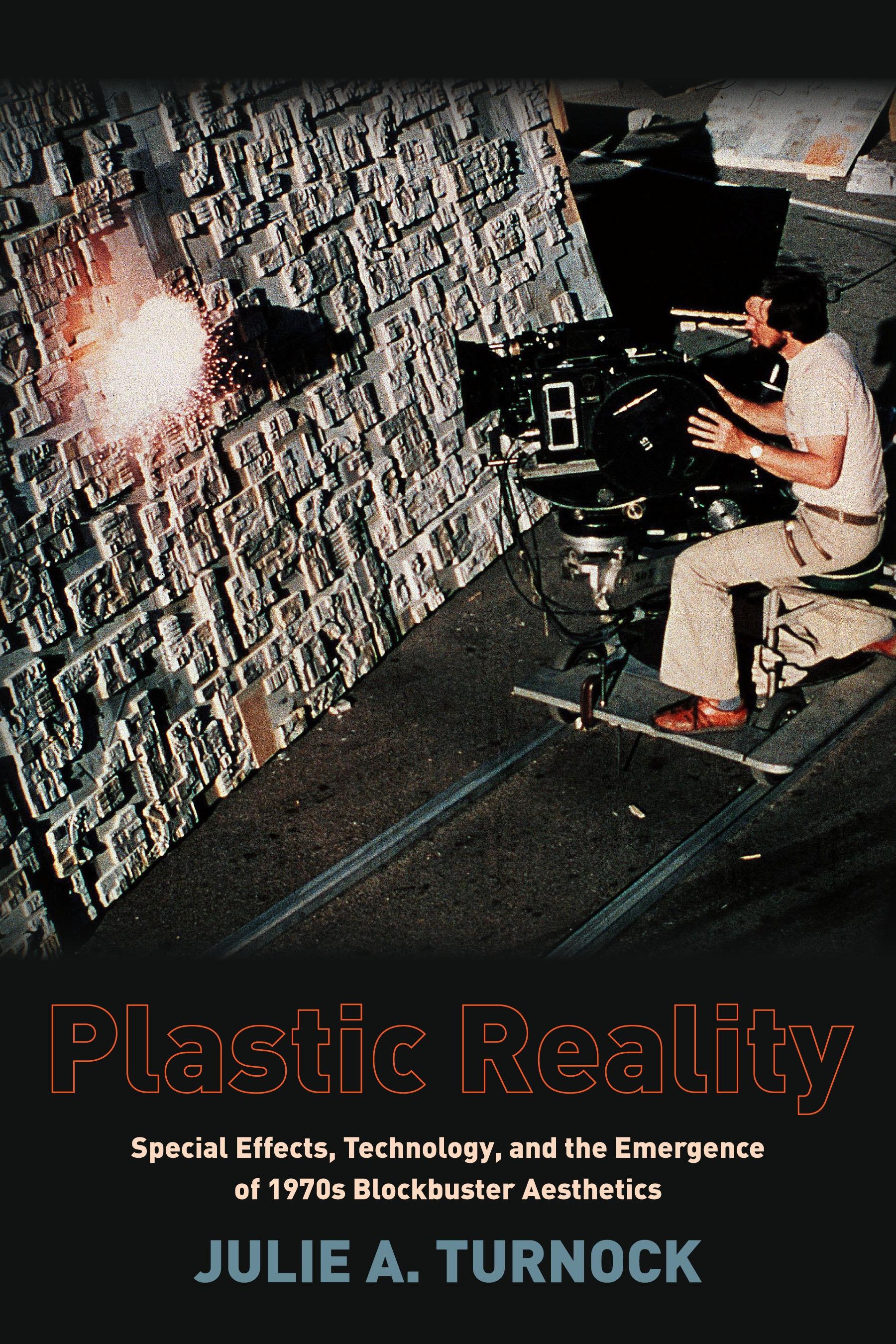
Julie A. Turnock tracks the use and evolution of special effects in 1970s filmmaking, a development as revolutionary to film as the form's transition to sound in the 1920s. Beginning with the classical studio era's early approaches to special effects, she follows the industry's slow build toward the significant advances of the late 1960s and early 1970s, which set the stage for the groundbreaking achievements of 1977.
Turnock analyzes the far-reaching impact of the convincing, absorbing, and seemingly unlimited fantasy environments of that year's iconic films, dedicating a major section of her book to the unparalleled innovations of Star Wars and Close Encounters of the Third Kind. She then traces these films' technological, cultural, and aesthetic influence into the 1980s in the deployment of optical special effects as well as the "not-too-realistic" and hyper-realistic techniques of traditional stop motion and Showscan. She concludes with a critique of special effects practices in the 2000s and their implications for the future of filmmaking and the production and experience of other visual media.
Pay easily by card, Klarna, Apple Pay or Google Pay. Not happy? You always have a 14-day money-back guarantee. Read more in our terms. If you have any questions, email us at hello@memmo.org.
Memmo makes studying easier – wherever you are in the world. We bring your course books and smart study tools together in one place: summaries, quizzes, podcasts and flashcards. Plus Ted, your study buddy who answers anything you wonder. Over 50,000 students already study here – built to help you learn faster and stress less.