
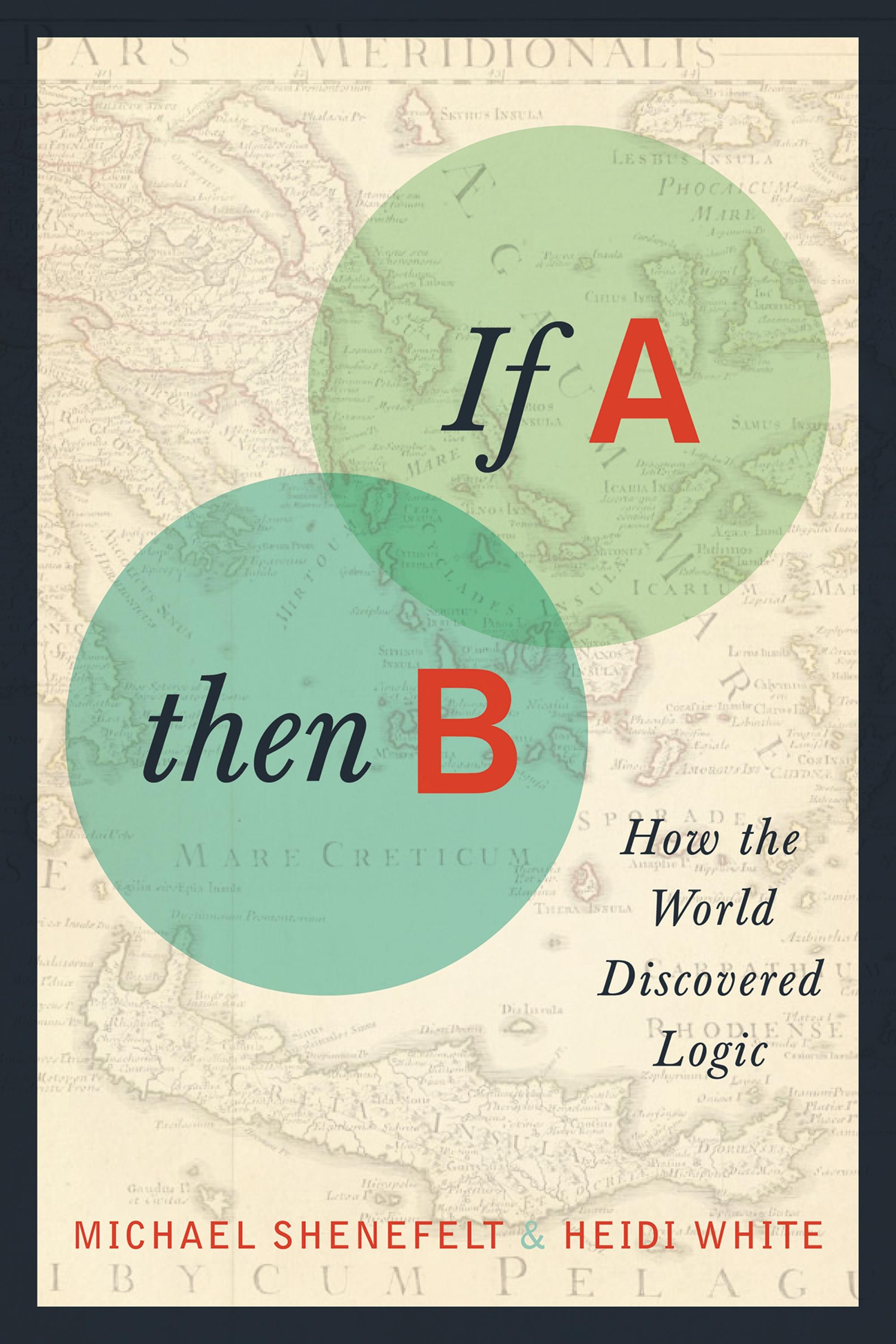
While logical principles seem timeless, placeless, and eternal, their discovery is a story of personal accidents, political tragedies, and broad social change. If A, Then B begins with logic's emergence twenty-three centuries ago and tracks its expansion as a discipline ever since. It explores where our sense of logic comes from and what it really is a sense of. It also explains what drove human beings to start studying logic in the first place.
Logic is more than the work of logicians alone. Its discoveries have survived only because logicians have also been able to find a willing audience, and audiences are a consequence of social forces affecting large numbers of people, quite apart from individual will. This study therefore treats politics, economics, technology, and geography as fundamental factors in generating an audience for logic—grounding the discipline's abstract principles in a compelling material narrative. The authors explain the turbulent times of the enigmatic Aristotle, the ancient Stoic Chrysippus, the medieval theologian Peter Abelard, and the modern thinkers René Descartes, David Hume, Jeremy Bentham, George Boole, Augustus De Morgan, John Stuart Mill, Gottlob Frege, Bertrand Russell, and Alan Turing. Examining a variety of mysteries, such as why so many branches of logic (syllogistic, Stoic, inductive, and symbolic) have arisen only in particular places and periods, If A, Then B is the first book to situate the history of logic within the movements of a larger social world.
If A, Then B is the 2013 Gold Medal winner of Foreword Reviews' IndieFab Book of the Year Award for Philosophy.
Pay easily by card, Klarna, Apple Pay or Google Pay. Not happy? You always have a 14-day money-back guarantee. Read more in our terms. If you have any questions, email us at hello@memmo.org.
Memmo makes studying easier – wherever you are in the world. We bring your course books and smart study tools together in one place: summaries, quizzes, podcasts and flashcards. Plus Ted, your study buddy who answers anything you wonder. Over 50,000 students already study here – built to help you learn faster and stress less.