
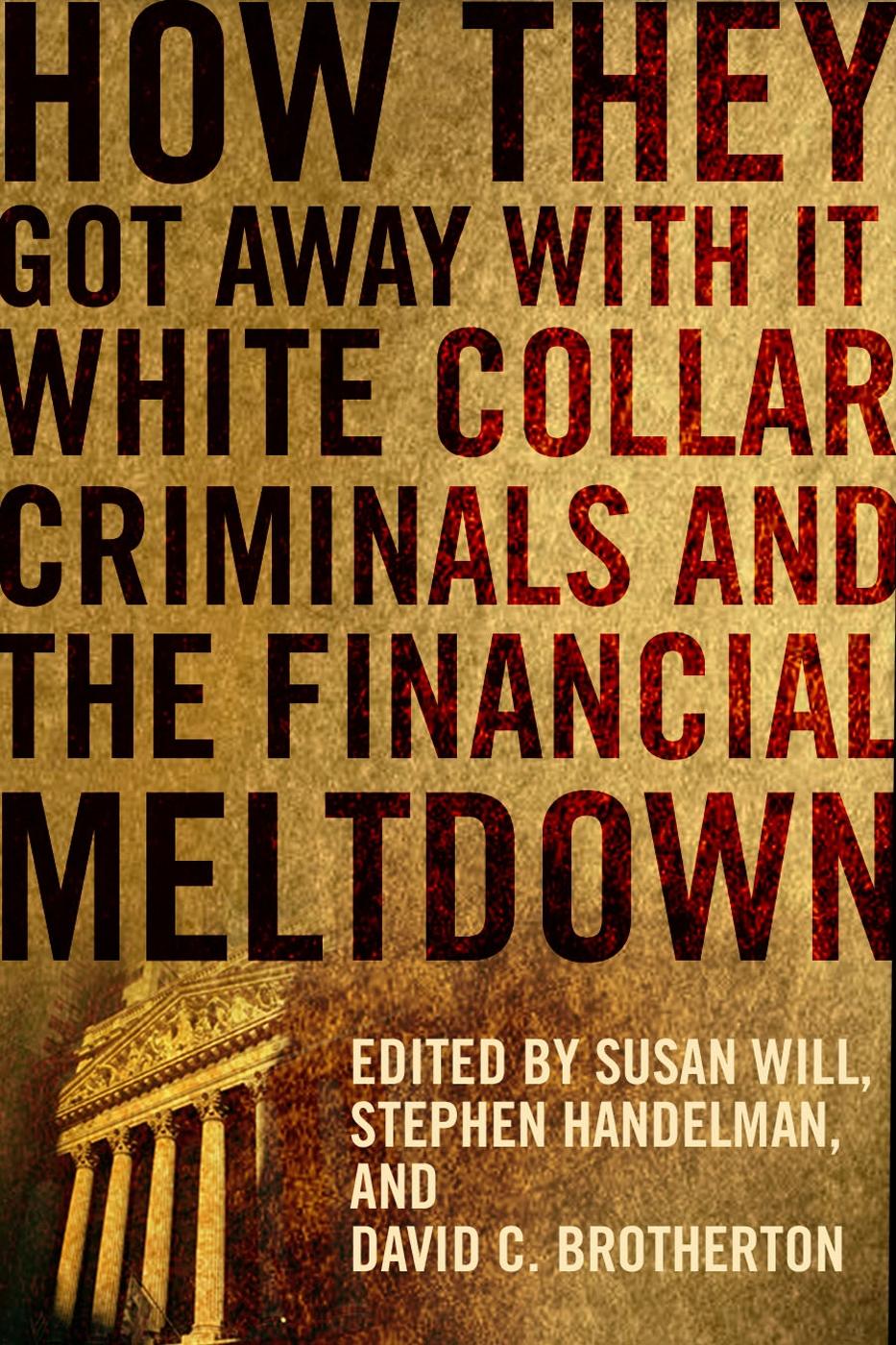
A team of scholars with backgrounds in criminology, sociology, economics, business, government regulation, and law examine the historical, social, and cultural causes of the 2008 economic crisis. Essays probe the workings of the toxic subprime loan industry, the role of external auditors, the consequences of Wall Street deregulation, the manipulations of alpha hedge fund managers, and the "Ponzi-like" culture of contemporary capitalism. They unravel modern finance's complex schematics and highlight their susceptibility to corruption, fraud, and outright racketeering. They examine the involvement of enablers, including accountants, lawyers, credit rating agencies, and regulatory workers, who failed to protect the public interest and enforce existing checks and balances. While the United States was "ground zero" of the meltdown, the financial crimes of other countries intensified the disaster. Internationally-focused essays consider bad practices in China and the European property markets and draw attention to the far-reaching consequences of transnational money laundering and tax evasion schemes. By approaching the 2008 crisis from the perspective of white collar criminology, contributors build a more general understanding of the collapse and crystallize the multiple human and institutional factors preventing capture of even the worst offenders.
Pay easily by card, Klarna, Apple Pay or Google Pay. Not happy? You always have a 14-day money-back guarantee. Read more in our terms. If you have any questions, email us at hello@memmo.org.
Memmo makes studying easier – wherever you are in the world. We bring your course books and smart study tools together in one place: summaries, quizzes, podcasts and flashcards. Plus Ted, your study buddy who answers anything you wonder. Over 50,000 students already study here – built to help you learn faster and stress less.
You might also like
Buy the book0