
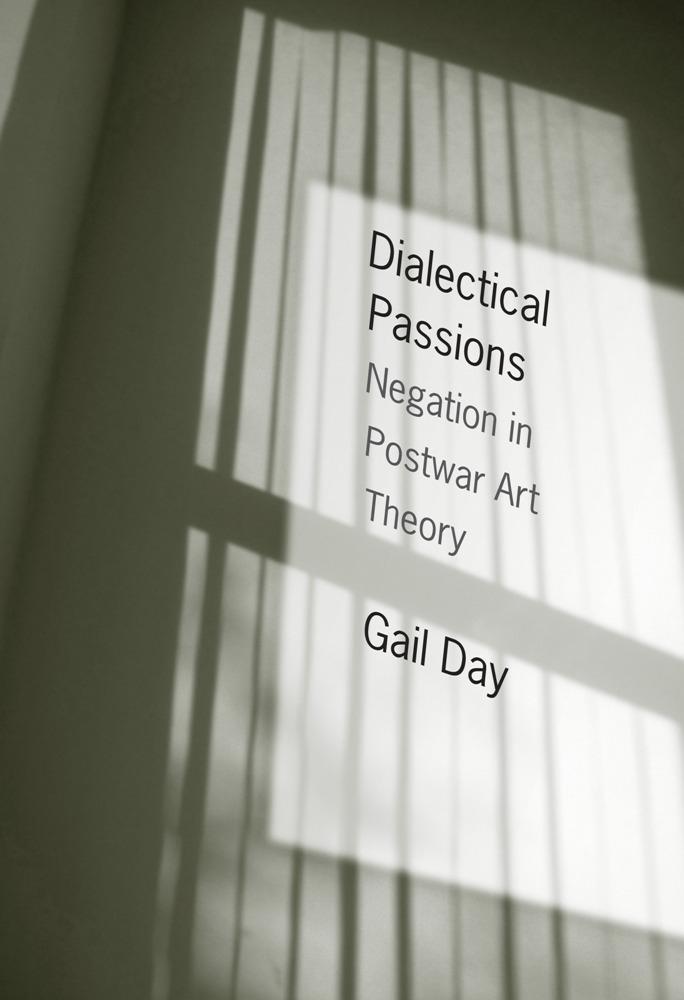
Representing a new generation of theorists reaffirming the radical dimensions of art, Gail Day launches a bold critique of late twentieth-century art theory and its often reductive analysis of cultural objects. Exploring core debates in discourses on art, from the New Left to theories of "critical postmodernism" and beyond, Day counters the belief that recent tendencies in art fail to be adequately critical. She also challenges the political inertia that results from these conclusions.
Day organizes her defense around critics who have engaged substantively with emancipatory thought and social process: T. J. Clark, Manfredo Tafuri, Fredric Jameson, Benjamin H. D. Buchloh, and Hal Foster, among others. She maps the tension between radical dialectics and left nihilism and assesses the interpretation and internalization of negation in art theory.
Chapters confront the claim that exchange and equivalence have subsumed the use value of cultural objectsand with it critical distance and interrogate the proposition of completed nihilism and the metropolis put forward in the politics of Italian operaismo. Day covers the debates on symbol and allegory waged within the context of 1980s art and their relation to the writings of Walter Benjamin and Paul de Man. She also examines common conceptions of mediation, totality, negation, and the politics of anticipation. A necessary unsettling of received wisdoms, Dialectical Passions recasts emancipatory reflection in aesthetics, art, and architecture.
Pay easily by card, Klarna, Apple Pay or Google Pay. Not happy? You always have a 14-day money-back guarantee. Read more in our terms. If you have any questions, email us at hello@memmo.org.
Memmo makes studying easier – wherever you are in the world. We bring your course books and smart study tools together in one place: summaries, quizzes, podcasts and flashcards. Plus Ted, your study buddy who answers anything you wonder. Over 50,000 students already study here – built to help you learn faster and stress less.