
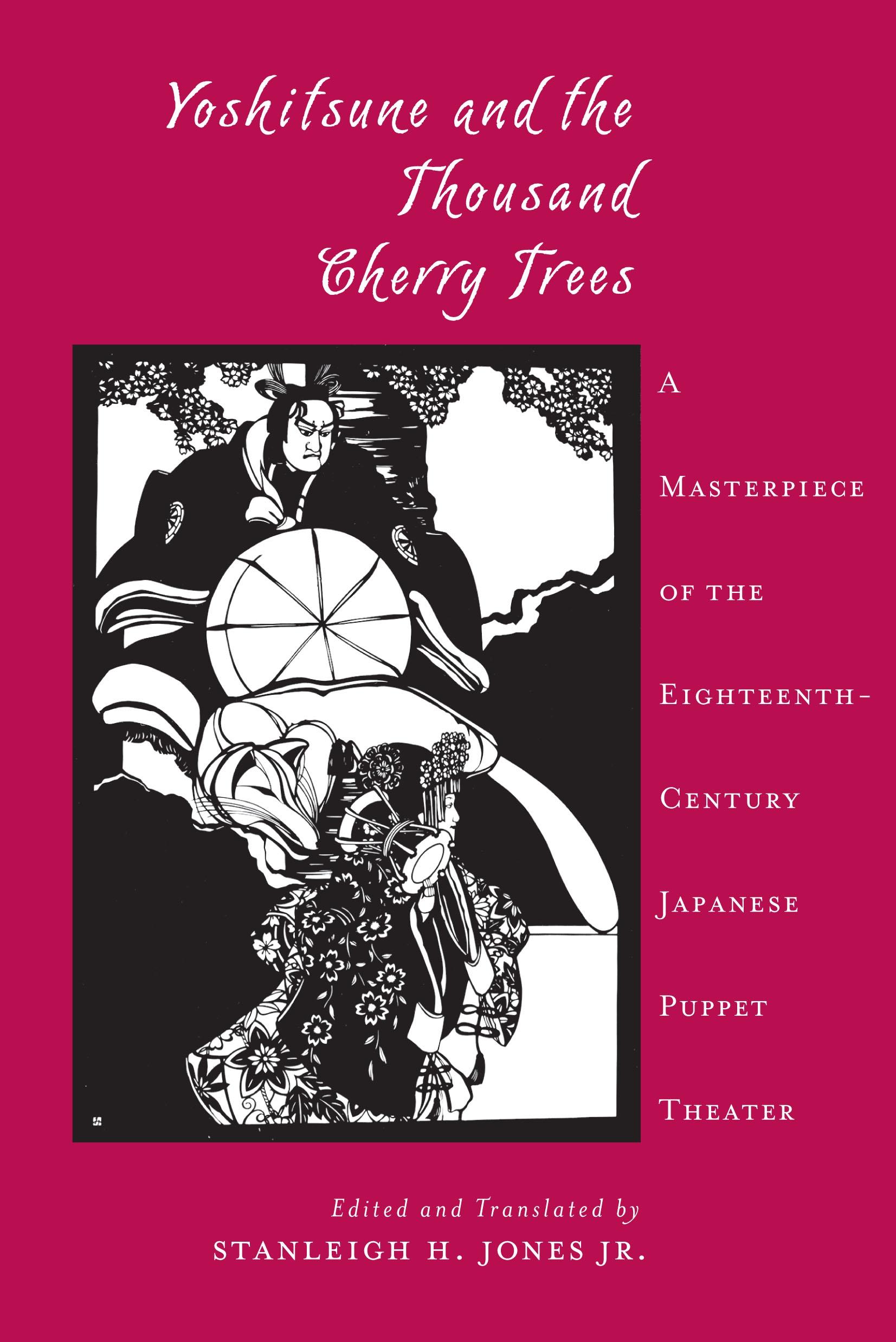
A masterpiece of eighteenth-century Japanese puppet theater, Yoshitsune and the Thousand Cherry Trees is an action-packed play set in the aftermath of the twelfth-century Genji–Heike wars. It follows the adventures of the military commander, Yoshitsune, as he tries to avoid capture by his jealous older brother and loyal henchmen. The drama, written by a trio of playwrights, popularizes Japan's martial past for urban Edo audiences. It was banned only once in its long history, for a period after World War II, because occupying American forces feared its nationalizing power.
In this expert translation by Stanleigh H. Jones Jr., readers learn why Yoshitsune and the Thousand Cherry Trees became one of the most influential plays in the repertoires of both kabuki and bunraku puppet theater. He opens with an introduction detailing the historical background, production history, and major features of the bunraku genre, and then pairs his translation of the play with helpful resources for students and scholars. Emphasizing text and performance, Jones's translation underlines not only the play's skillful appropriation of traditional forms but also its brilliant development of dramatic technique.
Pay easily by card, Klarna, Apple Pay or Google Pay. Not happy? You always have a 14-day money-back guarantee. Read more in our terms. If you have any questions, email us at hello@memmo.org.
Memmo makes studying easier – wherever you are in the world. We bring your course books and smart study tools together in one place: summaries, quizzes, podcasts and flashcards. Plus Ted, your study buddy who answers anything you wonder. Over 75,000 students already study here – built to help you learn faster and stress less.