
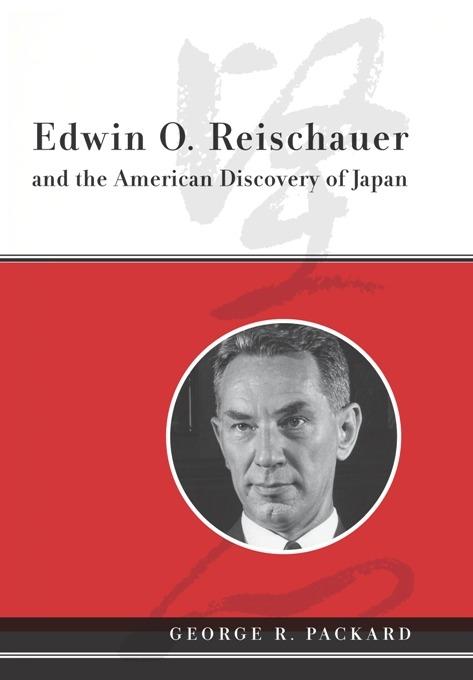
In 1961, President Kennedy named Edwin O. Reischauer the U.S. Ambassador to Japan. Already deeply intimate with the country, Reischauer hoped to establish a more equal partnership with Japan, which had long been maligned in the American imagination. Reischauer pushed his fellow citizens to abandon caricature and stereotype and recognize Japan as a peace-loving democracy. Though his efforts were often condemned for being "too soft," the immensity of his influence (and the truth of his arguments) can be felt today.
Having worked as Reischauer's special assistant in Tokyo, George R. Packard writes the definitiveand firstbiography of this rare, charismatic talent. Reischauer reset the balance between two powerful nations. During World War II, he analyzed intelligence and trained American codebreakers in Japanese. He helped steer Japan toward democracy and then wrote its definitive English-language history.
Reischauer's scholarship supplied the foundations for future East Asian disciplines, and his prescient research foretold America's missteps with China and involvement in Vietnam. At the time of his death in 1990, Reischauer warned the U.S. against adopting an attitude toward Asia that was too narrow and self-centered. India, Pakistan, and North Korea are now nuclear powers, and Reischauer's political brilliance has become more necessary and trenchant than ever.
Pay easily by card, Klarna, Apple Pay or Google Pay. Not happy? You always have a 14-day money-back guarantee. Read more in our terms. If you have any questions, email us at hello@memmo.org.
Memmo makes studying easier – wherever you are in the world. We bring your course books and smart study tools together in one place: summaries, quizzes, podcasts and flashcards. Plus Ted, your study buddy who answers anything you wonder. Over 50,000 students already study here – built to help you learn faster and stress less.