
"This is one of the few books on Montaigne that fuses analytical skill with humane awareness of why Montaigne matters."Harold Bloom, Sterling Professor of Humanities, Yale University
"In this exhilarating and learned book on Montaigne's essays, Lawrence D. Kritzman contemporizes the great writer. Reading him from today's deconstructive America, Kritzman discovers Montaigne always already deep into a dialogue with Jacques Derrida and psychoanalysis. One cannot but admire this fabulous act of translation."Hélène Cixous
"Throughout his career, Lawrence D. Kritzman has demonstrated an intimate knowledge of Montaigne's essays and an engagement with French philosophy and critical theory. The Fabulous Imagination sheds precious new light on one of the founders of modern individualism and on his crucial quest for self-knowledge."Jean Starobinski, professor emeritus of French literature, University of Geneva
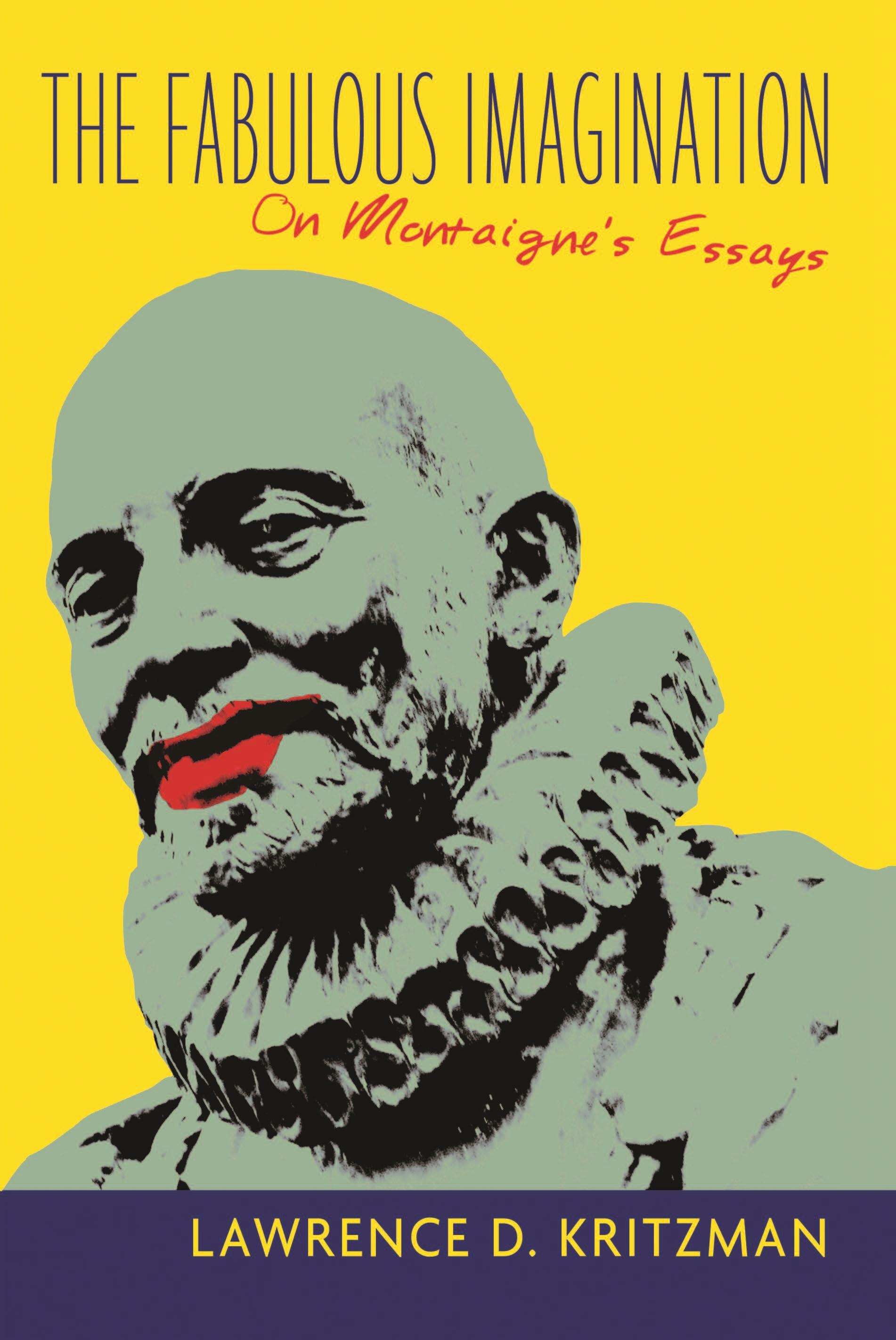
Michel de Montaigne's (1533-1592) Essais was a profound study of human subjectivity. More than three hundred years before the advent of psychoanalysis, Montaigne embarked on a remarkable quest to see and imagine the self from a variety of vantages. Through the questions How shall I live? How can I know myself? he explored the significance of monsters, nightmares, and traumatic memories; the fear of impotence; the fragility of gender; and the act of anticipating and coping with death. In this book, Lawrence D. Kritzman traces Montaigne's development of the Western concept of the self. For Montaigne, imagination lies at the core of an internal universe that influences both the body and the mind. Imagination is essential to human experience. Although Montaigne recognized that the imagination can confuse the individual, "the fabulous imagination" can be curative, enabling the mind's "I" to sustain itself in the face of hardship.
Kritzman begins with Montaigne's study of the fragility of gender and its relationship to the peripatetic movement of a fabulous imagination. He then follows with the essayist's examination of the act of mourning and the power of the imagination to overcome the fear of death. Kritzman concludes with Montaigne's views on philosophy, experience, and the connection between self-portraiture, ethics, and oblivion. His reading demonstrates that the mind's I, as Montaigne envisioned it, sees by imagining that which is not visible, thus offering an alternative to the logical positivism of our age.
Pay easily by card, Klarna, Apple Pay or Google Pay. Not happy? You always have a 14-day money-back guarantee. Read more in our terms. If you have any questions, email us at hello@memmo.org.
Memmo makes studying easier – wherever you are in the world. We bring your course books and smart study tools together in one place: summaries, quizzes, podcasts and flashcards. Plus Ted, your study buddy who answers anything you wonder. Over 50,000 students already study here – built to help you learn faster and stress less.