
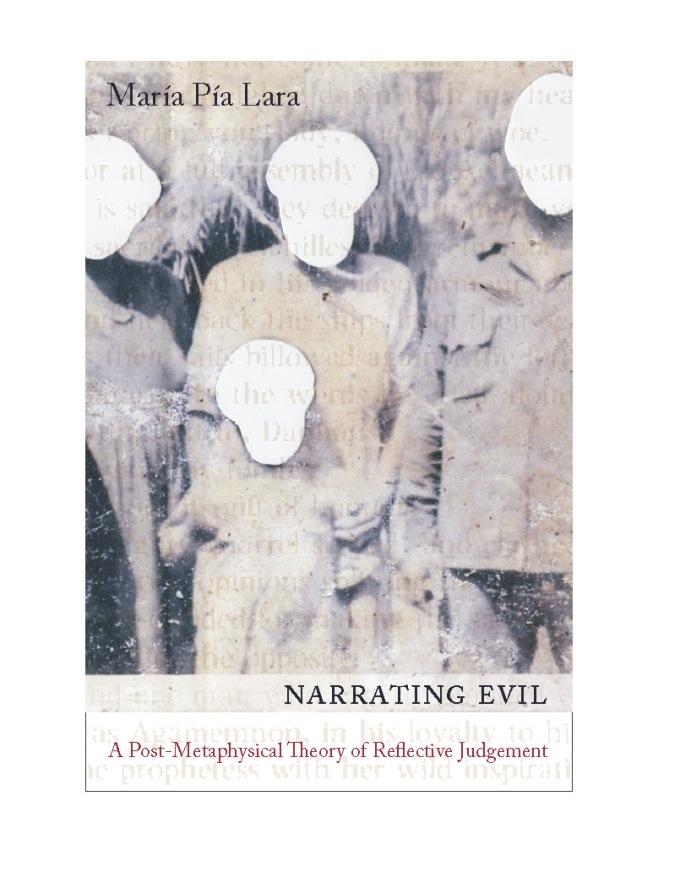
Conceptions of evil have changed dramatically over time, and though humans continue to commit acts of cruelty against one another, today we possess a clearer, more moral way of analyzing them. In Narrating Evil, María Pía Lara explores what has changed in our understanding of evil, why the transformation matters, and how we can learn from this specific historical development.
Drawing on Immanuel Kant's and Hannah Arendt's ideas about reflective judgment, Lara argues that narrative plays a key role in helping societies acknowledge their pasts. Particular stories haunt our consciousness and lead to a kind of examination and dialogue that shape notions of morality. A powerful description of a crime can act as a filter, helping us to draw conclusions about what constitutes a moral wrong, and public debates over these narratives allow us to construct a more accurate picture of historical truth, leading to a better understanding of why such actions are possible.
In building her argument, Lara considers Greek tragedies, Shakespeare's depictions of evil, Joseph Conrad's literary metaphors, and movies that portray human cruelty. Turning to such philosophers and writers as Jürgen Habermas, Walter Benjamin, Primo Levi, Giorgio Agamben, and Ariel Dorfman, Lara defines a reflexive relationship between an event, the narrative of the event, and the public reception of the narrative, and she proves that the stories of perpetrators and sufferers are always intertwined.
The process of disclosure, debate, and the public fashioning of collective judgment are vital methods through which we make sense not only of new forms of cruelty but of past crimes as well. Narrating Evil describes the steps of this process and why they are a crucial part of our attempt to build a different, more just world.
Pay easily by card, Klarna, Apple Pay or Google Pay. Not happy? You always have a 14-day money-back guarantee. Read more in our terms. If you have any questions, email us at hello@memmo.org.
Memmo makes studying easier – wherever you are in the world. We bring your course books and smart study tools together in one place: summaries, quizzes, podcasts and flashcards. Plus Ted, your study buddy who answers anything you wonder. Over 50,000 students already study here – built to help you learn faster and stress less.