
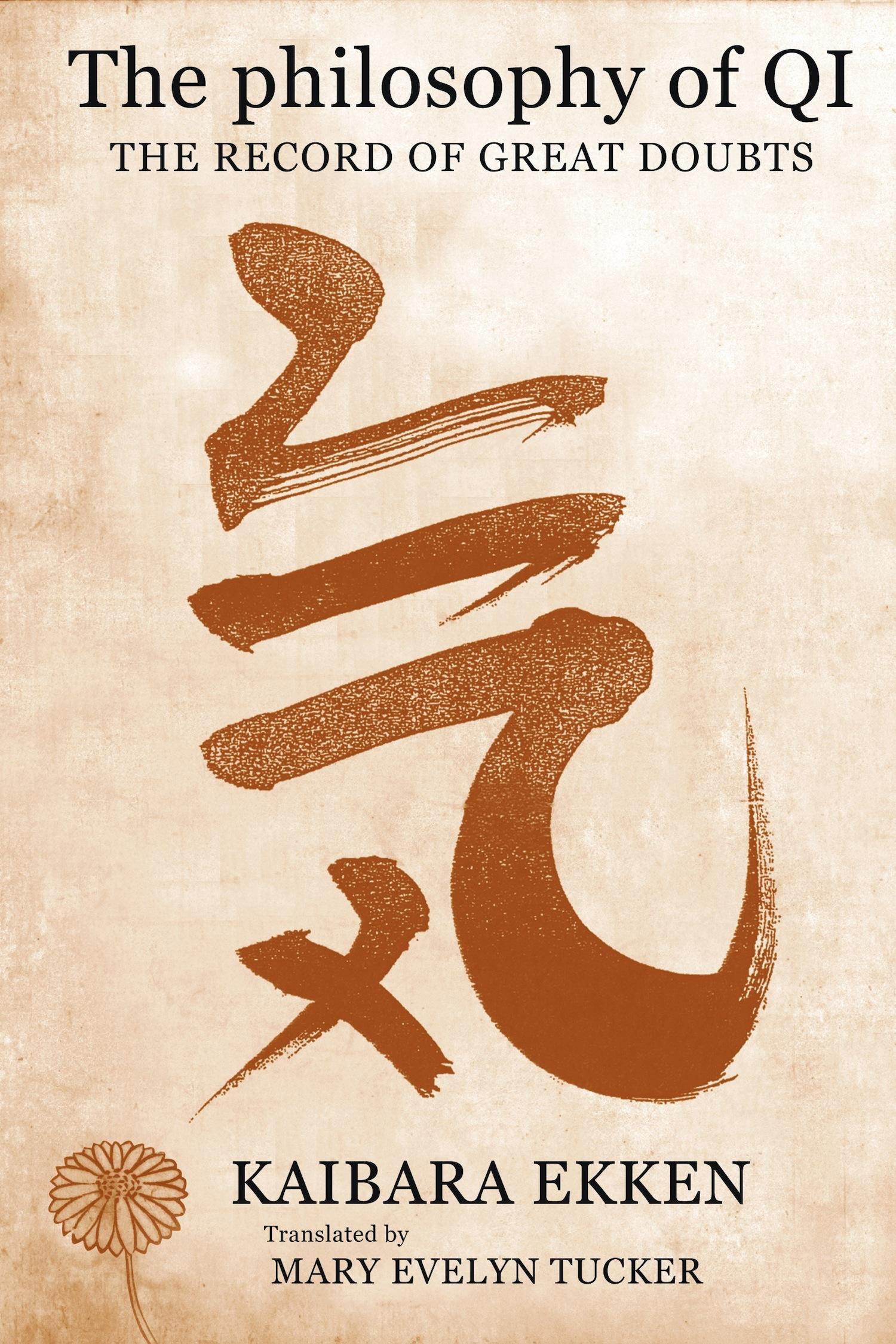
The Record of Great Doubts emphasizes the role of qi in achieving a life of engagement with other humans, with the larger society, and with nature as a whole. Rather than encourage transcendental escapism or quietism, Ekken articulates a philosophy of material force as a basis of living a life of commitment to the world. In this spirit, moral cultivation is not an isolated or a self-centered preoccupation, but an activity that occurs within the dynamic forces of nature and amid the rigorous demands of society. In this context, a vitalism of qi is an emergent force, not only providing the philosophical grounding for this vibrant interaction but also giving a basis for an investigation of the natural world that plumbs the principle within things. Ekken thus aimed to articulate a creative and dynamic milieu for moral education, political harmony, social coherence, and agricultural sustainability.
The Record of Great Doubts embodies Ekken's profound commitment to Confucian ideas and practices as a method for establishing an integrative ethical vision, one he hoped would guide Japan through a new period of peace and stability. A major philosophical treatise in the Japanese Neo-Confucian tradition, The Record of Great Doubts illuminates a crucial chapter in East Asian intellectual history.
Pay easily by card, Klarna, Apple Pay or Google Pay. Not happy? You always have a 14-day money-back guarantee. Read more in our terms. If you have any questions, email us at hello@memmo.org.
Memmo makes studying easier – wherever you are in the world. We bring your course books and smart study tools together in one place: summaries, quizzes, podcasts and flashcards. Plus Ted, your study buddy who answers anything you wonder. Over 50,000 students already study here – built to help you learn faster and stress less.