
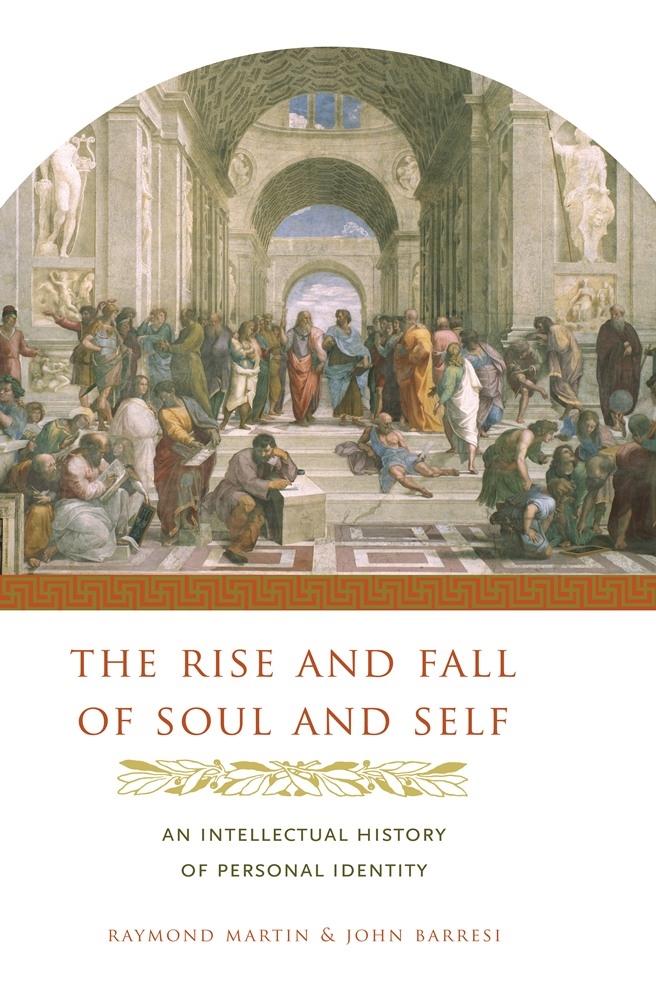
This book traces the development of theories of the self and personal identity from the ancient Greeks to the present day. From Plato and Aristotle to Freud and Foucault, Raymond Martin and John Barresi explore the works of a wide range of thinkers and reveal the larger intellectual trends, controversies, and ideas that have revolutionized the way we think about ourselves.
The authors open with ancient Greece, where the ideas of Plato, Aristotle, and the materialistic atomists laid the groundwork for future theories. They then discuss the ideas of the church fathers and medieval and Renaissance philosophers, including St. Paul, Philo, Augustine, Aquinas, and Montaigne. In their coverage of the emergence of a new mechanistic conception of nature in the seventeenth century, Martin and Barresi note a shift away from religious and purely philosophical notions of self and personal identity to more scientific and social conceptions, a trend that has continued to the present day. They explore modern philosophy and psychology, including the origins of different traditions within each discipline, and explain both the theoretical relevance of feminism and gender and ethnic studies and also the ways that Derrida and other recent thinkers have challenged the very idea that a unified self or personal identity even exists.
Martin and Barresi cover a number of issues broached by philosophers and psychologists, such as the existence of a fixed and unchanging self and whether the concept of the soul has a use outside of religious contexts. They address the question of whether notions of the soul and the self are still viable in today's world. Together, they reveal the fascinating ways in which great thinkers have grappled with these and other questions and the astounding impact their ideas have had on the development of self-understanding in the west.
Pay easily by card, Klarna, Apple Pay or Google Pay. Not happy? You always have a 14-day money-back guarantee. Read more in our terms. If you have any questions, email us at hello@memmo.org.
Memmo makes studying easier – wherever you are in the world. We bring your course books and smart study tools together in one place: summaries, quizzes, podcasts and flashcards. Plus Ted, your study buddy who answers anything you wonder. Over 50,000 students already study here – built to help you learn faster and stress less.