
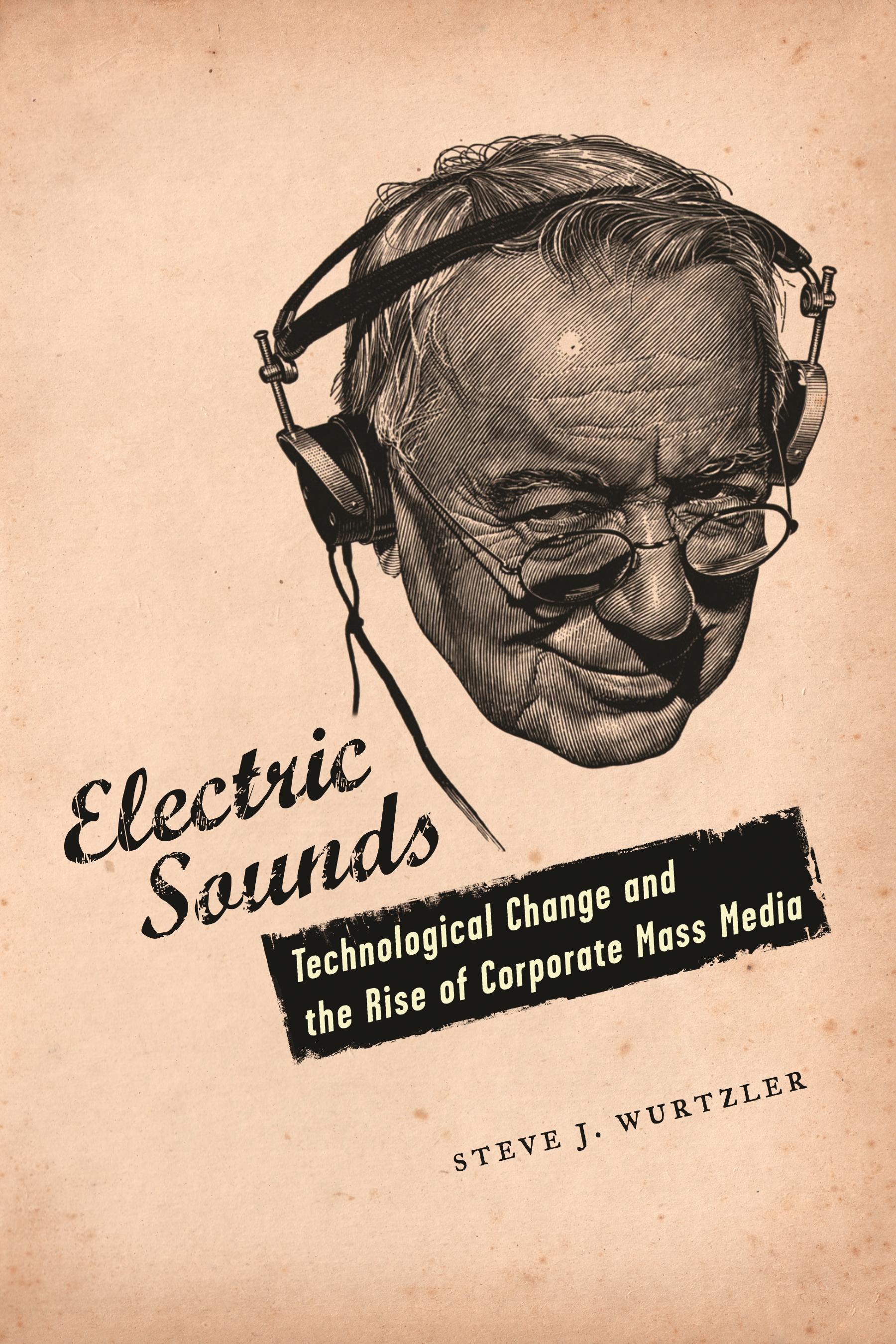
Electric Sounds brings to vivid life an era when innovations in the production, recording, and transmission of sound revolutionized a number of different media, especially the radio, the phonograph, and the cinema.
The 1920s and 1930s marked some of the most important developments in the history of the American mass media: the film industry's conversion to synchronous sound, the rise of radio networks and advertising-supported broadcasting, the establishment of a federal regulatory framework on which U.S. communications policy continues to be based, the development of several powerful media conglomerates, and the birth of a new acoustic commodity in which a single story, song, or other product was made available to consumers in multiple media forms and formats.
But what role would this new media play in society? Celebrants saw an opportunity for educational and cultural uplift; critics feared the degradation of the standards of public taste. Some believed acoustic media would fulfill the promise of participatory democracy by better informing the public, while others saw an opportunity for manipulation. The innovations of this period prompted not only a restructuring and consolidation of corporate mass media interests and a shift in the conventions and patterns of media consumption but also a renegotiation of the social functions assigned to mass media forms.
Steve J. Wurtzler's impeccably researched history adds a new dimension to the study of sound media, proving that the ultimate form technology takes is never predetermined. Rather, it is shaped by conflicting visions of technological possibility in economic, cultural, and political realms. Electric Sounds also illustrates the process through which technologies become media and the ways in which media are integrated into American life.
Pay easily by card, Klarna, Apple Pay or Google Pay. Not happy? You always have a 14-day money-back guarantee. Read more in our terms. If you have any questions, email us at hello@memmo.org.
Memmo makes studying easier – wherever you are in the world. We bring your course books and smart study tools together in one place: summaries, quizzes, podcasts and flashcards. Plus Ted, your study buddy who answers anything you wonder. Over 50,000 students already study here – built to help you learn faster and stress less.