
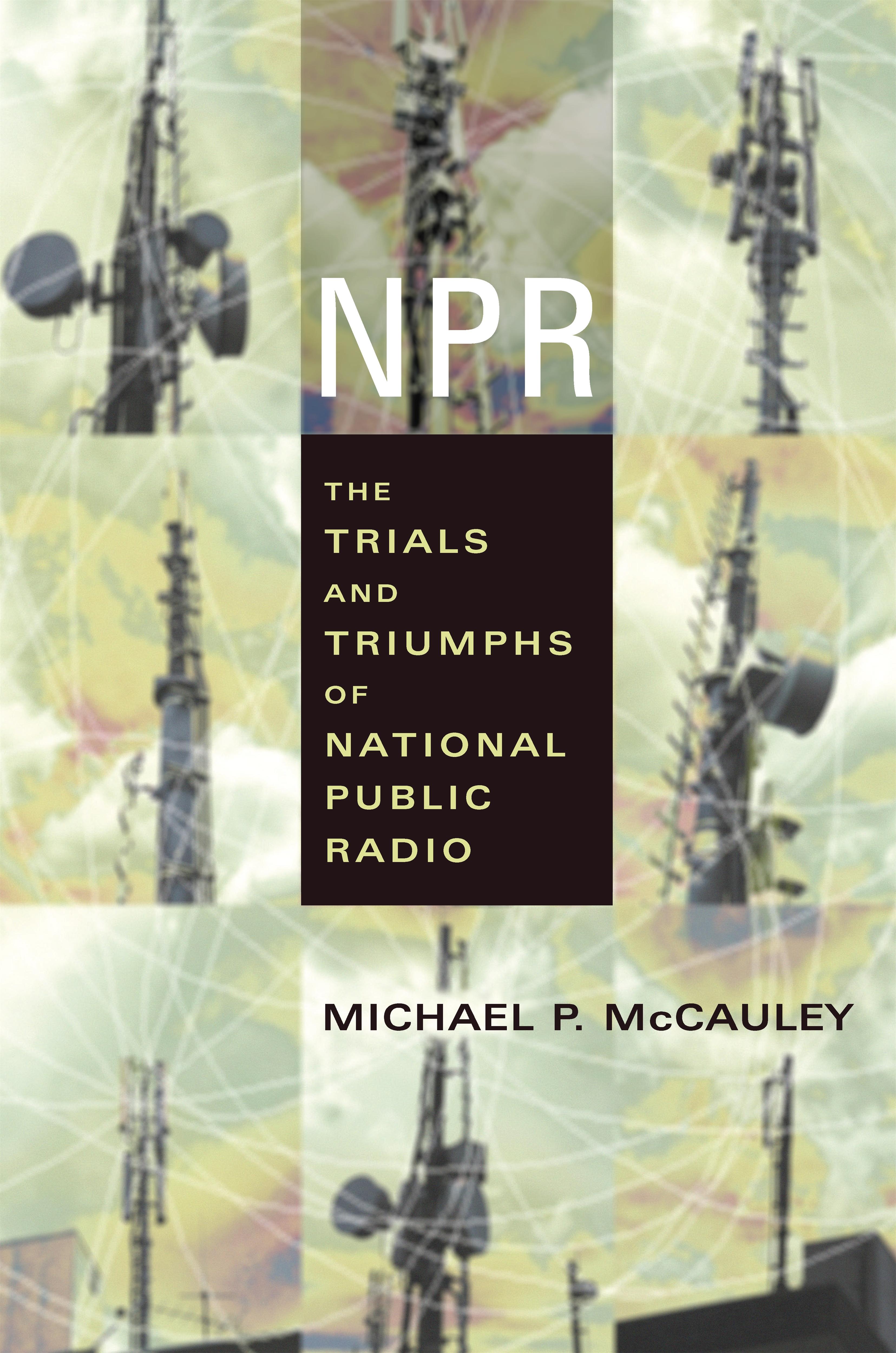
The people who shaped America's public broadcasting system thought it should be "a civilized voice in a civilized community"—a clear alternative to commercial broadcasting. This book tells the story of how NPR has tried to embody this idea. Michael P. McCauley describes NPR's evolution from virtual obscurity in the early 1970s, when it was riddled with difficulties—political battles, unseasoned leadership, funding problems—to a first-rate broadcast organization.
The book draws on a wealth of primary evidence, including fifty-seven interviews with people who have been central to the NPR story, and it places the network within the historical context of the wider U.S. radio industry. Since the late 1970s, NPR has worked hard to understand the characteristics of its audience. Because of this, its content is now targeted toward its most loyal listeners—highly educated baby-boomers, for the most part—who help support their local stations through pledges and fund drives.
Pay easily by card, Klarna, Apple Pay or Google Pay. Not happy? You always have a 14-day money-back guarantee. Read more in our terms. If you have any questions, email us at hello@memmo.org.
Memmo makes studying easier – wherever you are in the world. We bring your course books and smart study tools together in one place: summaries, quizzes, podcasts and flashcards. Plus Ted, your study buddy who answers anything you wonder. Over 75,000 students already study here – built to help you learn faster and stress less.