
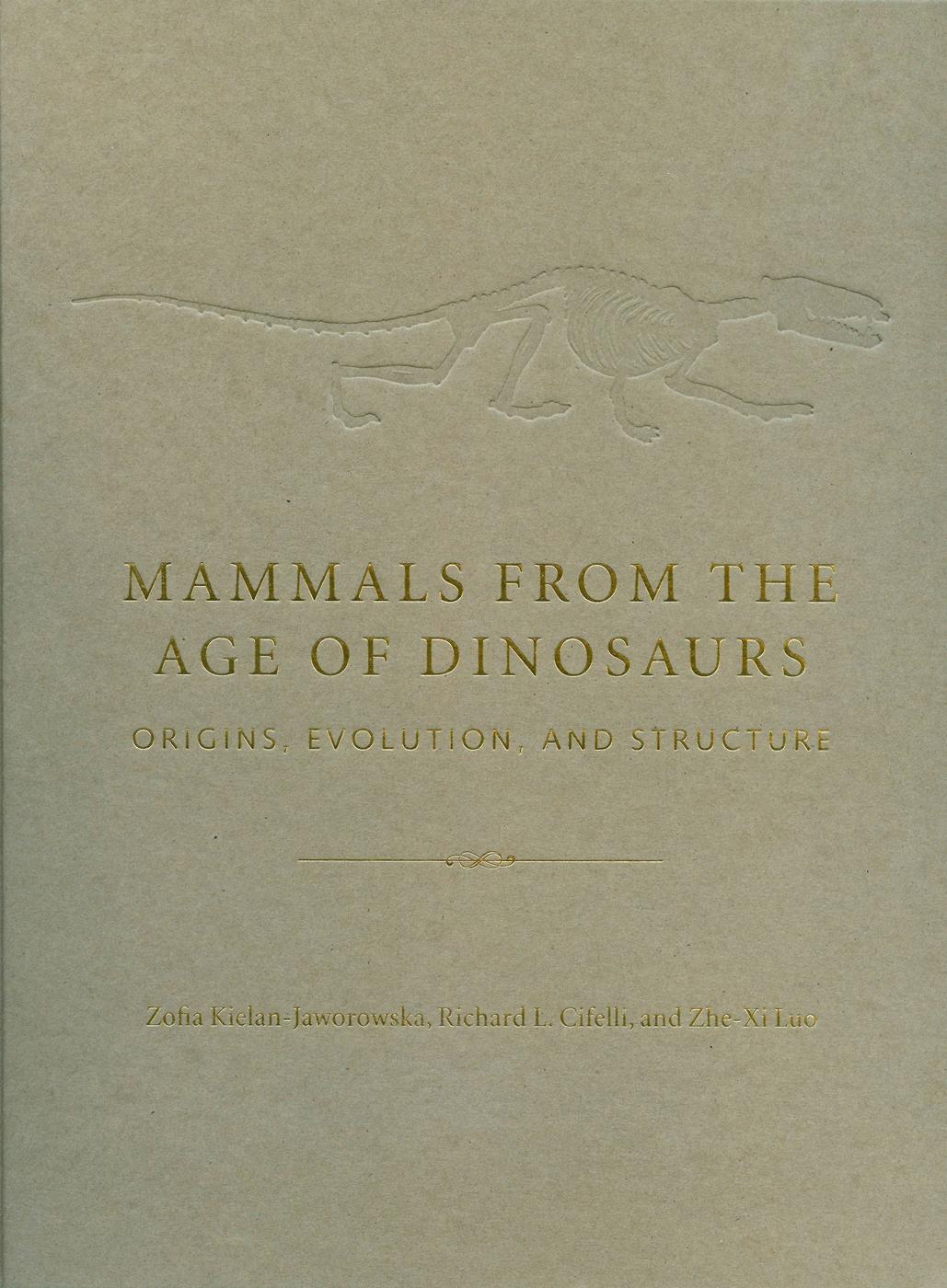
The fossil record on Mesozoic mammals has expanded by orders of magnitude over the past quarter century. New specimens, some of them breathtakingly complete, have been found in nearly all parts of the globe at a rapid pace. Coupled with the application of new scientific approaches and techniques, these exciting discoveries have led to profound changes in our interpretation of early mammal history.
Mesozoic mammals have come into their own as a rich source of information for evolutionary biology. Their record of episodic, successive radiations speaks to the pace and mode of evolution. Early mammals were small, but they provide key information on the morphological transformations that led to modern mammals, including our own lineage of Placentalia. Significant and fast-evolving elements of the terrestrial biota for much of the Mesozoic, early mammals have played an increasingly important role in studies of paleoecology, faunal turnover, and historical biogeography. The record of early mammals occupies center stage for testing molecular evolutionary hypotheses on the timing and sequence of mammalian radiations.
Organized according to phylogeny, this book covers all aspects of the anatomy, paleobiology, and systematics of all early mammalian groups, in addition to the extant mammalian lineages extending back into the Mesozoic.
Pay easily by card, Klarna, Apple Pay or Google Pay. Not happy? You always have a 14-day money-back guarantee. Read more in our terms. If you have any questions, email us at hello@memmo.org.
Memmo makes studying easier – wherever you are in the world. We bring your course books and smart study tools together in one place: summaries, quizzes, podcasts and flashcards. Plus Ted, your study buddy who answers anything you wonder. Over 50,000 students already study here – built to help you learn faster and stress less.