
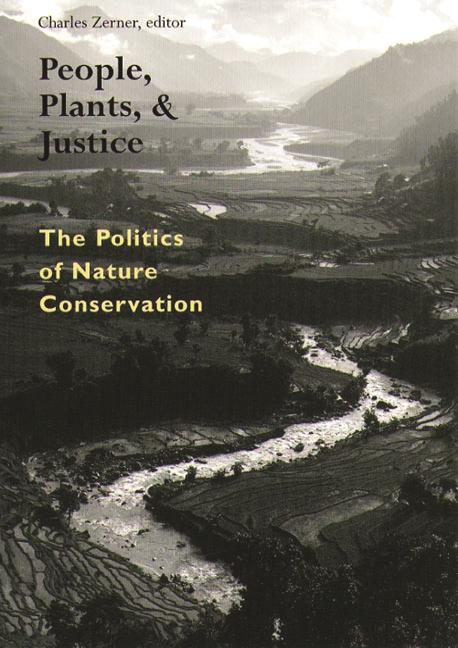
In an era of market triumphalism, this book probes the social and environmental consequences of market-linked nature conservation schemes. Rather than supporting a new anti-market orthodoxy, Charles Zerner and colleagues assert that there is no universal entity, "the market." Analysis and remedies must be based on broader considerations of history, culture, and geography in order to establish meaningful and lasting changes in policy and practice.
Original case studies from Asia, Latin America, Africa, and the South Pacific focus on topics as diverse as ecotourism, bioprospecting, oil extraction, cyanide fishing, timber extraction, and property rights. The cases position concerns about biodiversity conservation and resource management within social justice and legal perspectives, providing new insights for students, scholars, policy professionals and donor/foundations engaged in international conservation and social justice.
Pay easily by card, Klarna, Apple Pay or Google Pay. Not happy? You always have a 14-day money-back guarantee. Read more in our terms. If you have any questions, email us at hello@memmo.org.
Memmo makes studying easier – wherever you are in the world. We bring your course books and smart study tools together in one place: summaries, quizzes, podcasts and flashcards. Plus Ted, your study buddy who answers anything you wonder. Over 50,000 students already study here – built to help you learn faster and stress less.