
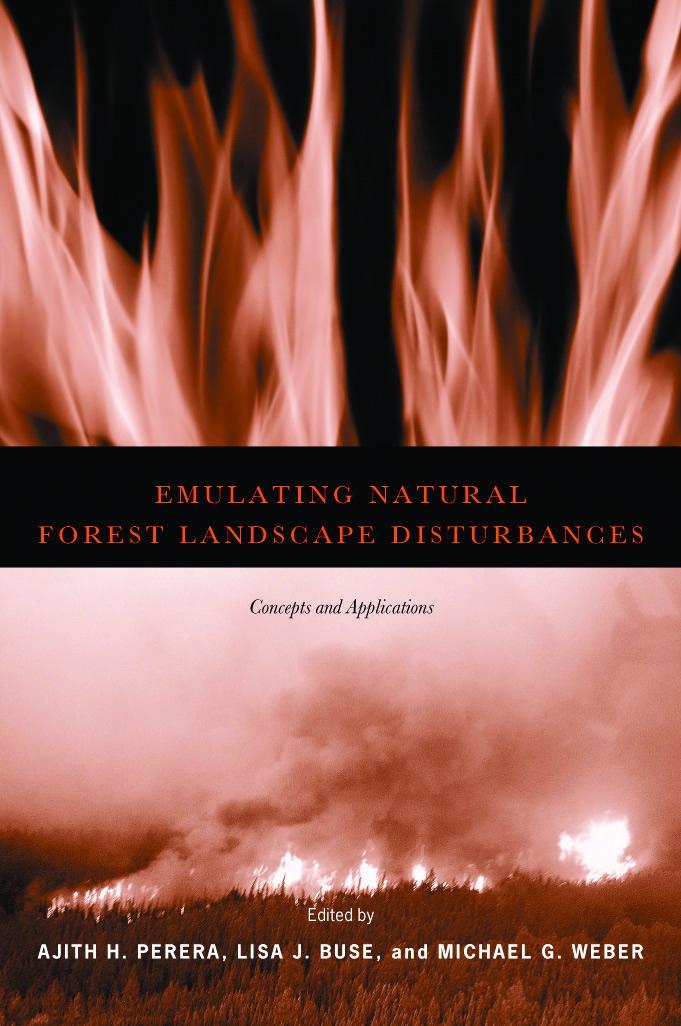
What is a natural forest disturbance? How well do we understand natural forest disturbances and how might we emulate them in forest management? What role does emulation play in forest management? Representing a range of geographic perspectives from across Canada and the United States, this book looks at the escalating public debate on the viability of natural disturbance emulation for sustaining forest landscapes from the perspective of policymakers, forestry professionals, academics, and conservationists.
This book provides a scientific foundation for justifying the use of and a solid framework for examining the ambiguities inherent in emulating natural forest landscape disturbance. It acknowledges the divergent expectations that practitioners face and offers a balanced view of the promises and challenges associated with applying this emerging forest management paradigm.
The first section examines foundational concepts, addressing questions of what emulation involves and what ecological reasoning substantiates it. These include a broad overview, a detailed review of emerging forest management paradigms and their global context, and an examination of the ecological premise for emulating natural disturbance. This section also explores the current understanding of natural disturbance regimes, including the two most prevalent in North America: fire and insects.
The second section uses case studies from a wide geographical range to address the characterization of natural disturbances and the development of applied templates for their emulation through forest management. The emphasis on fire regimes in this section reflects the greater focus that has traditionally been placed on understanding and managing fire, compared with other forms of disturbance, and utilizes several viewpoints to address the lessons learned from historical disturbance patterns.
Reflecting on current thinking in the field, immediate challenges, and potential directions, the final section moves deeper into the issues of practical applications by exploring the expectations for and feasibility of emulating natural disturbance through forest management.
Pay easily by card, Klarna, Apple Pay or Google Pay. Not happy? You always have a 14-day money-back guarantee. Read more in our terms. If you have any questions, email us at hello@memmo.org.
Memmo makes studying easier – wherever you are in the world. We bring your course books and smart study tools together in one place: summaries, quizzes, podcasts and flashcards. Plus Ted, your study buddy who answers anything you wonder. Over 50,000 students already study here – built to help you learn faster and stress less.