
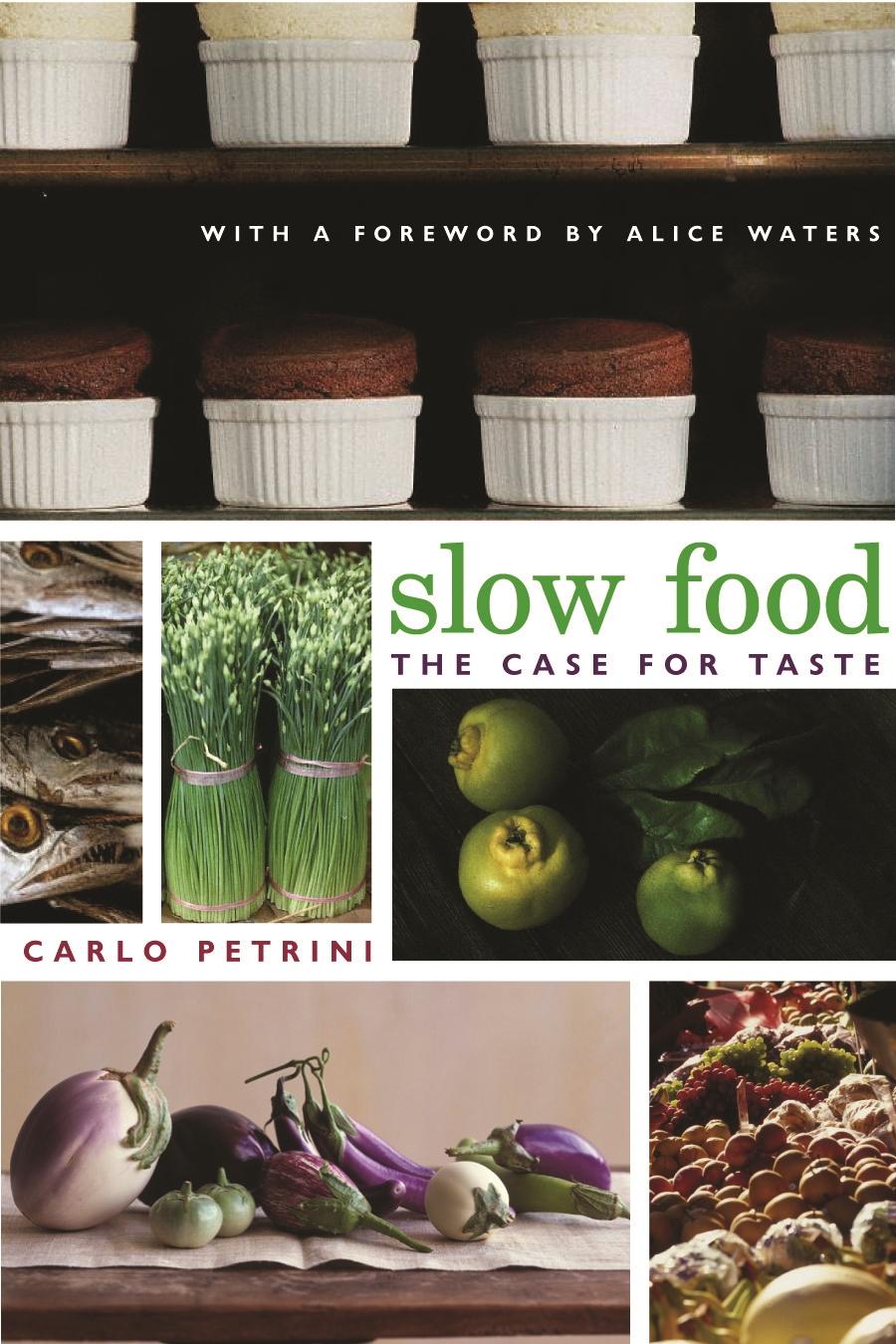
Take a breath.... Read slowly.
How often in the course and crush of our daily lives do we afford ourselves moments to truly relish-to truly be present in-the act of preparing and eating food? For most of us, our enjoyment of food has fallen victim to the frenetic pace of our lives and to our increasing estrangement, in a complex commercial economy, from the natural processes by which food is grown and produced. Packaged, artificial, and unhealthful, fast food is only the most dramatic example of the degradation of food in our lives, and of the deeper threats to our cultural, political, and environmental well-being.
In 1986, Carlo Petrini decided to resist the steady march of fast food and all that it represents when he organized a protest against the building of a McDonald's near the Spanish Steps in Rome. Armed with bowls of penne, Petrini and his supporters spawned a phenomenon. Three years later Petrini founded the International Slow Food Movement, renouncing not only fast food but also the overall pace of the "fast life." Issuing a manifesto, the Movement called for the safeguarding of local economies, the preservation of indigenous gastronomic traditions, and the creation of a new kind of ecologically aware consumerism committed to sustainability. On a practical level, it advocates a return to traditional recipes, locally grown foods and wines, and eating as a social event. Today, with a magazine, Web site, and over 75,000 followers organized into local "convivia," or chapters, Slow Food is poised to revolutionize the way Americans shop for groceries, prepare and consume their meals, and think about food.
Slow Food not only recalls the origins, first steps, and international expansion of the movement from the perspective of its founder, it is also a powerful expression of the organization's goal of engendering social reform through the transformation of our attitudes about food and eating. As Newsweek described it, the Slow Food movement has now become the basis for an alternative to the American rat race, the inspiration for "a kinder and gentler capitalism."
Linger a while then, with the story of what Alice Waters in her Foreword calls "this Delicious Revolution," and rediscover the pleasures of the good life.
Pay easily by card, Klarna, Apple Pay or Google Pay. Not happy? You always have a 14-day money-back guarantee. Read more in our terms. If you have any questions, email us at hello@memmo.org.
Memmo makes studying easier – wherever you are in the world. We bring your course books and smart study tools together in one place: summaries, quizzes, podcasts and flashcards. Plus Ted, your study buddy who answers anything you wonder. Over 50,000 students already study here – built to help you learn faster and stress less.