
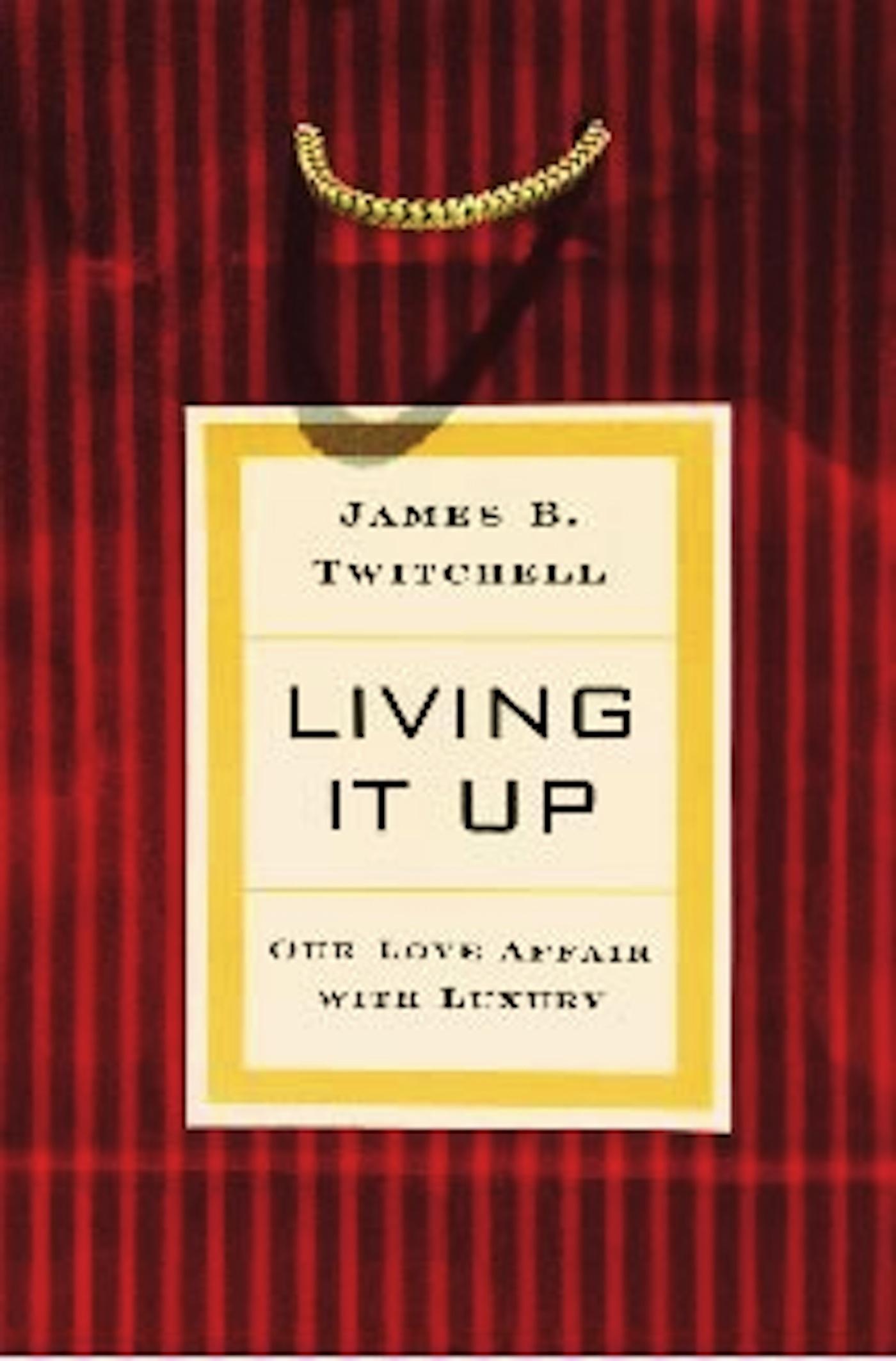
Economic downturns and terrorist attacks notwithstanding, America's love affair with luxury continues unabated. Over the last several years, luxury spending in the United States has been growing four times faster than overall spending. It has been characterized by political leaders as vital to the health of the American economy as a whole, even as an act of patriotism. Accordingly, indices of consumer confidence and purchasing seem unaffected by recession. This necessary consumption of unnecessary items and services is going on at all but the lowest layers of society: J.C. Penney now offers day spa treatments; Kmart sells cashmere bedspreads. So many products are claiming luxury status today that the credibility of the category itself is strained: for example, the name "pashmina" had to be invented to top mere cashmere.
We see luxury everywhere: in storefronts, advertisements, even in the workings of our imaginations. But what is it? How is it manufactured on the factory floor and in the minds of consumers? Who cares about it and who buys it? And how concerned should we be that luxuries are commanding a larger and larger percentage of both our disposable income and our aspirations?
Trolling the upscale malls of America, making his way toward the Mecca of Las Vegas, James B. Twitchell comes to some remarkable conclusions. The democratization of luxury, he contends, has been the single most important marketing phenomenon of our times. In the pages of Living It Up, Twitchell commits the academic heresy of paying respect to popular luxury consumption as a force that has united the country and the globe in a way that no war, movement, or ideology ever has. What's more, he claims, the shopping experience for Americans today has its roots in the spiritual, the religious, and the transcendent.
Deft and subtle writing, audacious ideas, and a fine sense of humor inform this entertaining and insightful book.
Pay easily by card, Klarna, Apple Pay or Google Pay. Not happy? You always have a 14-day money-back guarantee. Read more in our terms. If you have any questions, email us at hello@memmo.org.
Memmo makes studying easier – wherever you are in the world. We bring your course books and smart study tools together in one place: summaries, quizzes, podcasts and flashcards. Plus Ted, your study buddy who answers anything you wonder. Over 50,000 students already study here – built to help you learn faster and stress less.