
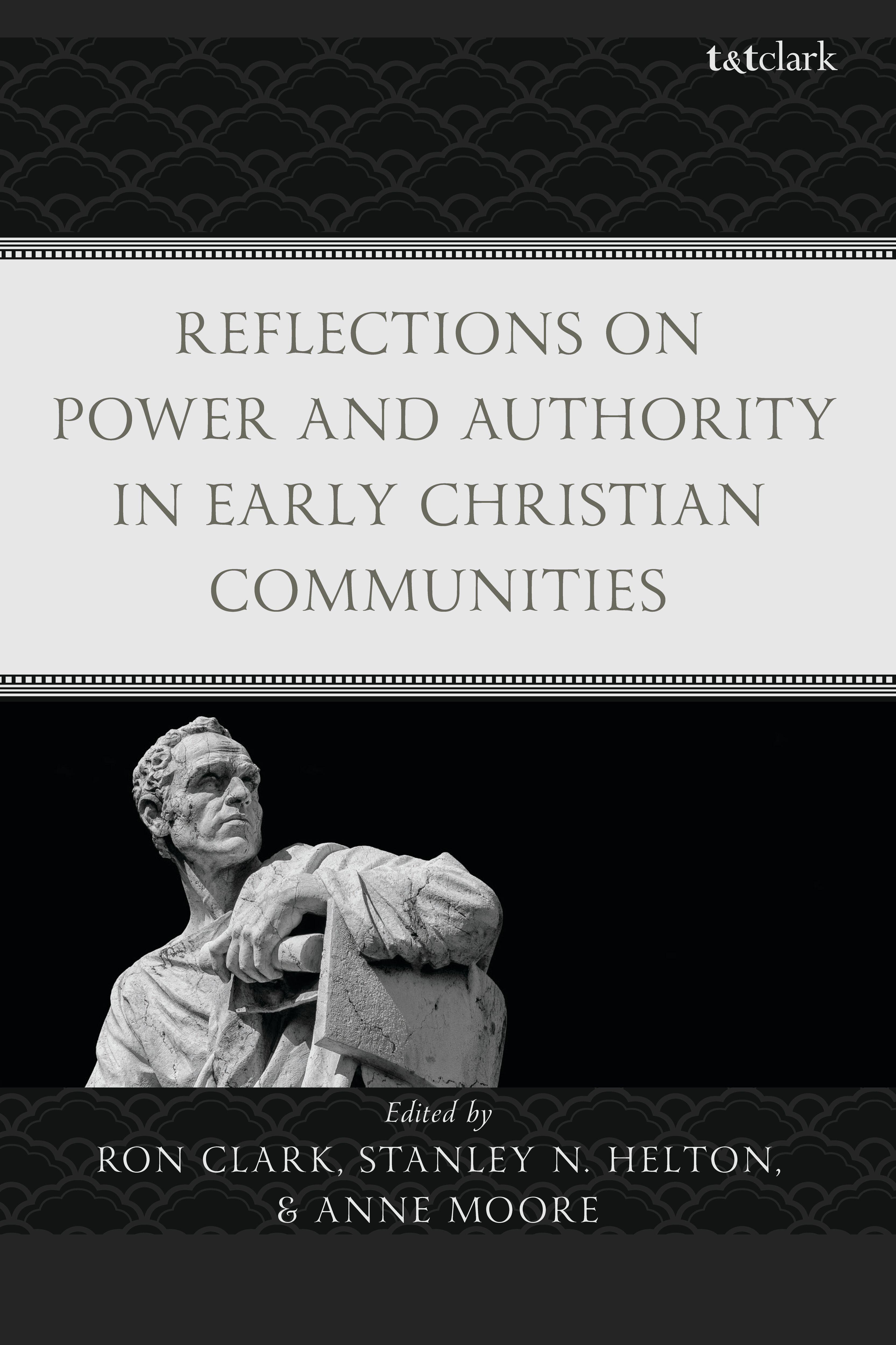
This edited collection considers the concept of power in the New Testament and early Christian writings.
Ron Clark, Stanley N. Helton, Anne Moore, and their contributors contend that power in ancient Southwest Asia and North Africa was not only a desired commodity, but an important tool to navigate the historical honor/shame culture. The essays herein explore the positive uses of power to foster peace and shalom in Early Christian communities. Drawing from sociological, feminist, and postcolonial methodologies, the contributors examine how authority is constructed, displaced, and reimagined through figures such as Jesus and Paul in the Roman Empire. Grounding their discussions within theoretical frameworks of power formulated by Max Weber, Hannah Arendt, Michel Foucault, and Steven Lukes, the essays herein reflect on the socio-political context of Roman imperialism. Their discussion of biblical texts across the Gospels, Romans, and 1 Corinthians fill a gap within biblical scholarship, illuminating the diverse meanings, functions, and motifs of authority and power within early Christian writings. In doing so, Clark, Helton, Moore, and their contributors challenge traditional interpretations and offers fresh insights into leadership, identity, and theological ethics in early Christianity.
Ron Clark, Stanley N. Helton, Anne Moore, and their contributors contend that power in ancient Southwest Asia and North Africa was not only a desired commodity, but an important tool to navigate the historical honor/shame culture. The essays herein explore the positive uses of power to foster peace and shalom in Early Christian communities. Drawing from sociological, feminist, and postcolonial methodologies, the contributors examine how authority is constructed, displaced, and reimagined through figures such as Jesus and Paul in the Roman Empire. Grounding their discussions within theoretical frameworks of power formulated by Max Weber, Hannah Arendt, Michel Foucault, and Steven Lukes, the essays herein reflect on the socio-political context of Roman imperialism. Their discussion of biblical texts across the Gospels, Romans, and 1 Corinthians fill a gap within biblical scholarship, illuminating the diverse meanings, functions, and motifs of authority and power within early Christian writings. In doing so, Clark, Helton, Moore, and their contributors challenge traditional interpretations and offers fresh insights into leadership, identity, and theological ethics in early Christianity.
Betala smidigt med kort, Klarna, Apple Pay eller Google Pay. Är du inte nöjd har du alltid 14 dagars ångerrätt. Läs mer i våra villkor. Har du några frågor, mejla oss på hello@memmo.org.
Memmo gör det enklare att plugga – var du än är i världen. Hos oss samlar du kursböcker och smarta studieverktyg på ett och samma ställe: sammanfattningar, quiz, poddar och flashcards. Och så Ted, din studiekompis som svarar på allt du undrar. Över 50 000 studenter pluggar redan här – byggt för att du ska lära dig snabbare och stressa mindre.