
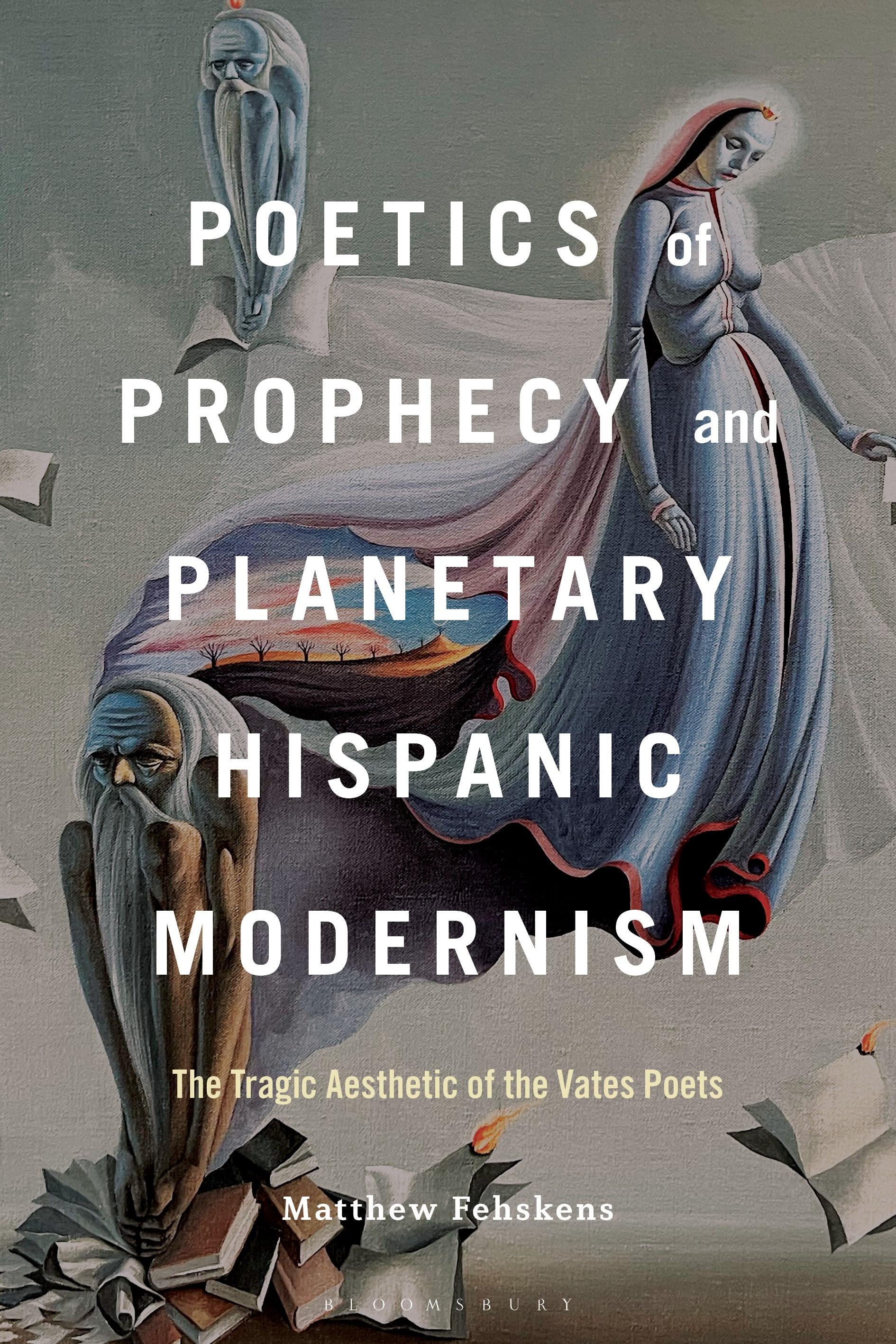
A study of Hispanic planetary modernism's use of prophetic discourse as an attempt to counter modern nihilism and provide modernity with poetry as its new Scripture.
Traditional studies of established literary modernisms (such as in the United Kingdom, France, and Germany) have long acknowledged the prophetic authority and tragic struggle for sacredness within modernity. As Poetics of Prophecy and Planetary Hispanic Modernism argues, the aesthetic and ideological phenomenon of the Vates (or prophetic) poet is also present in the rich tradition of Hispanic literature that spans more than 20 countries. However, the later modernization of Spain and Spanish America postpones its adoption until the advent of literary modernism.
Matthew Fehskens shows that this prophetic role is consistent across multiple poets in Europe, Spanish America, and the United States and constitutes a fundamental aspect of the transatlantic production of modernism in Spanish. The phenomenon is wide ranging, from the movement's founding authors, such as Cuban José Martí and Nicaraguan Rubén Darío, to Uruguayan poets Delmira Agustini and María Eugenia Vaz Ferreira, and Spanish authors Antonio Machado, Miguel de Unamuno, and Ramón del Valle Inclán.
Hispanic modernism had lofty aims, namely to speak poetic words of divine import to a culture ravaged by the Age of Reason and the materialism of modernity. Its authors aimed to transcend the limitations of literature, reason, and a disenchanted culture to create modern scriptures. This study demonstrates the centrality of prophecy in the development of Hispanic poetry in modernity.
Traditional studies of established literary modernisms (such as in the United Kingdom, France, and Germany) have long acknowledged the prophetic authority and tragic struggle for sacredness within modernity. As Poetics of Prophecy and Planetary Hispanic Modernism argues, the aesthetic and ideological phenomenon of the Vates (or prophetic) poet is also present in the rich tradition of Hispanic literature that spans more than 20 countries. However, the later modernization of Spain and Spanish America postpones its adoption until the advent of literary modernism.
Matthew Fehskens shows that this prophetic role is consistent across multiple poets in Europe, Spanish America, and the United States and constitutes a fundamental aspect of the transatlantic production of modernism in Spanish. The phenomenon is wide ranging, from the movement's founding authors, such as Cuban José Martí and Nicaraguan Rubén Darío, to Uruguayan poets Delmira Agustini and María Eugenia Vaz Ferreira, and Spanish authors Antonio Machado, Miguel de Unamuno, and Ramón del Valle Inclán.
Hispanic modernism had lofty aims, namely to speak poetic words of divine import to a culture ravaged by the Age of Reason and the materialism of modernity. Its authors aimed to transcend the limitations of literature, reason, and a disenchanted culture to create modern scriptures. This study demonstrates the centrality of prophecy in the development of Hispanic poetry in modernity.
Sidor: 232
Kategori: Litteraturvetenskap & Teori
e-ISBN: 9798765126790
Fraktvikt: 1.2 kg
Skickas inom: 1-2 dagar
Betala smidigt med kort, Klarna, Apple Pay eller Google Pay. Är du inte nöjd har du alltid 14 dagars ångerrätt. Läs mer i våra villkor. Har du några frågor, mejla oss på hello@memmo.org.
Memmo gör det enklare att plugga – var du än är i världen. Hos oss samlar du kursböcker och smarta studieverktyg på ett och samma ställe: sammanfattningar, quiz, poddar och flashcards. Och så Ted, din studiekompis som svarar på allt du undrar. Över 50 000 studenter pluggar redan här – byggt för att du ska lära dig snabbare och stressa mindre.