
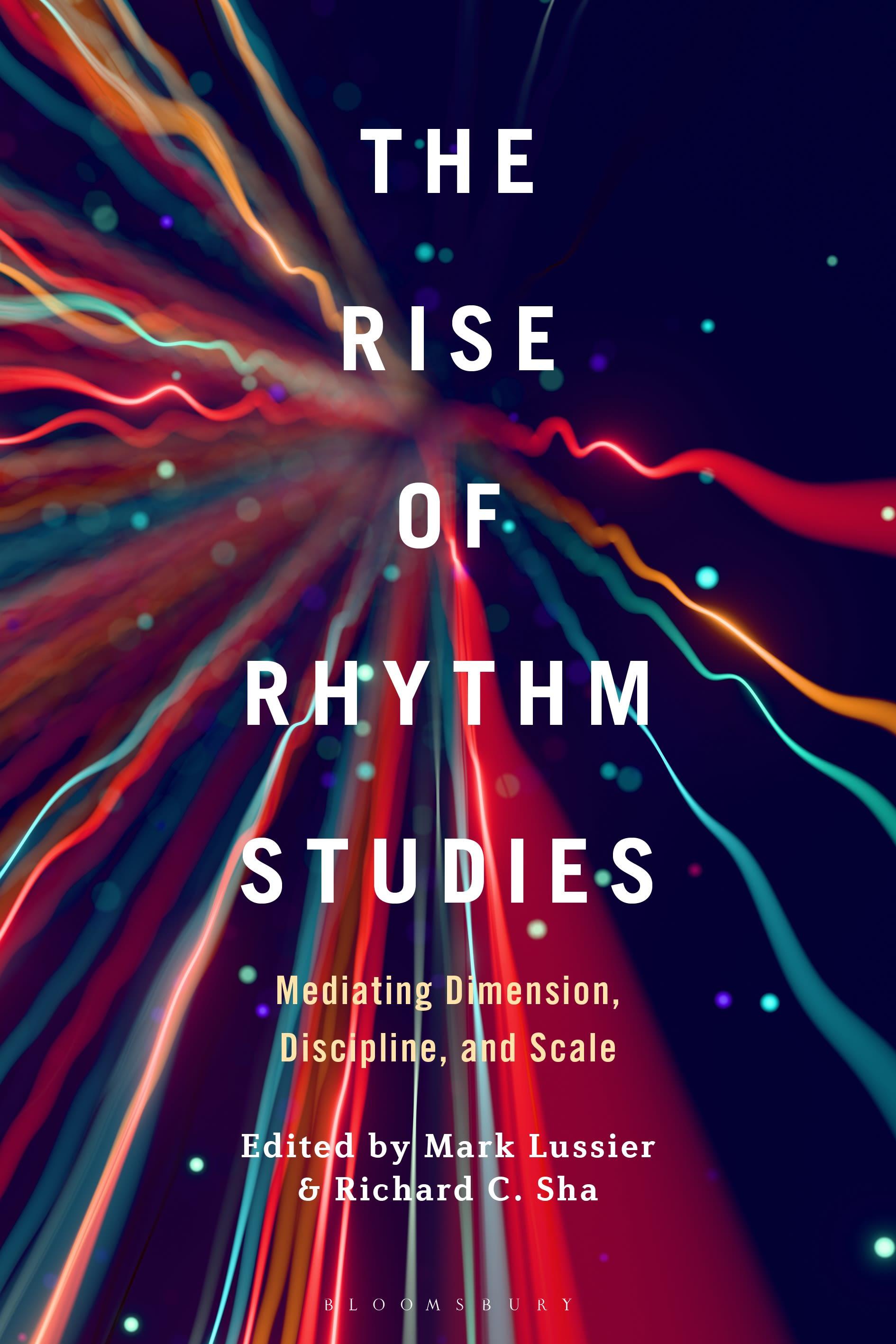
Rhythm is everywhere. Its ability to focus and unify interdisciplinary conversation begs the questions: What is rhythm and can different disciplines agree on its definition?
Rhythm studies have emerged as a key background form traversing cultural, natural, and social forms like cognition, communication, and even cosmology. An added boon: this background can seem unifying. Those who explore such entangled phenomena study the throbbing presence of rhythmic, oscillatory, and vibratory potentials: Neuroscientists turn to rhythm for novel explanations of why our cognitive capacities are so limited; physicists use it to cross time and space; scholars in various fields turn to it to rethink materialism and affect theory.
This lively collection considers why rhythm currently functions as a form of mediation between disciplines, across widely different scales and dimensions. The Rise of Rhythm Studies tests what rhythm can do through theoretical examinations and in case studies ranging from European literature to topology and media studies to Chinese visual art. Established scholars, such as Nina Kraus, Anna Gibbs, and Caroline Levine, alongside rising scholars in the field, marshal transdisciplinary perspectives in order to understand rhythm as a boundary condition for living in and working through and with the world.
Rhythm studies have emerged as a key background form traversing cultural, natural, and social forms like cognition, communication, and even cosmology. An added boon: this background can seem unifying. Those who explore such entangled phenomena study the throbbing presence of rhythmic, oscillatory, and vibratory potentials: Neuroscientists turn to rhythm for novel explanations of why our cognitive capacities are so limited; physicists use it to cross time and space; scholars in various fields turn to it to rethink materialism and affect theory.
This lively collection considers why rhythm currently functions as a form of mediation between disciplines, across widely different scales and dimensions. The Rise of Rhythm Studies tests what rhythm can do through theoretical examinations and in case studies ranging from European literature to topology and media studies to Chinese visual art. Established scholars, such as Nina Kraus, Anna Gibbs, and Caroline Levine, alongside rising scholars in the field, marshal transdisciplinary perspectives in order to understand rhythm as a boundary condition for living in and working through and with the world.
Sidor: 272
Kategori: Litteraturvetenskap & Teori
e-ISBN: 9798765125304
Fraktvikt: 1.2 kg
Skickas inom: 1-2 dagar
Betala smidigt med kort, Klarna, Apple Pay eller Google Pay. Är du inte nöjd har du alltid 14 dagars ångerrätt. Läs mer i våra villkor. Har du några frågor, mejla oss på hello@memmo.org.
Memmo gör det enklare att plugga – var du än är i världen. Hos oss samlar du kursböcker och smarta studieverktyg på ett och samma ställe: sammanfattningar, quiz, poddar och flashcards. Och så Ted, din studiekompis som svarar på allt du undrar. Över 50 000 studenter pluggar redan här – byggt för att du ska lära dig snabbare och stressa mindre.