
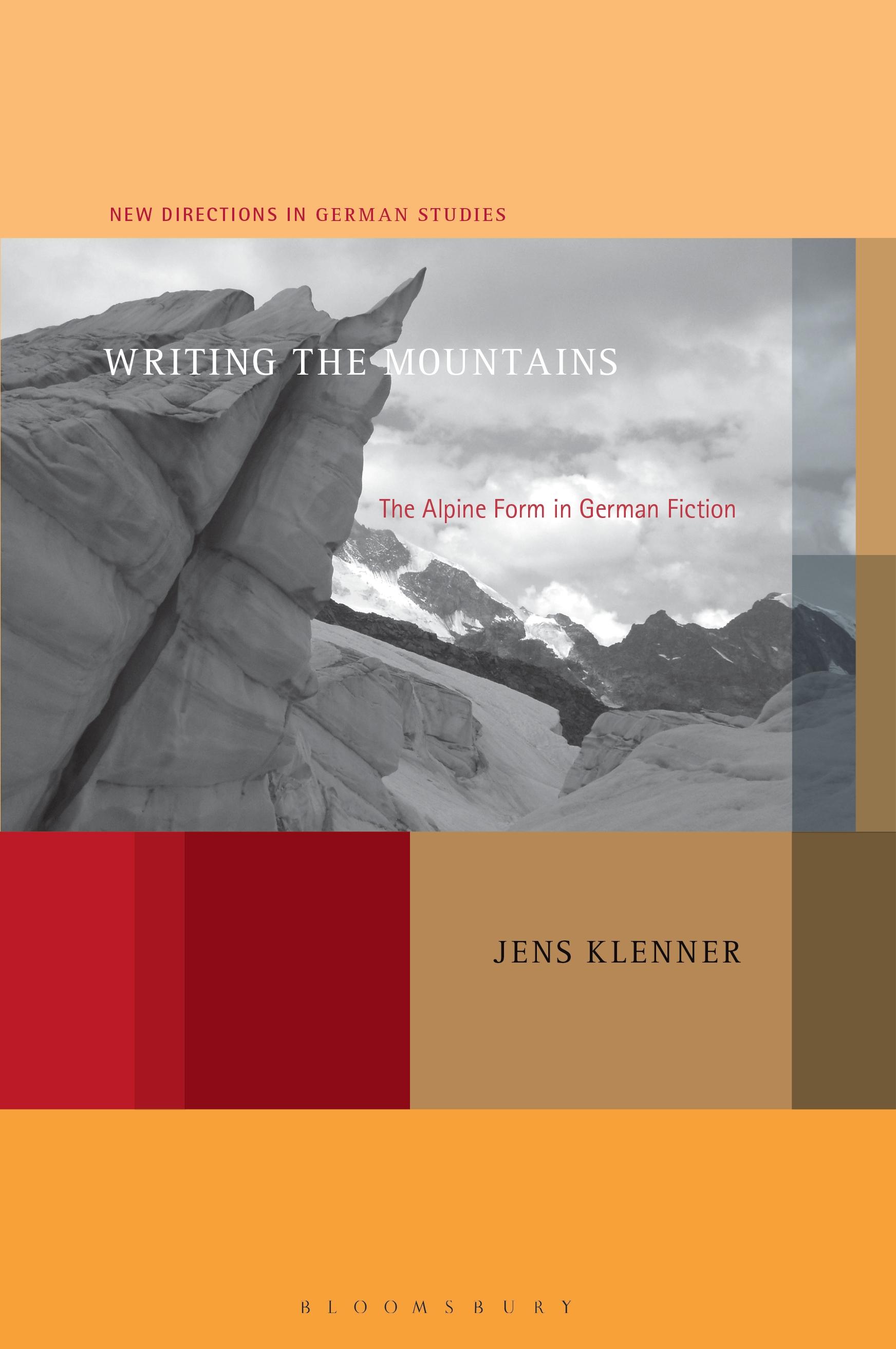
Writing the Mountains reconsiders the role of mountains in German language fiction from 1800 to the present and argues that in a range of texts, from E.T.A. Hoffmann's “Die Bergwerke zu Falun” (1819) to Elfriede Jelinek's Die Kinder der Toten (1995) and beyond, mountains serve as dynamic spaces of material change that generate aesthetic and narrative innovation. In contrast to dominant critical approaches to the Alpine landscape in literature, in which mountain ranges often features as passive settings, or which trace the influence of geographical and geological sciences in literary productions, this study argues for the dynamic role in literature of presumably rigid mineral structures.
In German-language fiction after 1800, the counter-intuitive topology of rocky mountain ranges and unfathomable subterranean depths of the Alpine imaginary functions as a space of exception which appears to reconfirm and radically challenge the foundations of Enlightenment thought. Writing the Mountains reads the mountain range as a rigid yet permeable liminal space. Within this zone, semiotic orders are unsettled, as is the division between organic and inorganic, between the human and the other.
In German-language fiction after 1800, the counter-intuitive topology of rocky mountain ranges and unfathomable subterranean depths of the Alpine imaginary functions as a space of exception which appears to reconfirm and radically challenge the foundations of Enlightenment thought. Writing the Mountains reads the mountain range as a rigid yet permeable liminal space. Within this zone, semiotic orders are unsettled, as is the division between organic and inorganic, between the human and the other.
Betala smidigt med kort, Klarna, Apple Pay eller Google Pay. Är du inte nöjd har du alltid 14 dagars ångerrätt. Läs mer i våra villkor. Har du några frågor, mejla oss på hello@memmo.org.
Memmo gör det enklare att plugga – var du än är i världen. Hos oss samlar du kursböcker och smarta studieverktyg på ett och samma ställe: sammanfattningar, quiz, poddar och flashcards. Och så Ted, din studiekompis som svarar på allt du undrar. Över 50 000 studenter pluggar redan här – byggt för att du ska lära dig snabbare och stressa mindre.