
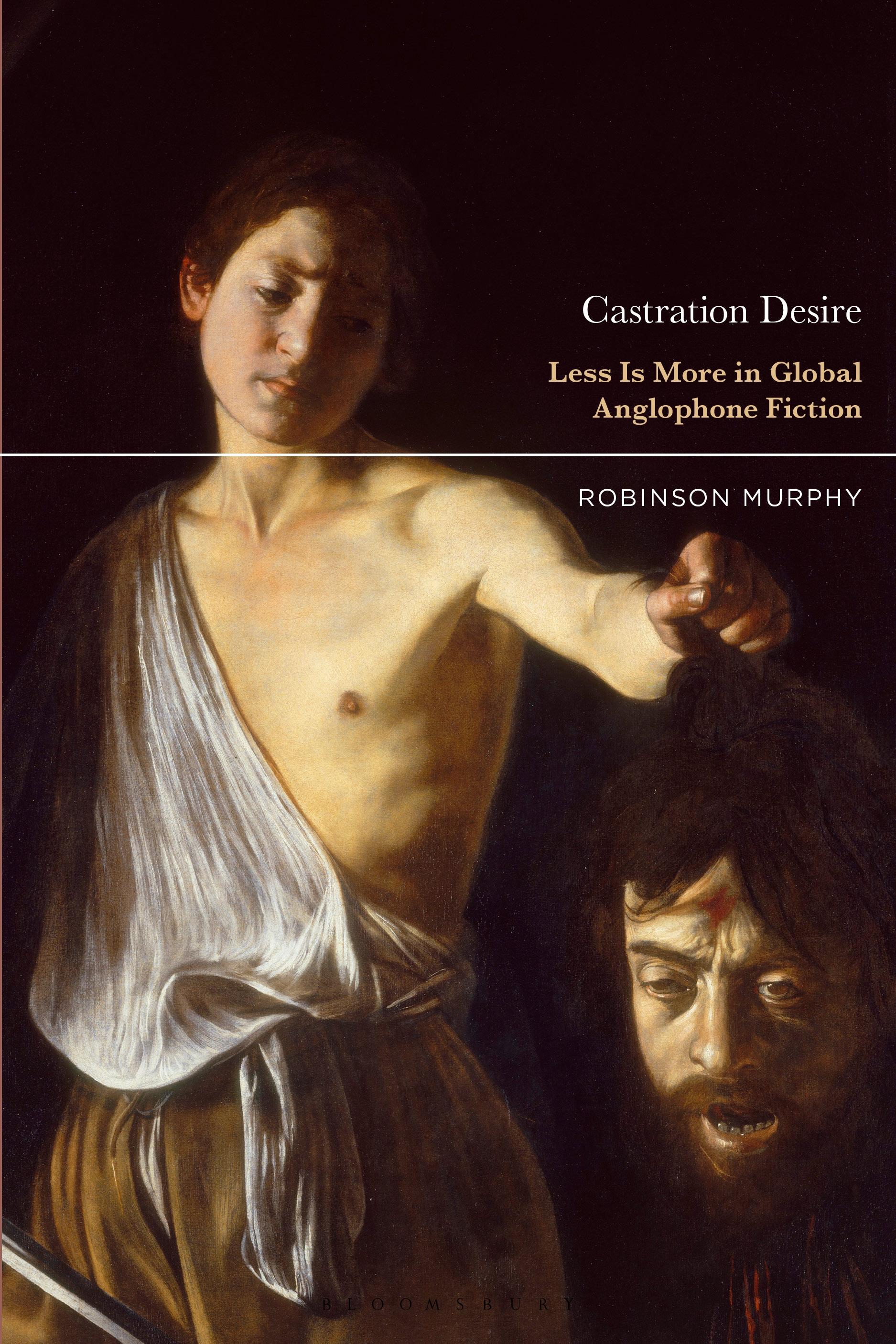
Theorizes an alternative form of masculinity in global literature that is less egocentric and more sustainable, both in terms of gendered and environmental power dynamics.
Contemporary novelists and filmmakers like Kazuo Ishiguro (Japanese-British), Emma Donoghue (Irish-Canadian), Michael Ondaatje (Sri Lankan-Canadian), Bong Joon-ho (South Korean) and J.M. Coetzee (South African-Australian) are emblematic of a transnational phenomenon that Robinson Murphy calls “castration desire.” That is, these artists present privileged characters who nonetheless pursue their own diminishment. In promulgating through their characters a less egocentric mode of thinking and acting, these artists offer a blueprint for engendering a more other-oriented global relationality. Murphy proposes that, in addition to being an ethical prerogative, castration desire's “less is more” model of relationality would make life livable where veritable suicide is our species' otherwise potential fate. “Castration desire” thus offers an antidote to rapacious extractivism, with the ambition of instilling a sustainable model for thinking and acting on an imminently eco-apocalyptic earth.
In providing a fresh optic through which to read a diversity of text-types, Castration Desire helps define where literary criticism is now and where it is headed. Castration Desire additionally extends and develops a zeitgeist currently unfolding in critical theory. It brings Leo Bersani's concept “psychic utopia” together with Judith Butler's “radical egalitarianism,” but transports their shared critique of phallic individualization into the environmental humanities. In doing so, this book builds a new framework for how gender studies intersects with environmental studies.
Contemporary novelists and filmmakers like Kazuo Ishiguro (Japanese-British), Emma Donoghue (Irish-Canadian), Michael Ondaatje (Sri Lankan-Canadian), Bong Joon-ho (South Korean) and J.M. Coetzee (South African-Australian) are emblematic of a transnational phenomenon that Robinson Murphy calls “castration desire.” That is, these artists present privileged characters who nonetheless pursue their own diminishment. In promulgating through their characters a less egocentric mode of thinking and acting, these artists offer a blueprint for engendering a more other-oriented global relationality. Murphy proposes that, in addition to being an ethical prerogative, castration desire's “less is more” model of relationality would make life livable where veritable suicide is our species' otherwise potential fate. “Castration desire” thus offers an antidote to rapacious extractivism, with the ambition of instilling a sustainable model for thinking and acting on an imminently eco-apocalyptic earth.
In providing a fresh optic through which to read a diversity of text-types, Castration Desire helps define where literary criticism is now and where it is headed. Castration Desire additionally extends and develops a zeitgeist currently unfolding in critical theory. It brings Leo Bersani's concept “psychic utopia” together with Judith Butler's “radical egalitarianism,” but transports their shared critique of phallic individualization into the environmental humanities. In doing so, this book builds a new framework for how gender studies intersects with environmental studies.
Betala smidigt med kort, Klarna, Apple Pay eller Google Pay. Är du inte nöjd har du alltid 14 dagars ångerrätt. Läs mer i våra villkor. Har du några frågor, mejla oss på hello@memmo.org.
Memmo gör det enklare att plugga – var du än är i världen. Hos oss samlar du kursböcker och smarta studieverktyg på ett och samma ställe: sammanfattningar, quiz, poddar och flashcards. Och så Ted, din studiekompis som svarar på allt du undrar. Över 50 000 studenter pluggar redan här – byggt för att du ska lära dig snabbare och stressa mindre.