
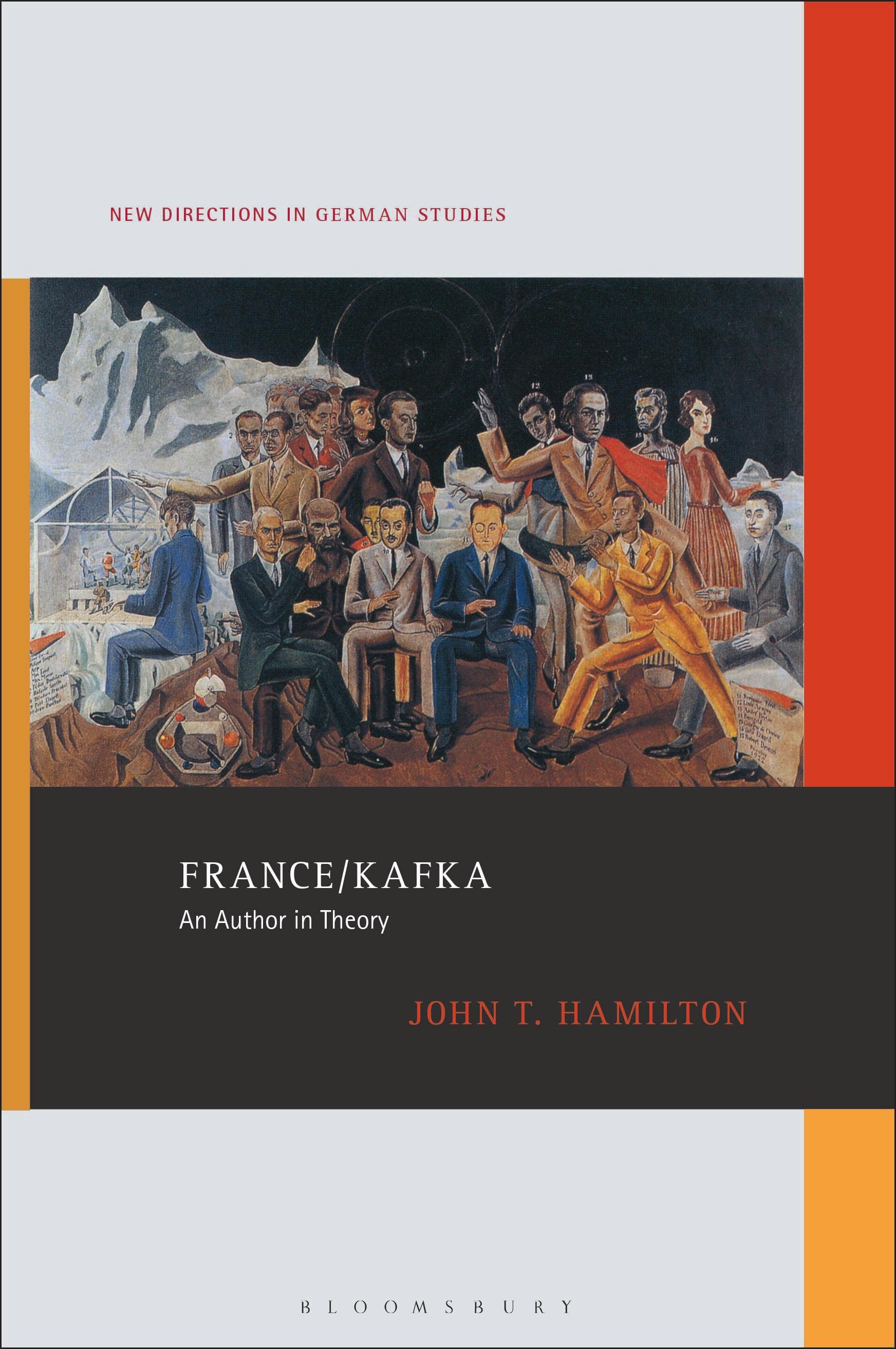
While his memory languished under Nazi censorship, Franz Kafka covertly circulated through occupied France and soon emerged as a cultural icon, read by the most influential intellectuals of the time as a prophet of the rampant bureaucracy, totalitarian oppression, and absurdity that branded the twentieth century. In tracing the history of Kafka's reception in postwar France, John T. Hamilton explores how the work of a German-Jewish writer from Prague became a modern classic capable of addressing universal themes of the human condition.
Hamilton also considers how Kafka's unique literary corpus came to stimulate reflection in diverse movements, critical approaches, and philosophical schools, from surrealism and existentialism through psychoanalysis, phenomenology, and structuralism to Marxism, deconstruction, and feminism. The story of Kafka's afterlife in Paris thus furnishes a key chapter in the unfolding of French theory, which continues to guide how we read literature and understand its relationship to the world.
Hamilton also considers how Kafka's unique literary corpus came to stimulate reflection in diverse movements, critical approaches, and philosophical schools, from surrealism and existentialism through psychoanalysis, phenomenology, and structuralism to Marxism, deconstruction, and feminism. The story of Kafka's afterlife in Paris thus furnishes a key chapter in the unfolding of French theory, which continues to guide how we read literature and understand its relationship to the world.
Betala smidigt med kort, Klarna, Apple Pay eller Google Pay. Är du inte nöjd har du alltid 14 dagars ångerrätt. Läs mer i våra villkor. Har du några frågor, mejla oss på hello@memmo.org.
Memmo gör det enklare att plugga – var du än är i världen. Hos oss samlar du kursböcker och smarta studieverktyg på ett och samma ställe: sammanfattningar, quiz, poddar och flashcards. Och så Ted, din studiekompis som svarar på allt du undrar. Över 50 000 studenter pluggar redan här – byggt för att du ska lära dig snabbare och stressa mindre.