
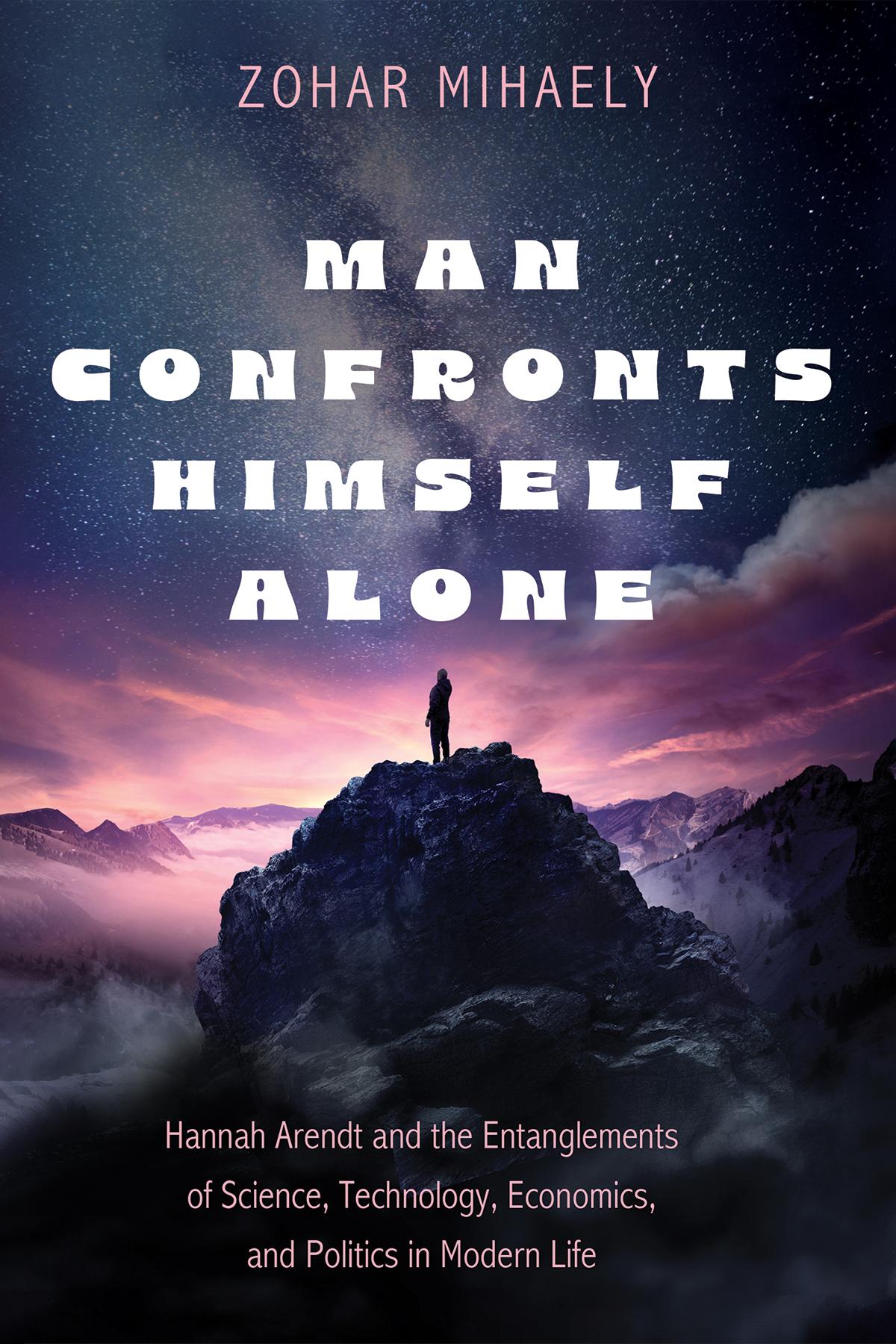
In 1957, the Russians launched the first satellite into space, marking the first time a man-made object broke through nature's limitations. In her iconic book The Human Condition, Hannah Arendt made the attempt to figure out the political implications of that seeming achievement. Her conclusion is that the astonishing scientific achievement of unprecedented control over terrestrial nature through the adoption of an outside-the-world "universal" perspective has shaped a prevailing mentality that sees the world, in which we have felt at home throughout history, as only optional. This has resulted in socioeconomic and political changes throughout modernity, ultimately reducing human ability to act politically. Many people today feel comfortable in a world shaped by science and technology. But Arendt warns us that there is hope for modern society if we can envision ways to make our active life worldly again. Mihaely's examination of Arendt's thoughts on science and politics stimulates the reader to rethink the authenticity of their freedom today.
Betala smidigt med kort, Klarna, Apple Pay eller Google Pay. Är du inte nöjd har du alltid 14 dagars ångerrätt. Läs mer i våra villkor. Har du några frågor, mejla oss på hello@memmo.org.
Memmo gör det enklare att plugga – var du än är i världen. Hos oss samlar du kursböcker och smarta studieverktyg på ett och samma ställe: sammanfattningar, quiz, poddar och flashcards. Och så Ted, din studiekompis som svarar på allt du undrar. Över 50 000 studenter pluggar redan här – byggt för att du ska lära dig snabbare och stressa mindre.
Du kanske också gillar
Köp boken0