
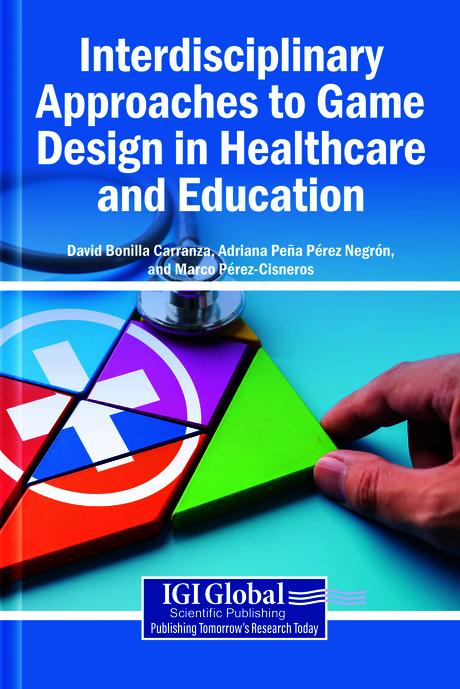
Game design is recognized as a powerful tool in healthcare and education, with immense potential in interdisciplinary collaboration. By integrating principles from psychology, cognitive science, instructional design, and user experience with cutting-edge technology, developers can create games that entertain while also promoting learning and well-being. These approaches enable the design of immersive, evidence-based experiences that improve patient engagement, support therapeutic interventions, and enhance educational outcomes. As the boundaries between disciplines blur, game design emerges as a dynamic field driving innovation in both sectors. Interdisciplinary Approaches to Game Design in Healthcare and Education explores the transformative potential of games, focusing on applications in healthcare, education, and psychology. It examines methodologies for testing game efficacy, strategies for ethical player-centered design, and studies leveraging AI, VR, and biometrics, addressing risks like bias or addiction. This book covers topics such as gamification, biotechnology, and digital technology, and is a useful resource for educators, medical and healthcare professionals, computer engineers, game designers, academicians, researchers, and scientists.
Betala smidigt med kort, Klarna, Apple Pay eller Google Pay. Är du inte nöjd har du alltid 14 dagars ångerrätt. Läs mer i våra villkor. Har du några frågor, mejla oss på hello@memmo.org.
Memmo gör det enklare att plugga – var du än är i världen. Hos oss samlar du kursböcker och smarta studieverktyg på ett och samma ställe: sammanfattningar, quiz, poddar och flashcards. Och så Ted, din studiekompis som svarar på allt du undrar. Över 50 000 studenter pluggar redan här – byggt för att du ska lära dig snabbare och stressa mindre.
Du kanske också gillar
Köp boken0