
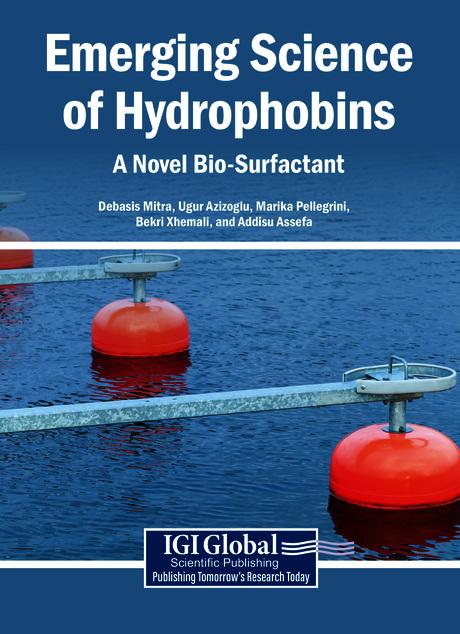
Hydrophobins have unique properties as naturally occurring bio-surfactants produced by filamentous fungi. These small proteins can self-assemble at hydrophilic and hydrophobic interfaces, modify surface characteristics, stabilize emulsions, and enhance the interaction between biological and non-biological materials. As environmentally friendly and biodegradable alternatives to synthetics, hydrophobins have demonstrated promising applications in biotechnology, pharmaceuticals, food processing, agriculture, nanotechnology, and biomedical engineering. Ongoing research may further reveal their structural diversity, functional mechanisms, and industrial potential, positioning hydrophobins as innovative biomolecules contributing to sustainable technological advancements across multiple sectors. Emerging Science of Hydrophobins: A Novel Bio-Surfactant examines the rapidly evolving field of hydrophobins, exploring their practical utility as high-performance, eco-friendly biosurfactants. It bridges the gap between fundamental mycology and applied material science. This book covers topics such as materials science, biology, and green chemistry, and is a useful resource for biologists, engineers, academicians, researchers, and scientists.
Betala smidigt med kort, Klarna, Apple Pay eller Google Pay. Är du inte nöjd har du alltid 14 dagars ångerrätt. Läs mer i våra villkor. Har du några frågor, mejla oss på hello@memmo.org.
Memmo gör det enklare att plugga – var du än är i världen. Hos oss samlar du kursböcker och smarta studieverktyg på ett och samma ställe: sammanfattningar, quiz, poddar och flashcards. Och så Ted, din studiekompis som svarar på allt du undrar. Över 75 000 studenter pluggar redan här – byggt för att du ska lära dig snabbare och stressa mindre.
Du kanske också gillar
Köp boken0