
Distributed by University Press of Florida on behalf of the Brian Canin Urban Design Award
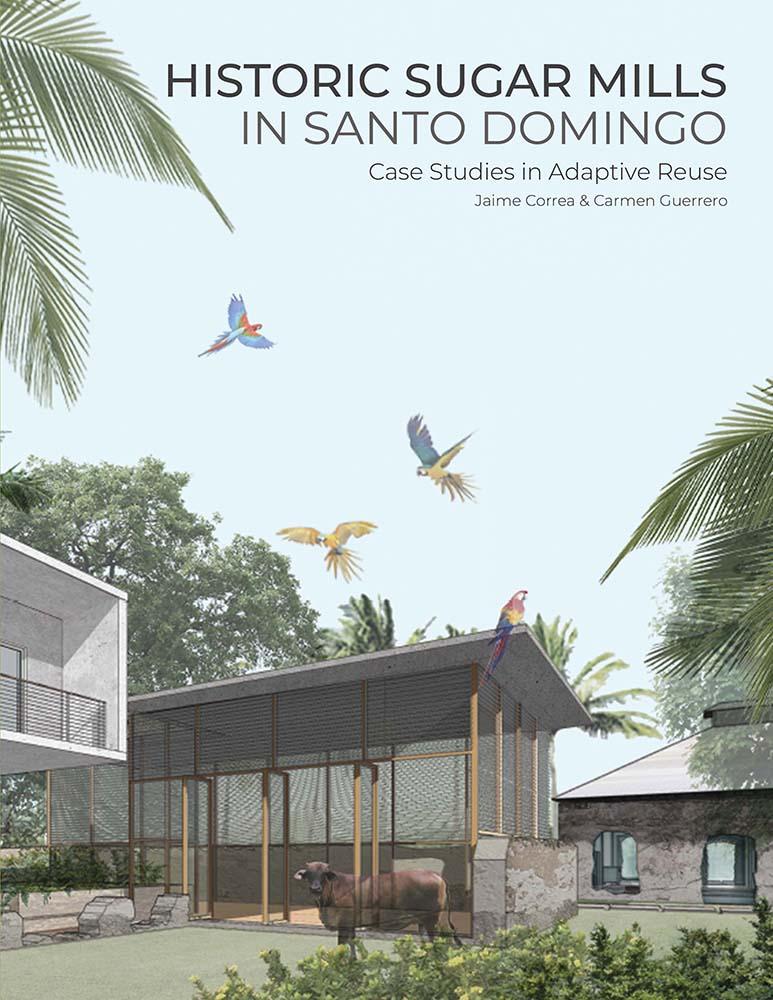
Colonial sugar mills, ingenios coloniales, are essential to the material history of the Dominican Republic. They served as a cornerstone of the national economy and as a foundation for the stability required during the colonial era. From the 1500s to the end of the 1800s, sugar mills and sugar factories were founded and sustained in what is now known as “La Ruta del Azucar,” or the Sugar Road. Colonial sugar mills not only represent a significant period in the country’s history, but they also hold significant cultural and architectural value.
In this volume, students at the School of Architecture of the University of Miami explore what is left of some of the most important ingenios coloniales in the Dominican Republic and, through an innovative approach of adaptive reuse, propose alternatives to celebrate their architectural value and cultural influences while also exploring the socio-economic and racial disparities and the political ideologies that are part of the history of these sites. The students approached the project with a spirit of innovation and the desire to document histories and possibilities for future generations in the Dominican Republic and to leave behind a legacy for new students to do similar work in urban and rural environments.
Betala smidigt med kort, Klarna, Apple Pay eller Google Pay. Är du inte nöjd har du alltid 14 dagars ångerrätt. Läs mer i våra villkor. Har du några frågor, mejla oss på hello@memmo.org.
Memmo gör det enklare att plugga – var du än är i världen. Hos oss samlar du kursböcker och smarta studieverktyg på ett och samma ställe: sammanfattningar, quiz, poddar och flashcards. Och så Ted, din studiekompis som svarar på allt du undrar. Över 75 000 studenter pluggar redan här – byggt för att du ska lära dig snabbare och stressa mindre.