
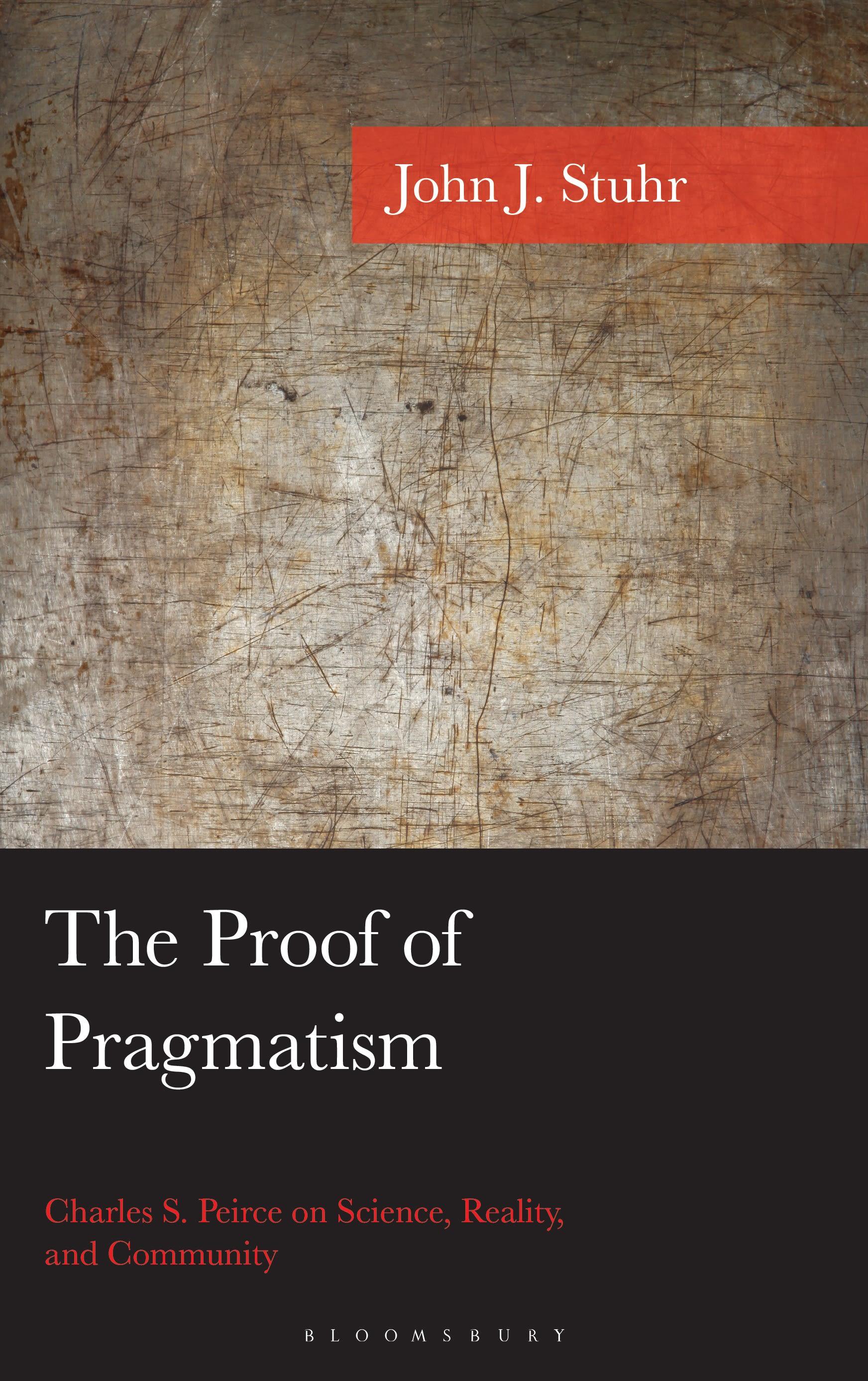
Pragmatism is true and not only useful.
Drawing critically on the writings of Charles Peirce, this book presents a proof of pragmatism and explores its implications for using scientific method, understanding the nature of reality, and recognizing and deepening the centrality of community.
Peirce's development of a successful proof of pragmatism had three stages, each improving on the earlier: a proof based in the psychology of belief; a proof based in a phenomenology of perception; and a proof based in semiotics. In reconstructing and refashioning Peirce's philosophy and its theoretical and practical consequences, John J. Stuhr demonstrates how Peirce makes it possible for pragmatists to reject fully the mission, methods, and conclusions of modern European philosophy and, in so doing, to articulate a revolutionary new philosophy rooted in experimental, fallible, and public thought. For this pragmatism, community is not simply a prerequisite of communication; it is an end and, as an ideal, it is an instrument for transformation, a way to change the world.
In establishing a proof of the truth of pragmatism, Stuhr clarifies the logical, ontological, and normative commitments of pragmatism, making clear their impact for inquiry and problem solving, reasoning and an understanding of reality, and ethical commitments and social ideals. The book provides a thorough and clear account of the development of pragmatism and a lively and original extension and application of pragmatic theory to practice.
Drawing critically on the writings of Charles Peirce, this book presents a proof of pragmatism and explores its implications for using scientific method, understanding the nature of reality, and recognizing and deepening the centrality of community.
Peirce's development of a successful proof of pragmatism had three stages, each improving on the earlier: a proof based in the psychology of belief; a proof based in a phenomenology of perception; and a proof based in semiotics. In reconstructing and refashioning Peirce's philosophy and its theoretical and practical consequences, John J. Stuhr demonstrates how Peirce makes it possible for pragmatists to reject fully the mission, methods, and conclusions of modern European philosophy and, in so doing, to articulate a revolutionary new philosophy rooted in experimental, fallible, and public thought. For this pragmatism, community is not simply a prerequisite of communication; it is an end and, as an ideal, it is an instrument for transformation, a way to change the world.
In establishing a proof of the truth of pragmatism, Stuhr clarifies the logical, ontological, and normative commitments of pragmatism, making clear their impact for inquiry and problem solving, reasoning and an understanding of reality, and ethical commitments and social ideals. The book provides a thorough and clear account of the development of pragmatism and a lively and original extension and application of pragmatic theory to practice.
Betala smidigt med kort, Klarna, Apple Pay eller Google Pay. Är du inte nöjd har du alltid 14 dagars ångerrätt. Läs mer i våra villkor. Har du några frågor, mejla oss på hello@memmo.org.
Memmo gör det enklare att plugga – var du än är i världen. Hos oss samlar du kursböcker och smarta studieverktyg på ett och samma ställe: sammanfattningar, quiz, poddar och flashcards. Och så Ted, din studiekompis som svarar på allt du undrar. Över 50 000 studenter pluggar redan här – byggt för att du ska lära dig snabbare och stressa mindre.