
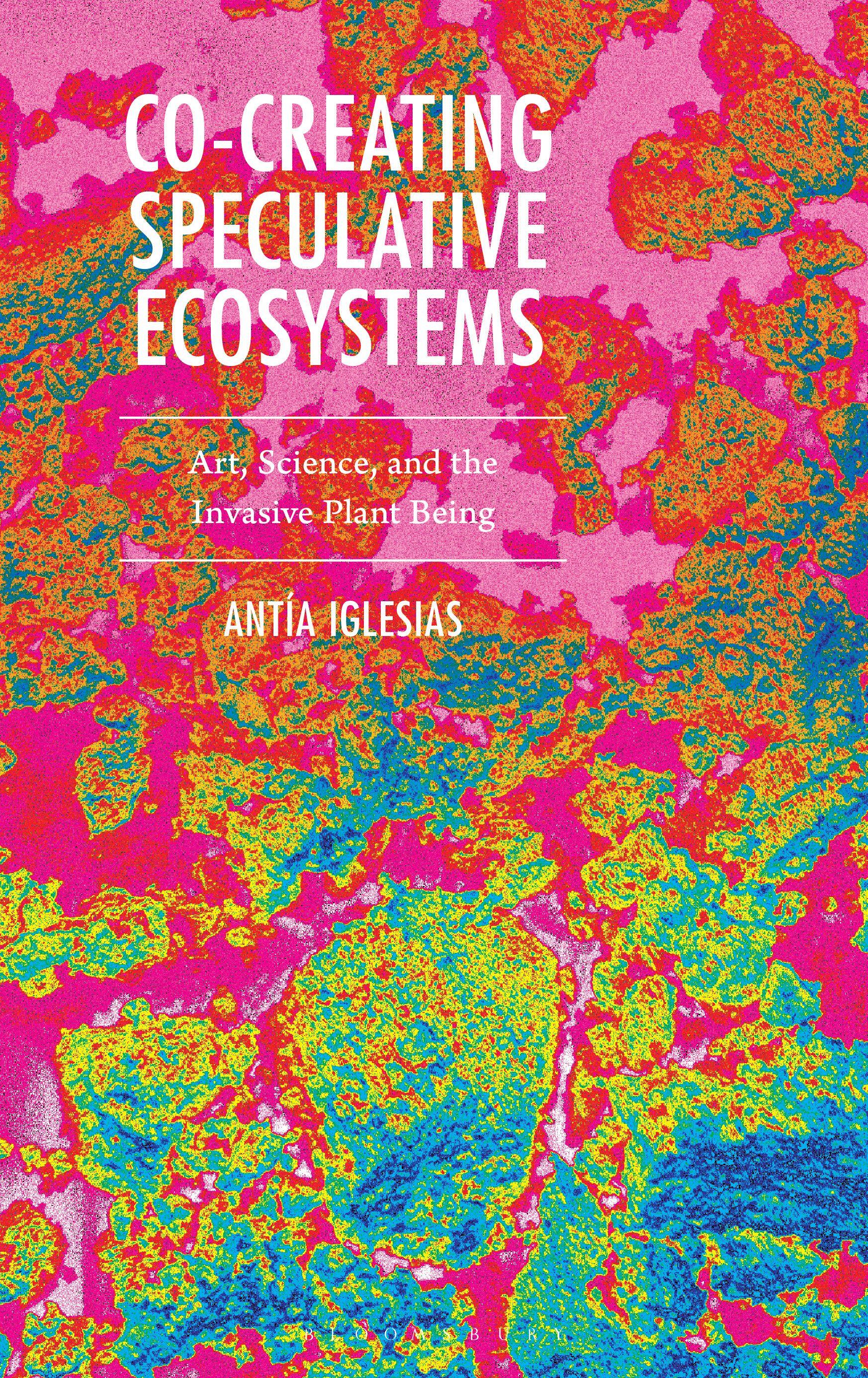
Focusing on four plant species in the riparian landscapes of Galicia (Northern Spain), this book examines the ecological, conceptual, artistic, and material reality of exotic–invasive plants and the traces they leave behind after land management processes. Rather than treating these individuals as problems, this research approaches them as collaborators. Through artistic practice and scientific experimentation, vegetal biomass is transformed into new materials -pigments, paper -and artworks, opening unexpected paths for creation and reflection.
Blending theory with practice, this book brings together art experiences, ecological thinking, environmental humanities, and experimental processes to question the boundaries between disciplines, nature and culture, and human and non-human agency. Finally, the author proposes that art and science, working together, can help us perceive the complexity of ecosystems and rethink our role within them.
Blending theory with practice, this book brings together art experiences, ecological thinking, environmental humanities, and experimental processes to question the boundaries between disciplines, nature and culture, and human and non-human agency. Finally, the author proposes that art and science, working together, can help us perceive the complexity of ecosystems and rethink our role within them.
Betala smidigt med kort, Klarna, Apple Pay eller Google Pay. Är du inte nöjd har du alltid 14 dagars ångerrätt. Läs mer i våra villkor. Har du några frågor, mejla oss på hello@memmo.org.
Memmo gör det enklare att plugga – var du än är i världen. Hos oss samlar du kursböcker och smarta studieverktyg på ett och samma ställe: sammanfattningar, quiz, poddar och flashcards. Och så Ted, din studiekompis som svarar på allt du undrar. Över 50 000 studenter pluggar redan här – byggt för att du ska lära dig snabbare och stressa mindre.