
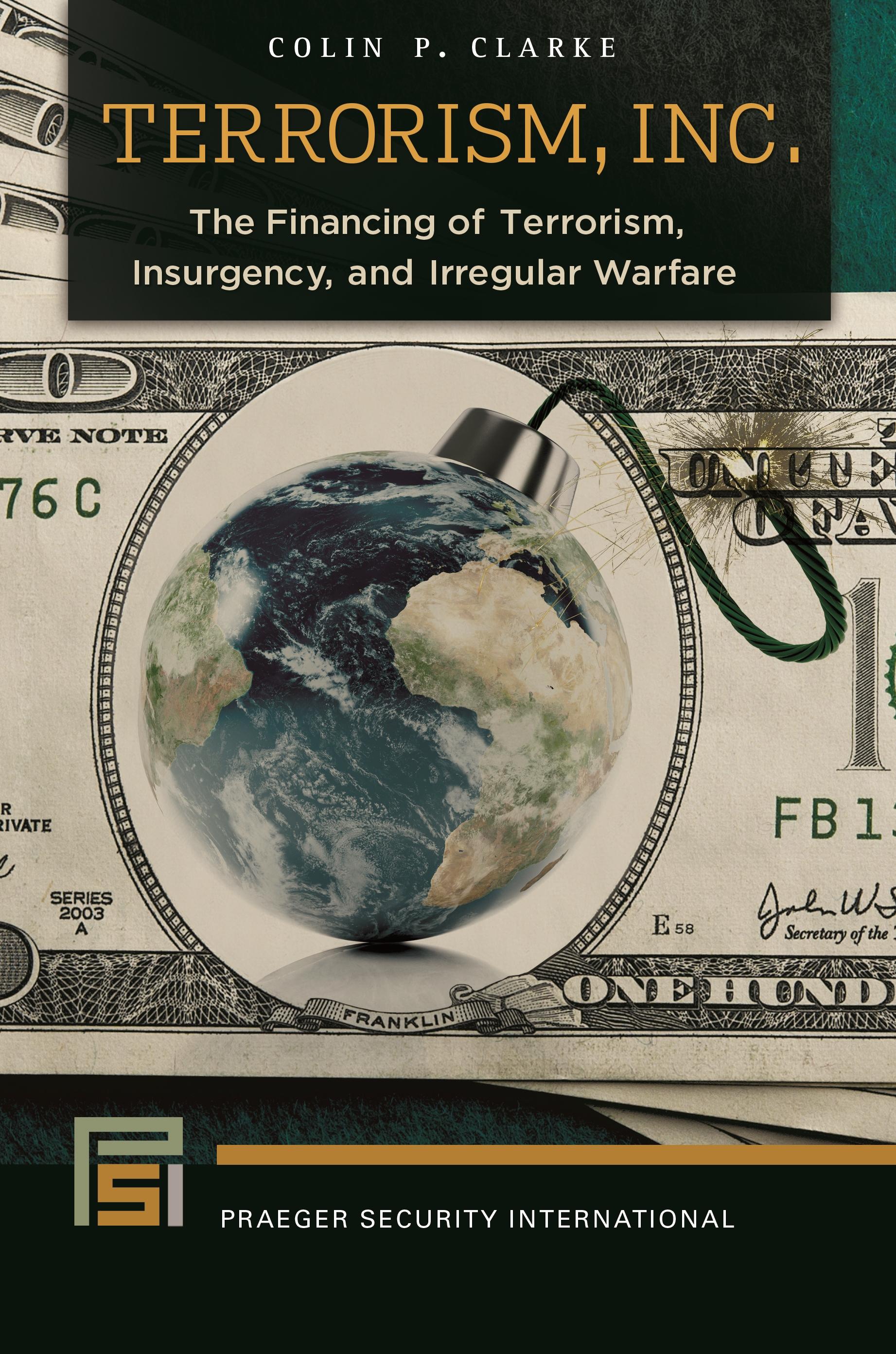
This in-depth, historical analysis of terrorism investigates the major funding streams of terrorists, insurgents, guerrillas, warlords, militias, and criminal organizations throughout the world as well as the efforts of the international community to thwart their efforts.
Terrorist financing is an ongoing game of creating, concealing, and surreptitiously utilizing funds. This intriguing book considers every facet of guerrilla funding—from how activities are financed, to what insurgents do with the revenue they generate, to the range of countermeasures in place for deterring their moneymaking activities. Case studies prompt an analysis of past government responses and inform recommendations for countering irregular warfare worldwide.
Author Colin P. Clarke presents the business side of terrorism, taking a look at the cash-producing ventures he labels "gray activities" such as diaspora support, charities, fraudulent businesses, front companies, and money laundering as well as "dark activities" including kidnapping for ransom, robbery, smuggling, trafficking, and extortion. He considers the transnational efforts to stop terrorist activities—from wiretaps and electronic surveillance to financial sanctions and the freezing of funds and accounts—and points to the emergence of interagency task forces for detaining and destroying the operations of major criminal organizations across the globe.
Terrorist financing is an ongoing game of creating, concealing, and surreptitiously utilizing funds. This intriguing book considers every facet of guerrilla funding—from how activities are financed, to what insurgents do with the revenue they generate, to the range of countermeasures in place for deterring their moneymaking activities. Case studies prompt an analysis of past government responses and inform recommendations for countering irregular warfare worldwide.
Author Colin P. Clarke presents the business side of terrorism, taking a look at the cash-producing ventures he labels "gray activities" such as diaspora support, charities, fraudulent businesses, front companies, and money laundering as well as "dark activities" including kidnapping for ransom, robbery, smuggling, trafficking, and extortion. He considers the transnational efforts to stop terrorist activities—from wiretaps and electronic surveillance to financial sanctions and the freezing of funds and accounts—and points to the emergence of interagency task forces for detaining and destroying the operations of major criminal organizations across the globe.
Betala smidigt med kort, Klarna, Apple Pay eller Google Pay. Är du inte nöjd har du alltid 14 dagars ångerrätt. Läs mer i våra villkor. Har du några frågor, mejla oss på hello@memmo.org.
Memmo gör det enklare att plugga – var du än är i världen. Hos oss samlar du kursböcker och smarta studieverktyg på ett och samma ställe: sammanfattningar, quiz, poddar och flashcards. Och så Ted, din studiekompis som svarar på allt du undrar. Över 50 000 studenter pluggar redan här – byggt för att du ska lära dig snabbare och stressa mindre.