
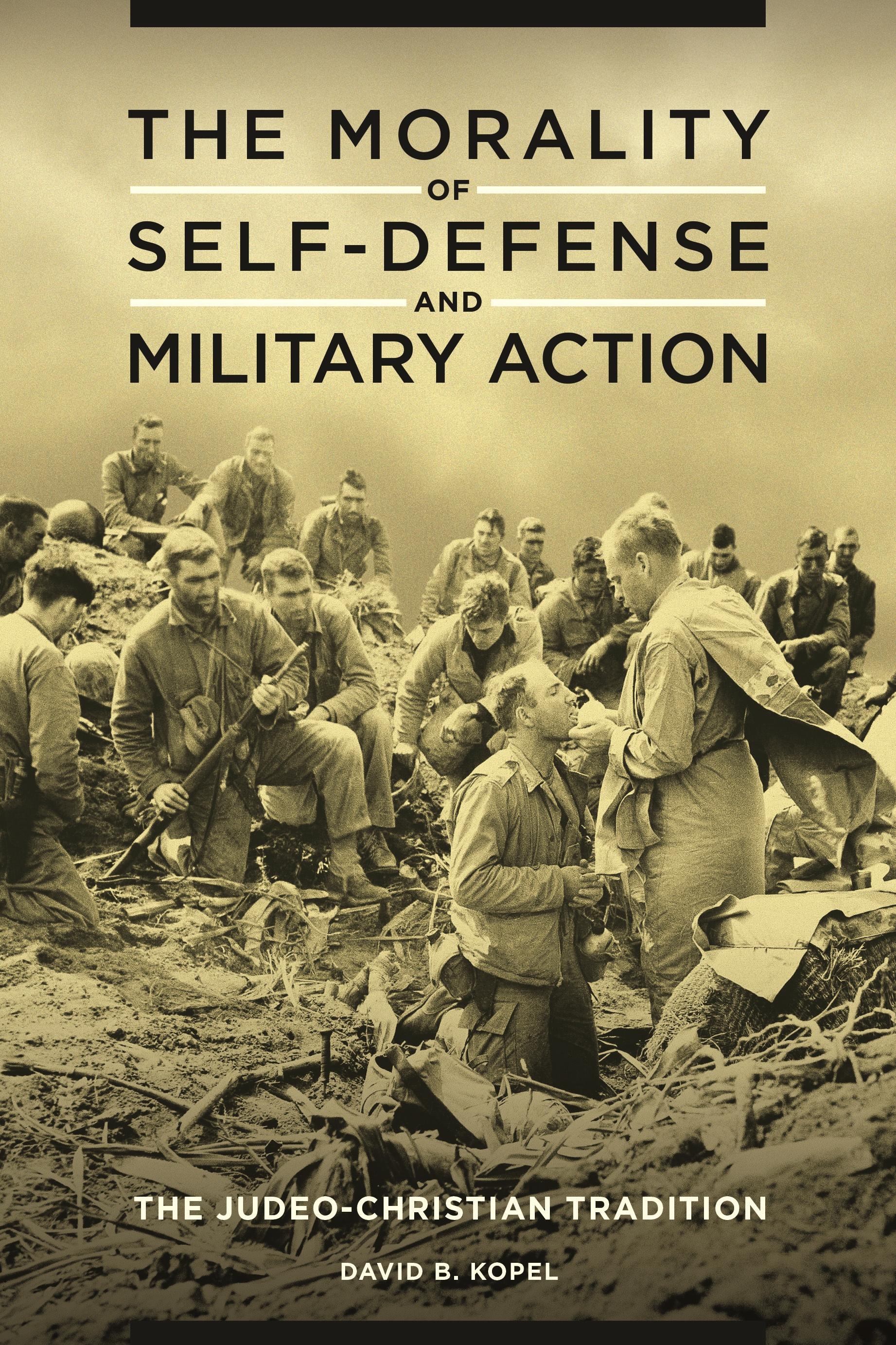
Shedding new light on a controversial and intriguing issue, this book will reshape the debate on how the Judeo-Christian tradition views the morality of personal and national self-defense.
Are self-defense, national warfare, and revolts against tyranny holy duties—or violations of God's will? Pacifists insist these actions are the latter, forbidden by Judeo-Christian morality. This book maintains that the pacifists are wrong. To make his case, the author analyzes the full sweep of Judeo-Christian history from earliest times to the present, combining history, scriptural analysis, and philosophy to describe the changes and continuity of Jewish and Christian doctrine about the use of lethal force. He reveals the shifting patterns of thought in both religions and presents the strongest arguments on both sides of the issue.
The book begins with the ancient Hebrews and Genesis and covers Jewish history through the Holocaust and beyond. The analysis then shifts to the story of Christianity from its origins, through the Middle Ages and the Reformation, up the present day. Based on this scrutiny, the author concludes that—contrary to popular belief—the legitimacy of self-defense is strongly supported by Judeo-Christian scripture and commentary, by philosophical analysis, and by the respect for human dignity and human rights on which both Judaism and Christianity are based.
Are self-defense, national warfare, and revolts against tyranny holy duties—or violations of God's will? Pacifists insist these actions are the latter, forbidden by Judeo-Christian morality. This book maintains that the pacifists are wrong. To make his case, the author analyzes the full sweep of Judeo-Christian history from earliest times to the present, combining history, scriptural analysis, and philosophy to describe the changes and continuity of Jewish and Christian doctrine about the use of lethal force. He reveals the shifting patterns of thought in both religions and presents the strongest arguments on both sides of the issue.
The book begins with the ancient Hebrews and Genesis and covers Jewish history through the Holocaust and beyond. The analysis then shifts to the story of Christianity from its origins, through the Middle Ages and the Reformation, up the present day. Based on this scrutiny, the author concludes that—contrary to popular belief—the legitimacy of self-defense is strongly supported by Judeo-Christian scripture and commentary, by philosophical analysis, and by the respect for human dignity and human rights on which both Judaism and Christianity are based.
Betala smidigt med kort, Klarna, Apple Pay eller Google Pay. Är du inte nöjd har du alltid 14 dagars ångerrätt. Läs mer i våra villkor. Har du några frågor, mejla oss på hello@memmo.org.
Memmo gör det enklare att plugga – var du än är i världen. Hos oss samlar du kursböcker och smarta studieverktyg på ett och samma ställe: sammanfattningar, quiz, poddar och flashcards. Och så Ted, din studiekompis som svarar på allt du undrar. Över 50 000 studenter pluggar redan här – byggt för att du ska lära dig snabbare och stressa mindre.