
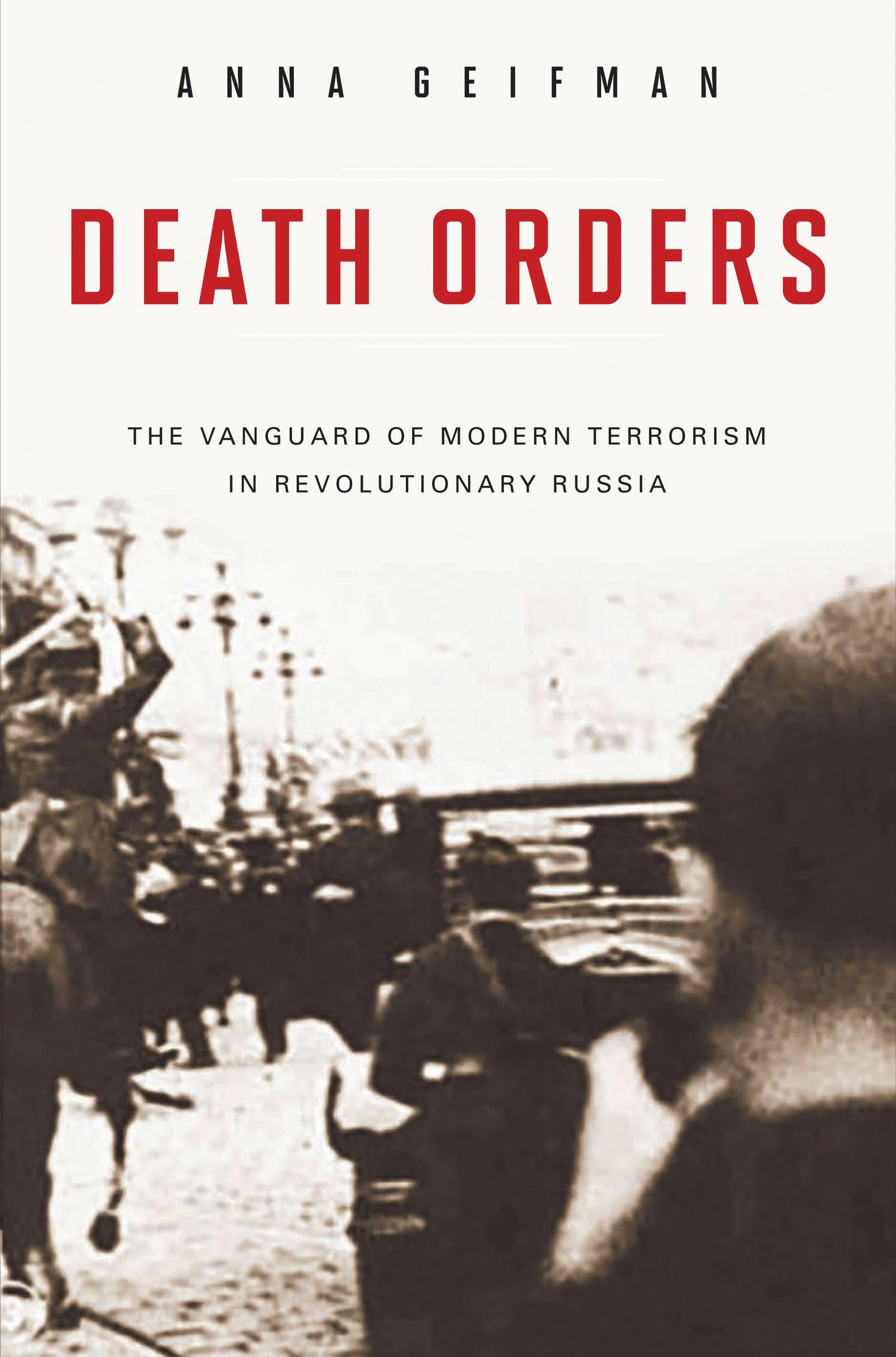
This fascinating study shows how terrorism as developed and practiced in Romanov Russia has, over the past century, manifested itself as the template for modern and postmodern terrorism as a universal sociocultural, psychological, and existential experience, irrespective of particular political causes, ethnic distinctions, and ideological boundaries.
Arguing that Russia is the birthplace of modern terrorism, Death Orders: The Vanguard of Modern Terrorism in Revolutionary Russia uses the nation as a case study of psycho-historical patterns of worldwide terrorist activity during the past century. Key features of early-20th century Russian political extremism serve as models for terrorist experiences in other periods and regions as author Anna Geifman builds a typology of a universal phenomenon.
The book shows how, in Russia and elsewhere, terrorists' objectives have degenerated from punishment of individual adversaries and attempts to intimidate political elites to indiscriminate acts of political violence. It shifts attention from ideology to practices that had been previously hidden, ignored, or rationalized, demonstrating that what terrorists say about their motives may not be what actually drives them to brutality. By looking closely at Russian precedents for the general experience of modern political violence, the book helps illuminate many obscure aspects of terrorism today.
Arguing that Russia is the birthplace of modern terrorism, Death Orders: The Vanguard of Modern Terrorism in Revolutionary Russia uses the nation as a case study of psycho-historical patterns of worldwide terrorist activity during the past century. Key features of early-20th century Russian political extremism serve as models for terrorist experiences in other periods and regions as author Anna Geifman builds a typology of a universal phenomenon.
The book shows how, in Russia and elsewhere, terrorists' objectives have degenerated from punishment of individual adversaries and attempts to intimidate political elites to indiscriminate acts of political violence. It shifts attention from ideology to practices that had been previously hidden, ignored, or rationalized, demonstrating that what terrorists say about their motives may not be what actually drives them to brutality. By looking closely at Russian precedents for the general experience of modern political violence, the book helps illuminate many obscure aspects of terrorism today.
Betala smidigt med kort, Klarna, Apple Pay eller Google Pay. Är du inte nöjd har du alltid 14 dagars ångerrätt. Läs mer i våra villkor. Har du några frågor, mejla oss på hello@memmo.org.
Memmo gör det enklare att plugga – var du än är i världen. Hos oss samlar du kursböcker och smarta studieverktyg på ett och samma ställe: sammanfattningar, quiz, poddar och flashcards. Och så Ted, din studiekompis som svarar på allt du undrar. Över 50 000 studenter pluggar redan här – byggt för att du ska lära dig snabbare och stressa mindre.