
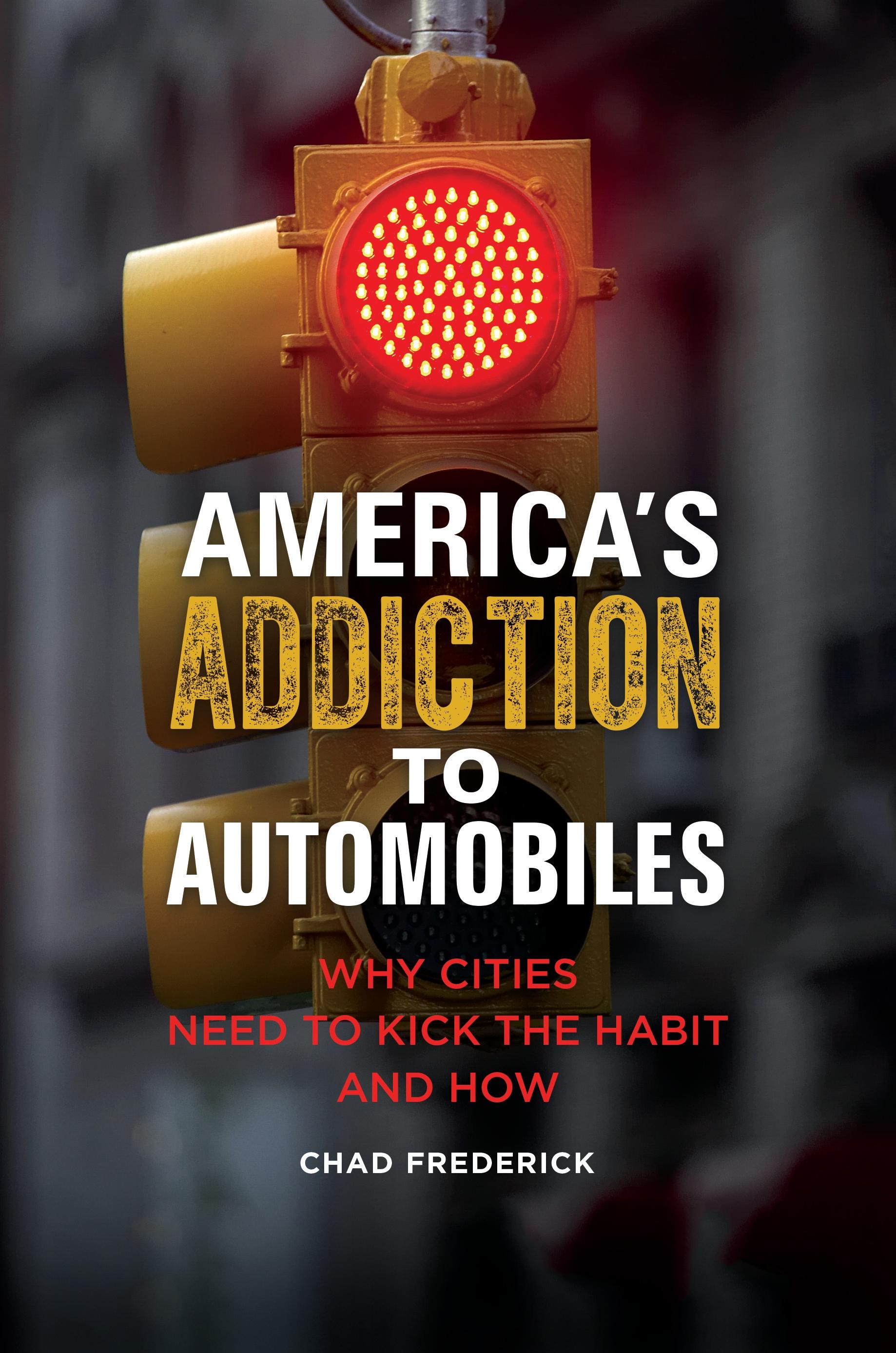
A provocative look at our nation's dependency on the automobile and how its potential impact on urban design will either make or break our health, economy, and quality of life.
In this thought-provoking work, author and urban planning expert Chad Frederick scrutinizes the use of automobiles in cities, investigating its role in exacerbating urban inequalities and thwarting sustainability of modern society. Through a comprehensive, thoughtful discussion, Frederick illustrates how the automobile is fundamentally at odds with the very nature of cities. He shows how cars impose huge burdens on our health, equity, environment, local and national economy, and quality of life. Most of all, he shows how automobile dependency has put our entire society at risk.
The book delves into the monumental role of automobiles in the development of cities after the Great Depression, impacting the American identity and affecting the way we produce and manage urban spaces. Frederick provides compelling evidence that cities with more diverse modes of transportation are greener, healthier, more prosperous, and even more enjoyable places to live than automobile-dependent cities. He identifies one institution responsible for our inability to improve our cities: the social sciences, and examines the root cause of our inability to make progress toward more multi-modal cities. In conclusion, the author offers a radical solution for moving beyond the underlying logic that forces us to create automobile-dependent cities.
In this thought-provoking work, author and urban planning expert Chad Frederick scrutinizes the use of automobiles in cities, investigating its role in exacerbating urban inequalities and thwarting sustainability of modern society. Through a comprehensive, thoughtful discussion, Frederick illustrates how the automobile is fundamentally at odds with the very nature of cities. He shows how cars impose huge burdens on our health, equity, environment, local and national economy, and quality of life. Most of all, he shows how automobile dependency has put our entire society at risk.
The book delves into the monumental role of automobiles in the development of cities after the Great Depression, impacting the American identity and affecting the way we produce and manage urban spaces. Frederick provides compelling evidence that cities with more diverse modes of transportation are greener, healthier, more prosperous, and even more enjoyable places to live than automobile-dependent cities. He identifies one institution responsible for our inability to improve our cities: the social sciences, and examines the root cause of our inability to make progress toward more multi-modal cities. In conclusion, the author offers a radical solution for moving beyond the underlying logic that forces us to create automobile-dependent cities.
Betala smidigt med kort, Klarna, Apple Pay eller Google Pay. Är du inte nöjd har du alltid 14 dagars ångerrätt. Läs mer i våra villkor. Har du några frågor, mejla oss på hello@memmo.org.
Memmo gör det enklare att plugga – var du än är i världen. Hos oss samlar du kursböcker och smarta studieverktyg på ett och samma ställe: sammanfattningar, quiz, poddar och flashcards. Och så Ted, din studiekompis som svarar på allt du undrar. Över 50 000 studenter pluggar redan här – byggt för att du ska lära dig snabbare och stressa mindre.