
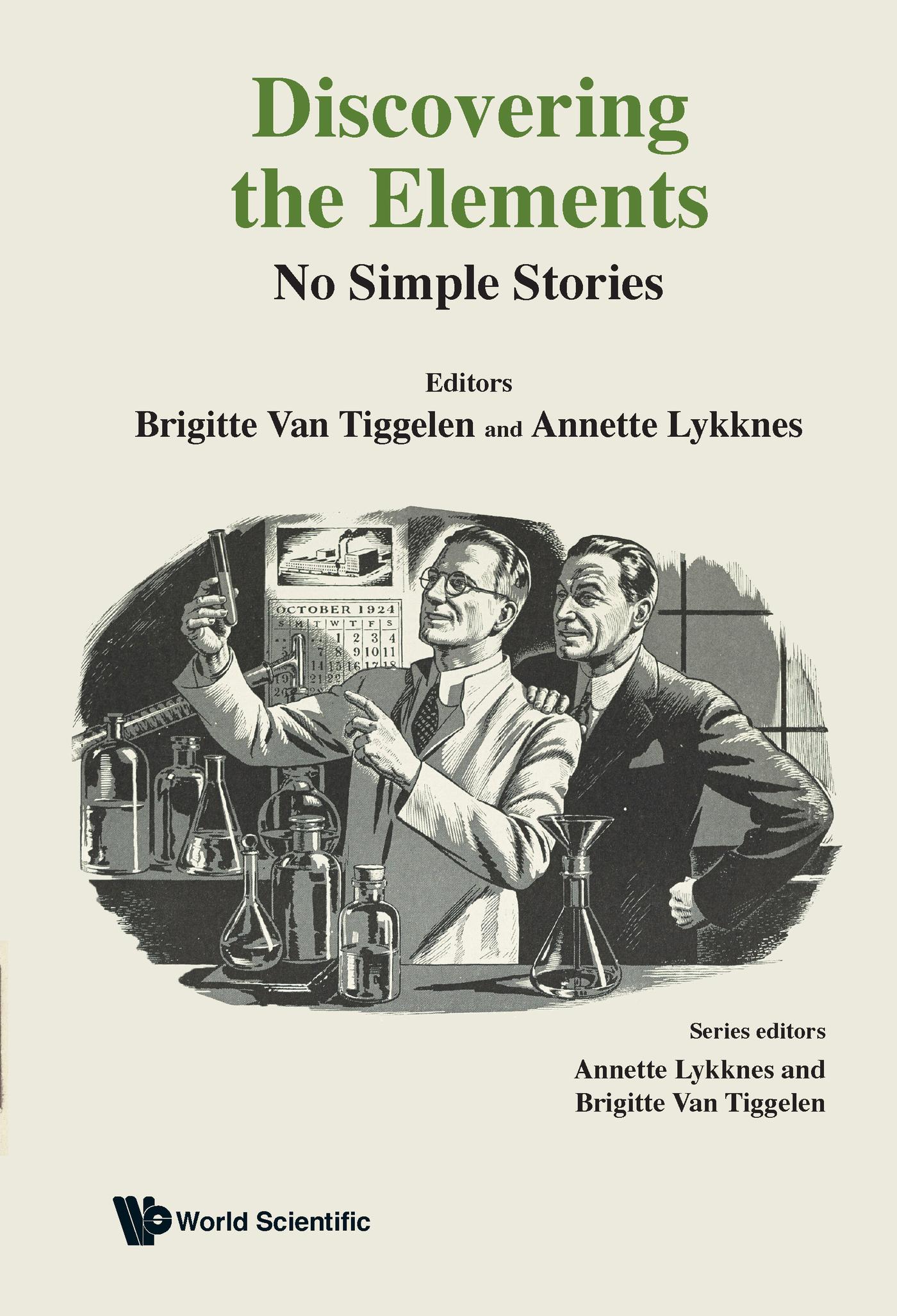
What constitutes a scientific discovery, how do stories about them emerge and what aspects of science are communicated through these accounts? Discovery histories fascinate and are often used as windows into the practice of science, past and present. As these stories are shared in popular media and in the classroom, they inevitably tell simplified stories that might give a distorted picture of how science works and how its now well-established results came about. How can we negotiate enthusiasm for heroic tales of scientific breakthroughs with a respect for historical scholarship?
This volume challenges some aspects characteristic of many discovery histories, namely a pinpointing of events in time and space and the reduction of scientific processes to simple strings of linear events, by providing research-based case stories of element discoveries along with didactic materials that can be used in teaching to reflect on scientific progress. Charlotte A Abney Salomon, Gisela Boek, Carmen Giunta, Pere Grapi, Sarah N Hijmans, Helge Kragh, Annette Lykknes, Ann E Robinson, and Brigitte Van Tiggelen dive deep into the discovery stories of gadolinum and rare earths, germanium and the periodic system, noble gases, chlorine, aluminum, hydrogen's heavier isotopes, radium and polonium, nobelium, technetium and rhenium, respectively, offering new perspectives on how these chemical elements were acknowledged as such and how their discovery histories were created.
Contents:
- Identifying, Interpreting and Disseminating Discoveries of Elements: An Introduction to the Volume (Brigitte Van Tiggelen and Annette Lykknes)
- Why Re-Examine Scientific Discoveries?:
- Reconstructing Discovery Histories, Creating Winners and Losers
- The Pitfalls of the Linear Thread
- Staging Personal Involvement
- Scientific Discovery in Teaching
- Identifying and Interpreting Discovery Histories of Chemical Elements:
- Situating Discoveries in Time and Space
- Predicting and Anticipating Discoveries of Elements and Isotopes
- Towards a New Model for Discovery History
- Discoveries in Chemistry — Drawing on the Case of Elements
- Situating Discoveries in Time and Space:
- Finding Yttrium: Johan Gadolin and the Development of a Discovery (Charlotte A Abney Salomon)
- The Long and Arduous Pathway Towards the Elementary Nature of Chlorine (Pere Grapí)
- The Many Fathers of Aluminium: Collaboration, Credit and the Construction of Discovery (Sarah N Hijmans)
- A Chemistry of the Imponderable? Radium, Polonium and the Discovery of Elements in the era of Radioactivity (Annette Lykknes)
- Predicting and Anticipating Discoveries of Elements and Isotopes:
- Germanium — Discovered as the Predicted eka–Silicon? (Gisela Boeck)
- It's Not Elementary: The Successive Lives of Eka-Manganese Aka Element 43 (Brigitte Van Tiggelen)
- Nobelium, The Questionable Element (Ann E Robinson)
- The Heavy Hydrogen Isotopes: Anticipations and Discoveries (Helge Kragh)
- Towards a New Model for Discovery History:
- In Defence of a Journalistic Model of Describing Discovery: The Cases of Argon, Helium and Neon (Carmen J Giunta)
- Didactic Materials:
- Introduction to the Didactic Materials
- Finding Yttrium (Charlotte A Abney Salomon)
- The Elementary Nature of Chlorine (Pere Grapí)
- The Many Fathers of Aluminium (Sarah N Hijmans)
- Discovery of Radium and Polonium in the Era of Radioactivity (Annette Lykknes)
- Clemens Winkler, Cobalt Pigments, and the Discovery of the Eka-Elements (Gisela Boeck)
- It's not Elementary — the Case of Jargonium (Brigitte Van Tiggelen)
- Nobelium, the Questionable Element (Ann E Robinson)
- The Heavy Hydrogen Isotopes (Helge Kragh)
- Discovering Argon, Helium and Neon (Carmen J Giunta)
Readership: Historians and philosophers of science, chemists and scientists, chemistry and science teachers, students in chemistry.
Betala smidigt med kort, Klarna, Apple Pay eller Google Pay. Är du inte nöjd har du alltid 14 dagars ångerrätt. Läs mer i våra villkor. Har du några frågor, mejla oss på hello@memmo.org.
Memmo gör det enklare att plugga – var du än är i världen. Hos oss samlar du kursböcker och smarta studieverktyg på ett och samma ställe: sammanfattningar, quiz, poddar och flashcards. Och så Ted, din studiekompis som svarar på allt du undrar. Över 75 000 studenter pluggar redan här – byggt för att du ska lära dig snabbare och stressa mindre.