
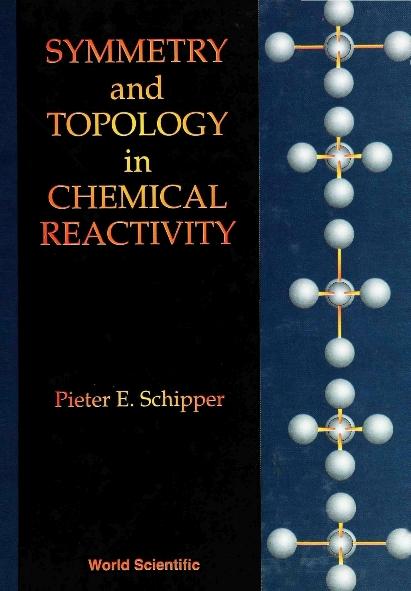
This well-illustrated book develops, using only the ideas of basic quantum chemistry (e.g. perturbation and symmetry theory), a fundamental conceptual and theoretical framework for chemical reactivity. By feeding the role of symmetry and chemical group topology directly into the development, the analysis generates and explains the successful features of simpler reactivity theories (e.g. frontier orbital theory, the isolobal concept, PMO theory, the Woodward-Hoffmann rules), as well as defines their limitations. The unifying construct is that of a group-resolved correlation diagram, which is shown to represent the formal quantization of the electron arrow, replacing the concept of classical point electrons moving between groups with the concept of quantum electron matter waves which evolve with the evolving nuclear and chemical group structure. The use of the concept of chemical groups (functional group system, substituents, solvents) is central to the development, localising the evolutionary electrons within the functional groups and leading to an isolation and analytic definition of substituent and solvent (catalytic) effects as explicit functions of the reaction coordinate. Each archetypical reaction family is represented by fully-worked examples: viz. aliphatic nucleophilic substitution, aromatic electrophilic substitution, inorganic rearrangements, electrocyclic additions, Diels-Alder additions and addition stages in chiral reactions.
Betala smidigt med kort, Klarna, Apple Pay eller Google Pay. Är du inte nöjd har du alltid 14 dagars ångerrätt. Läs mer i våra villkor. Har du några frågor, mejla oss på hello@memmo.org.
Memmo gör det enklare att plugga – var du än är i världen. Hos oss samlar du kursböcker och smarta studieverktyg på ett och samma ställe: sammanfattningar, quiz, poddar och flashcards. Och så Ted, din studiekompis som svarar på allt du undrar. Över 50 000 studenter pluggar redan här – byggt för att du ska lära dig snabbare och stressa mindre.
Du kanske också gillar
Köp boken0